Have you ever typed “tieing” and wondered if it looks right? You’re not alone. This is a common spelling confusion because the word “tie” ends in “e,” which can make the -ing form feel tricky.
In this guide, we’ll break down tying vs tieing, explain the correct spelling, give clear examples, highlight common mistakes, and help you remember the rule easily.
Quick Answer
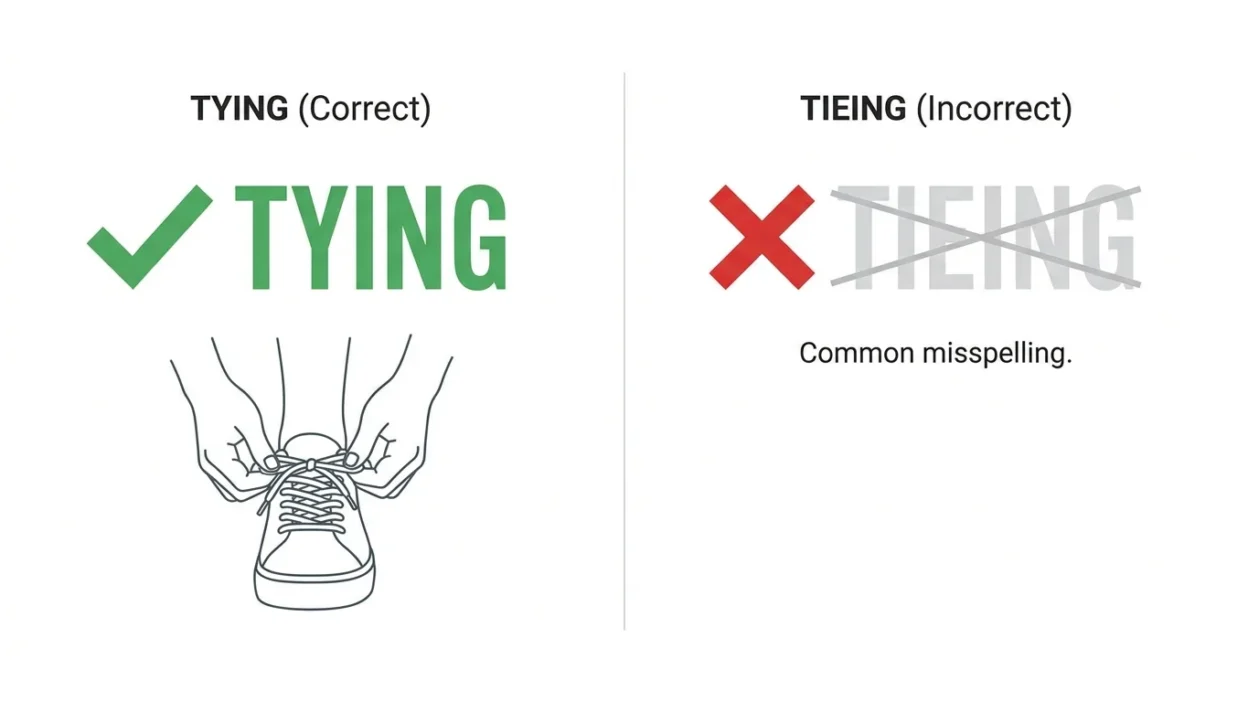
- ✅ Tying = correct spelling
- ❌ Tieing = incorrect and nonstandard
👉 Simple rule:
Always use tying when adding “-ing” to tie.
What Does “Tying” Mean?
Tying is the present participle of the verb tie, meaning to fasten, attach, or form a knot.
Common Meanings
- Fastening something with a knot
- Securing or binding
- Connecting or linking
Example Sentences
- She is tying her shoes.
- He is tying the rope tightly.
- They are tying the decorations together.
👉 Tone: Everyday, practical usage
Why “Tieing” Is Incorrect
The spelling “tieing” is a common mistake caused by misunderstanding spelling rules.
The Correct Rule
When a verb ends in -ie, you:
👉 Change -ie → y before adding -ing
So:
- tie → tying ✔
Not: - tie → tieing ❌
Similar Examples
- die → dying
- lie → lying
👉 This is a standard English spelling pattern.
Tying vs Tieing: Key Differences
Comparison Table: Tying vs Tieing
| Feature | Tying | Tieing |
|---|---|---|
| Correctness | ✔ Correct | ✖ Incorrect |
| Rule followed | -ie → y + ing | Incorrect formation |
| Usage | Standard English | Misspelling |
| Example | Tying a knot | ❌ Tieing a knot |
When Should You Use “Tying”?
Use tying whenever you’re describing the action of fastening or connecting something.
Best Situations for “Tying”
- Shoes or laces
- Ropes or knots
- Attaching or securing objects
Examples
- “She is tying her hair.”
- “He is tying the package.”
- “They are tying the ropes together.”
👉 Think of tying as the only correct form.
Common Mistakes to Avoid
1. Writing “Tieing”
❌ She is tieing her shoes
✔ She is tying her shoes
👉 Always change ie → y
2. Forgetting the Spelling Rule
Many verbs follow patterns this one is simple once you remember it.
3. Overthinking the Word
Even though “tie” ends in “e,” don’t just add “-ing” normally apply the rule.
Helpful Tip to Remember
👉 Tie → Tying (drop “ie,” add “y”)
Memory trick:
- “ie” doesn’t stay it turns into “y”
So:
- tie → tying
- die → dying
- lie → lying
More Examples in Context
- “He is tying his tie.”
- “She is tying the ribbons.”
- “They are tying everything together neatly.”
Synonyms and Related Words
To improve your writing, you can also use:
- Fastening
- Binding
- Securing
- Connecting
- Attaching
👉 These add variety while keeping meaning clear.
Tying vs Tieing in American and British English
- Tying is correct in both American and British English
- Tieing is incorrect in all standard forms
- No regional differences
👉 One correct spelling worldwide: tying
FAQs
1. Is “tieing” ever correct?
No, it is always considered incorrect in standard English.
2. What is the correct spelling?
Tying is the correct form.
3. Why does “tie” become “tying”?
Because verbs ending in -ie change to y before adding “-ing.”
4. Are there similar examples?
Yes—die → dying, lie → lying.
5. Can I use “tying” in formal writing?
Yes, it is correct in all contexts.
6. Why is this confusing?
Because many verbs simply add “-ing,” but this one follows a special rule.
7. How can I remember it easily?
Think: “ie becomes y” before -ing
Summary
When comparing tying vs tieing, the correct spelling is always tying. It follows a simple rule: verbs ending in -ie change to y before adding “-ing.” The form tieing is a common mistake and should be avoided in all writing.
Learning this small rule can help you avoid similar spelling errors and make your writing more polished and professional.
Actionable Takeaway
Next time you write, remember:
👉 Tie → Tying (ie → y)
👉 Tieing = incorrect
Stick with tying, and you’ll always be right.