
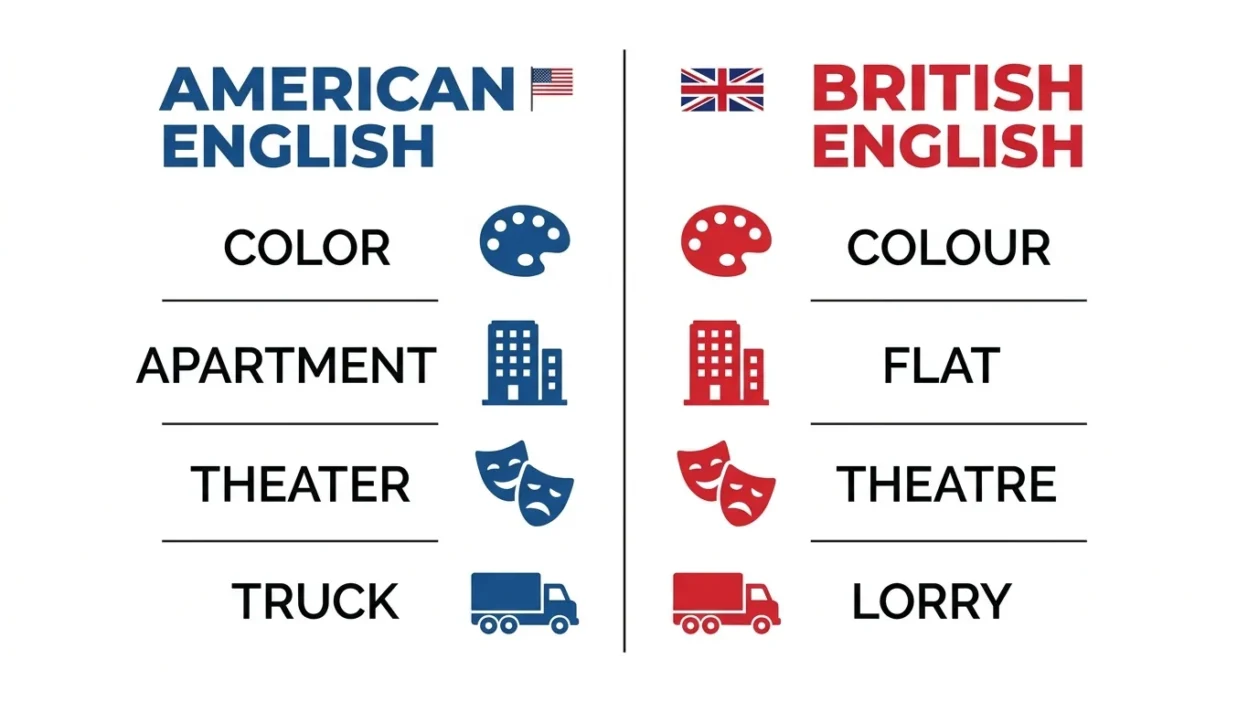
Have you ever noticed words like “color” and “colour” or “apartment” and “flat” and wondered which one is correct? The truth is both are correct, depending on whether you’re using American or British English.
In this guide, we’ll break down American vs British English in a simple, friendly way. You’ll learn the key differences in spelling, vocabulary, grammar, pronunciation, and when to use each style.
Quick Answer
- 🇺🇸 American English = used in the United States
- 🇬🇧 British English = used in the United Kingdom
👉 Simple rule:
Both are correct just stay consistent with one style in your writing.
What Is American English?
American English refers to the version of English used in the United States. It has its own spelling rules, vocabulary, and pronunciation patterns.
Key Features
- Simpler spellings (e.g., “color”)
- Modern vocabulary
- Influenced by cultural and technological changes
Examples
- Color
- Center
- Apartment
- Truck
👉 Tone: Direct, simplified, widely used globally
What Is British English?
British English is the form of English used in the United Kingdom and many Commonwealth countries.
Key Features
- Traditional spellings (e.g., “colour”)
- Unique vocabulary
- Often more formal tone
Examples
- Colour
- Centre
- Flat
- Lorry
👉 Tone: Traditional, formal, regionally diverse
American vs British English: Key Differences
The main differences appear in spelling, vocabulary, and sometimes grammar.
Comparison Table: American vs British English
| Feature | American English 🇺🇸 | British English 🇬🇧 |
|---|---|---|
| Spelling | Color, center | Colour, centre |
| Vocabulary | Apartment, truck | Flat, lorry |
| Grammar | Past simple more common | Present perfect more common |
| Pronunciation | Rhotic (pronounces “r”) | Often non-rhotic |
| Usage | USA, global media | UK, Commonwealth countries |
Spelling Differences
One of the most noticeable differences is spelling.
Common Patterns
1. -or vs -our
- American: color, favor
- British: colour, favour
2. -er vs -re
- American: center, meter
- British: centre, metre
3. -ize vs -ise
- American: organize
- British: organise
4. Double vs Single Letters
- American: traveled
- British: travelled
👉 These patterns help you quickly recognize the style.
Vocabulary Differences
Some everyday words are completely different.
Common Examples
| American English | British English |
|---|---|
| Elevator | Lift |
| Cookie | Biscuit |
| Gas | Petrol |
| Vacation | Holiday |
| Sidewalk | Pavement |
👉 Same meaning, different words!
Grammar Differences
There are small but noticeable grammar differences.
1. Present Perfect vs Past Simple
- American: I already ate
- British: I’ve already eaten
2. Collective Nouns
- American: The team is winning
- British: The team are winning
👉 British English allows more flexibility with plural agreement.
Pronunciation Differences
Pronunciation can vary significantly.
Key Differences
- American English pronounces the “r” clearly (e.g., car)
- British English often drops the “r” sound (cah)
👉 These differences affect accents more than spelling.
When Should You Use American or British English?
Use American English if:
- Writing for a global or US audience
- Creating online content
- Following modern style guides
Use British English if:
- Writing for UK or Commonwealth readers
- Following academic or regional standards
- Required by your institution or employer
👉 Important: Stay consistent—don’t mix styles.
Common Mistakes to Avoid
1. Mixing Styles
❌ The colour of the center is bright
✔ Choose one:
- American: color, center
- British: colour, centre
2. Assuming One Is “More Correct”
Both are correct context matters.
3. Ignoring Audience
Always match your language style to your readers.
Helpful Tip to Remember
👉 American = simpler spelling
👉 British = traditional spelling
Memory trick:
- US → short words (color)
- UK → extra letters (colour)
More Examples in Context
American English
- “The apartment is on the second floor.”
- “He drove a truck.”
British English
- “The flat is on the second floor.”
- “He drove a lorry.”
Synonyms and Related Terms
- US English
- UK English
- International English
- Standard English
👉 These terms are often used interchangeably depending on context.
FAQs
1. Which is correct: American or British English?
Both are correct just use one consistently.
2. Which is more common worldwide?
American English is more widely used globally, especially online.
3. Do grammar rules differ a lot?
No, only small differences exist.
4. Can I mix both styles?
It’s not recommended stay consistent.
5. Which should I learn?
It depends on your goals and audience.
6. Is pronunciation very different?
Yes, especially accents and “r” sounds.
7. Do exams require a specific style?
Some do always check guidelines.
Summary
Understanding American vs British English helps you communicate more clearly and professionally. While both forms share the same core language, they differ in spelling, vocabulary, grammar, and pronunciation.
Neither version is better they simply serve different audiences and contexts. The key is consistency and awareness of your readers.
Actionable Takeaway
Next time you write, remember:
👉 Choose American or British English based on your audience
👉 Stay consistent throughout your content
👉 Watch for spelling and vocabulary differences
A little attention to detail goes a long way in making your writing polished and professional.