Choosing between landscape vs portrait can completely change how a photo, video, document, design, or screen looks. If you are taking pictures, creating social media posts, printing documents, or designing graphics, understanding the difference between these two orientations is extremely important.
Many people hear the terms “landscape” and “portrait” regularly but still feel unsure about when to use each one. The good news is that the concept is actually very simple. In this guide, you will learn the meaning of landscape and portrait, key differences, practical examples, common mistakes, photography tips, and how each orientation works across devices, printing, and social media.
Quick Answer
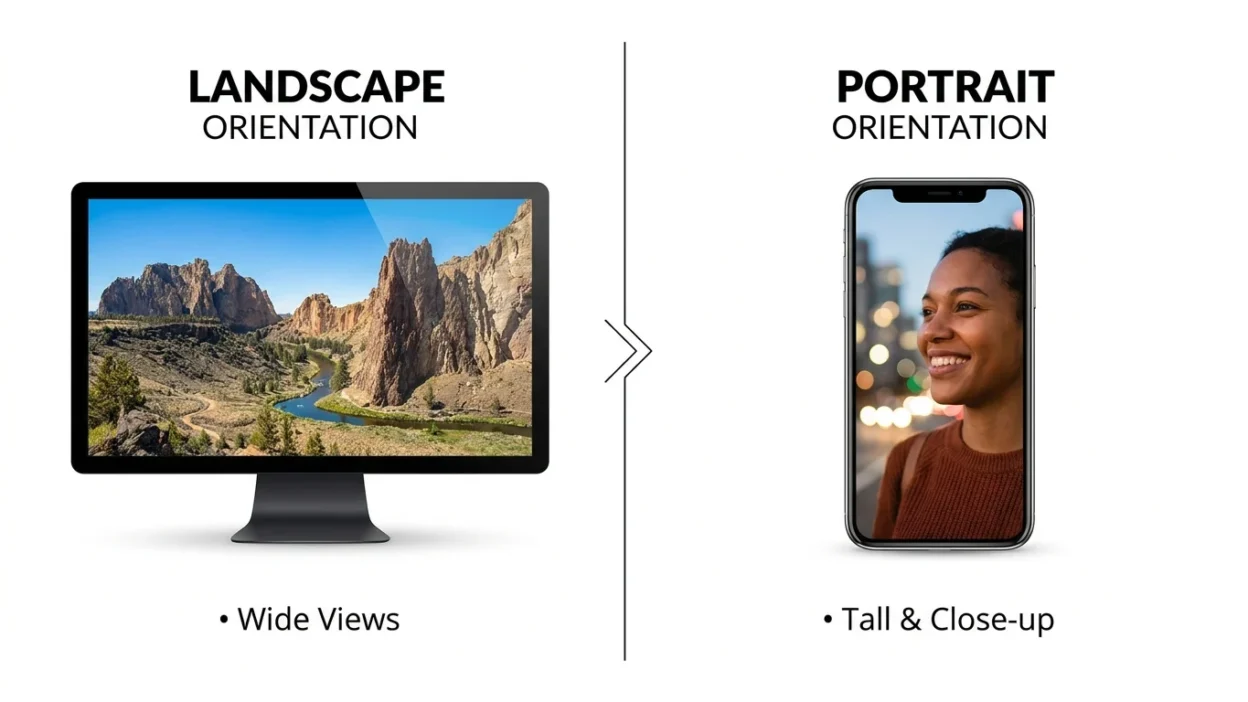
- Landscape means the width is greater than the height.
- Portrait means the height is greater than the width.
Simple examples:
- A widescreen TV uses landscape orientation.
- A phone held upright uses portrait orientation.
What Does Landscape Mean?
The term landscape refers to a horizontal orientation where the content is wider than it is tall.
Landscape Characteristics
- Horizontal layout
- Wider viewing area
- More side to side space
- Common for videos and presentations
Examples of Landscape Orientation
- Television screens
- Computer monitors
- Movies
- PowerPoint presentations
- YouTube videos
- Wide photography shots
Landscape Example
Imagine taking a photo of:
- Mountains
- Beaches
- City skylines
- Group photos
Landscape orientation captures more width and background detail.
What Does Portrait Mean?
The term portrait refers to a vertical orientation where the content is taller than it is wide.
Portrait Characteristics
- Vertical layout
- Taller viewing area
- Focuses more on height
- Common for people and mobile viewing
Examples of Portrait Orientation
- Smartphone screens
- Instagram Stories
- TikTok videos
- Passport photos
- Posters
- Book covers
Portrait Example
Portrait mode works well for:
- Individual people
- Fashion photography
- Vertical posters
- Mobile content
Landscape vs Portrait Comparison Table
| Feature | Landscape | Portrait |
|---|---|---|
| Shape | Horizontal | Vertical |
| Width vs Height | Wider than tall | Taller than wide |
| Best For | Scenery and videos | People and mobile viewing |
| Common Devices | TVs and monitors | Smartphones |
| Social Media Use | YouTube | TikTok and Stories |
| Focus | Wider scenes | Height and subjects |
Why Is It Called Landscape?
The word “landscape” comes from landscape paintings and photography that capture wide outdoor scenes like:
- Mountains
- Forests
- Rivers
- Countryside
These scenes naturally fit better in a horizontal frame.
Why Is It Called Portrait?
The term “portrait” comes from portrait paintings that focus on a person’s face and body.
A vertical frame works better because the human body is naturally taller than it is wide.
Landscape vs Portrait in Photography
Photography is one of the most common areas where orientation matters.
When to Use Landscape in Photography
Landscape orientation works best for:
- Nature photography
- Group pictures
- Travel photography
- Architecture
- Sports photography
Benefits of Landscape Photos
- Captures more surroundings
- Feels cinematic
- Works well on screens
- Better for panoramic scenes
When to Use Portrait in Photography
Portrait orientation is ideal for:
- Individual people
- Fashion photography
- Social media content
- Full body shots
- Vertical subjects
Benefits of Portrait Photos
- Focuses attention on the subject
- Better for mobile screens
- More engaging for social apps
Landscape vs Portrait for Social Media
Modern social media platforms have changed how people use orientation.
Landscape Content
Best for:
- YouTube
- Website banners
- Presentation slides
- Cinematic videos
Portrait Content
Best for:
- TikTok
- Instagram Reels
- Snapchat
- Instagram Stories
- Mobile first content
Today, portrait content often performs better on mobile platforms because people naturally hold phones vertically.
Landscape vs Portrait in Printing
Orientation also matters in printing and document design.
Landscape Printing
Often used for:
- Spreadsheets
- Charts
- Presentations
- Large tables
Portrait Printing
Usually used for:
- Books
- Letters
- Resumes
- Reports
Most standard documents default to portrait orientation.
Common Mistakes People Make
Mistake 1: Using Landscape for Vertical Subjects
A tall object may look awkward in landscape orientation because of excessive empty space.
Mistake 2: Using Portrait for Wide Scenes
Portrait mode can cut off important scenery details.
Mistake 3: Ignoring Platform Requirements
Different platforms favor different formats.
Example:
- TikTok prefers portrait videos
- YouTube prefers landscape videos
Landscape vs Portrait in Mobile Phones
Smartphones automatically rotate screens depending on orientation.
Portrait Phone Use
Most people use phones vertically for:
- Messaging
- Browsing
- Social media
Landscape Phone Use
Landscape mode is common for:
- Gaming
- Watching movies
- Video editing
- Fullscreen content
American vs British English Differences
Interestingly, both American and British English use the same terms:
- Landscape
- Portrait
There is no major spelling difference between the two English styles.
Aspect Ratios in Landscape and Portrait
Aspect ratio describes the relationship between width and height.
Common Landscape Ratios
- 16:9
- 4:3
- 3:2
Common Portrait Ratios
- 9:16
- 4:5
- 2:3
Understanding aspect ratios helps improve photo and video composition.
Which Orientation Is Better?
There is no universal “better” option.
The right choice depends on:
- Subject
- Platform
- Audience
- Device
- Purpose
Choose Landscape If You Want
- Wider scenes
- Cinematic visuals
- Professional video layout
- Group shots
Choose Portrait If You Want
- Mobile friendly content
- Better focus on people
- Social media optimization
- Vertical emphasis
Easy Memory Tricks
Landscape Memory Tip
Think about a wide landscape view like mountains or beaches.
Landscape = wide
Portrait Memory Tip
Think about a standing person in a portrait painting.
Portrait = tall
FAQs
1. What is the difference between landscape and portrait?
Landscape is horizontal, while portrait is vertical.
2. Which orientation is better for photos?
It depends on the subject. Landscapes work better for wide scenes, while portraits work better for people.
3. Is portrait vertical or horizontal?
Portrait orientation is vertical.
4. Why do phones use portrait mode?
People naturally hold phones vertically for easier one handed use.
5. Which orientation is best for YouTube?
Landscape orientation is generally best for YouTube videos.
6. Is TikTok portrait or landscape?
TikTok mainly uses portrait orientation.
7. Which is better for printing documents?
Portrait orientation is more common for documents and books.
8. Can you switch between landscape and portrait?
Yes. Most devices and software allow easy orientation changes.
Final Summary
Understanding landscape vs portrait is essential for photography, design, video creation, printing, and social media content. Landscape orientation provides a wider horizontal view that works perfectly for scenery, cinematic visuals, presentations, and widescreen content. Portrait orientation focuses on height and works best for people, mobile devices, and vertical social media platforms.
Neither orientation is universally better. The ideal choice depends on your subject, platform, and goals. By learning when and why to use each format, you can improve visual quality, audience engagement, and overall content presentation.
Actionable Takeaway
Before creating a photo, video, or document, ask yourself:
- Do I need more width and scenery? → Use landscape.
- Do I need vertical focus and mobile optimization? → Use portrait.
Choosing the correct orientation can instantly make your content look more professional and visually appealing.