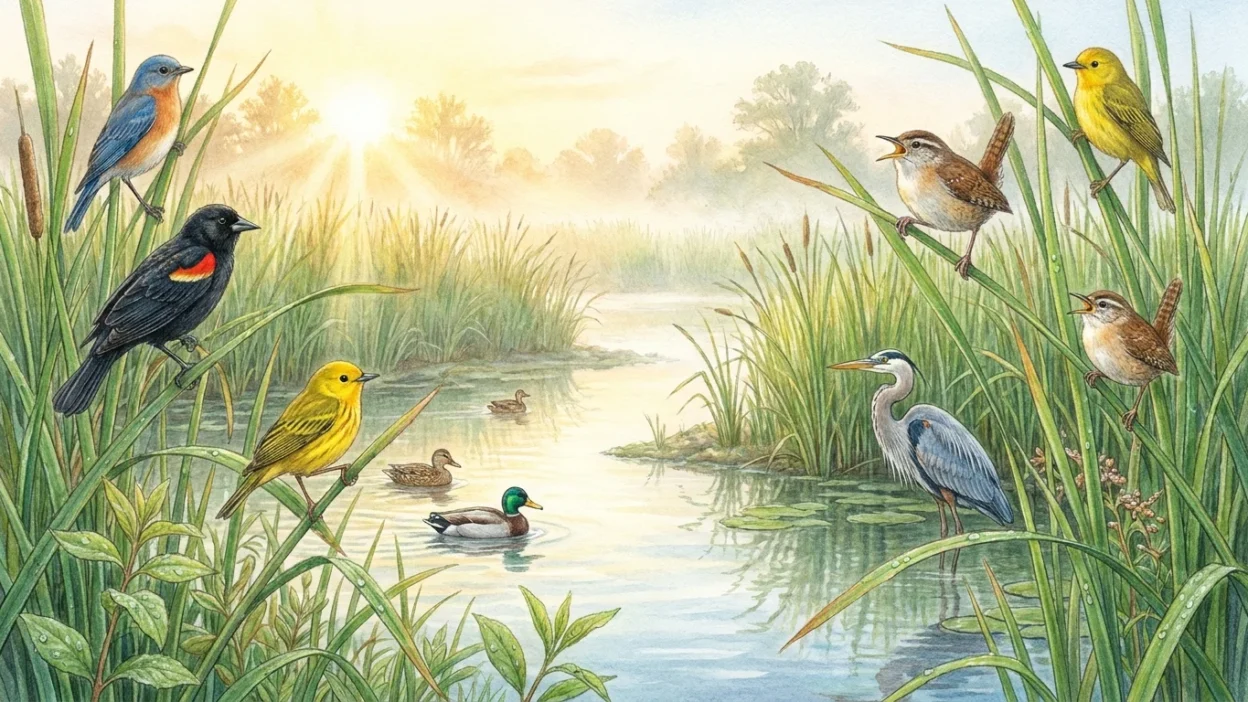
The comparison between reed vs songbird may seem unusual at first because these two words belong to different categories in nature. A reed is a type of tall grasslike plant commonly found near wetlands, while a songbird is a bird known for melodic vocal sounds. However, the two are closely connected in ecosystems because many songbirds live, feed, or nest among reeds.
People often search for “reed vs songbird” when studying birds, wetlands, nature terminology, poetry, symbolism, or wildlife habitats. Understanding the distinction helps avoid confusion and gives a clearer picture of how these natural elements interact.
In this guide, you will learn the meaning of reeds and songbirds, their differences, examples, habitats, ecological importance, symbolism, and common misconceptions.
Quick Answer
- A reed is a tall wetland plant that grows near water.
- A songbird is a bird known for singing melodic songs.
Simple explanation:
- Reed = plant
- Songbird = animal
Many songbirds actually live inside reed filled environments.
What Is a Reed?
Common reed is a tall grasslike plant commonly found in:
- Marshes
- Lakesides
- Rivers
- Wetlands
- Swamps
Reeds are flexible plants with long stems and narrow leaves.
Characteristics of Reeds
- Grow near water
- Tall and thin
- Sway in the wind
- Provide shelter for wildlife
- Important in wetland ecosystems
Common Uses of Reeds
Humans have historically used reeds for:
- Roof thatching
- Musical instruments
- Paper making
- Basket weaving
- Wildlife conservation
What Is a Songbird?
A songbird is a type of bird known for producing complex vocal sounds or songs.
Songbirds belong mainly to the scientific group called passerines.
Characteristics of Songbirds
- Melodic singing ability
- Small to medium body size
- Perching feet
- Strong vocal communication
Examples of Songbirds
- Nightingale
- Canary
- Robin
- Sparrow
Reed vs Songbird Comparison Table
| Feature | Reed | Songbird |
|---|---|---|
| Category | Plant | Bird |
| Living Type | Vegetation | Animal |
| Habitat | Wetlands | Forests, wetlands, gardens |
| Main Function | Shelter and ecosystem support | Singing and ecological balance |
| Movement | Stationary | Flying |
| Sound Production | Rustling in wind | Musical vocal songs |
How Reeds and Songbirds Connect
Even though reeds and songbirds are different, they are ecologically connected.
Reeds Provide Habitat
Wetland reeds offer:
- Nesting locations
- Protection from predators
- Food sources
- Shelter during migration
Songbirds Depend on Wetlands
Many birds thrive in reed filled habitats because they provide safety and abundant insects.
Birds Commonly Found in Reed Habitats
Several bird species are strongly associated with reeds.
Examples Include
- Reed warbler
- Marsh wren
- Red-winged blackbird
These birds often build nests hidden among tall reeds.
Symbolic Meaning of Reeds
Reeds often symbolize:
- Flexibility
- Adaptability
- Calmness
- Survival
Because reeds bend without breaking during storms, they are frequently used as symbols of resilience.
Symbolic Meaning of Songbirds
Songbirds commonly symbolize:
- Freedom
- Joy
- Hope
- Beauty
- Communication
In literature and poetry, singing birds often represent emotional expression and peace.
Reed vs Songbird in Literature
Writers sometimes pair reeds and songbirds together in nature imagery.
Example Imagery
- Reeds swaying beside quiet water
- Songbirds singing at sunrise
- Wetland landscapes full of life
This combination creates peaceful and emotional natural scenes.
Ecological Importance
Importance of Reeds
Reeds help:
- Prevent erosion
- Improve water quality
- Support wetland biodiversity
- Provide wildlife habitat
Importance of Songbirds
Songbirds help ecosystems through:
- Seed dispersal
- Insect control
- Pollination in some species
- Environmental balance
Common Mistakes People Make
Mistake 1: Thinking Reed Is a Bird
Some people confuse “reed” with bird names like reed warbler.
A reed itself is a plant.
Mistake 2: Assuming All Singing Birds Are Songbirds
Not every bird that makes sounds belongs to the songbird category scientifically.
Mistake 3: Ignoring Habitat Connections
Songbirds and reeds are deeply connected in wetland ecosystems.
Reed vs Songbird in Music and Art
Nature inspired art often combines:
- Reed filled marshes
- Singing birds
- Calm natural soundscapes
Musicians and painters frequently use these elements to create peaceful emotional themes.
American vs British Nature Terminology
The meanings of reed and songbird remain mostly the same in both American and British English.
However:
- British birdwatching culture often uses more specialized wetland bird terminology.
- American usage may focus more generally on backyard songbirds.
Easy Memory Tricks
Reed Memory Tip
Think of reeds growing beside lakes and rivers.
Reed = plant near water
Songbird Memory Tip
Think of birds singing in the morning.
Songbird = bird with melodic songs
FAQs
1. What is the difference between a reed and a songbird?
A reed is a plant, while a songbird is a bird known for singing.
2. Do songbirds live in reeds?
Yes. Many songbirds use reeds for nesting and shelter.
3. Is a reed an animal?
No. A reed is a wetland plant.
4. What birds are commonly found near reeds?
Reed warblers, marsh wrens, and blackbirds are often found in reed habitats.
5. Why are reeds important for birds?
Reeds provide protection, food, and nesting areas.
6. Are all birds songbirds?
No. Songbirds are a specific group of birds with advanced vocal abilities.
7. What do songbirds symbolize?
Songbirds often symbolize freedom, joy, and hope.
8. What do reeds symbolize?
Reeds commonly symbolize flexibility and resilience.
Final Summary
Understanding reed vs songbird becomes simple once you recognize that they belong to completely different parts of nature. Reeds are tall wetland plants that provide habitat and ecological support, while songbirds are melodic birds known for singing and communication. Despite their differences, the two are closely connected because many songbirds rely on reeds for survival.
Both reeds and songbirds play essential roles in healthy ecosystems and carry strong symbolic meanings in art, literature, and culture. Learning how they interact helps deepen appreciation for wetlands, wildlife, and the natural environment.
Actionable Takeaway
Next time you visit a wetland or marsh area:
- Notice the tall reeds growing near the water
- Listen for songbirds singing nearby
- Observe how plants and wildlife support each other naturally
Understanding these connections can make nature walks far more meaningful and enjoyable.