Cinema lovers often compare Lynchian vs Felliniesque when discussing surreal storytelling, dreamlike visuals, and emotionally powerful filmmaking. Both terms describe highly recognizable artistic styles inspired by legendary directors, yet they create very different feelings and experiences for audiences.
If you have ever watched a strange, haunting movie and wondered whether it felt more “Lynchian” or “Felliniesque,” this guide will help you understand the difference clearly. We’ll explore the meaning of both terms, visual styles, storytelling approaches, themes, examples, common confusion, and how these cinematic influences continue shaping modern film and television.
Quick Answer
- Lynchian describes a dark, mysterious, surreal, and psychologically unsettling style inspired by filmmaker David Lynch.
- Felliniesque describes a dreamy, extravagant, emotionally rich, and visually theatrical style inspired by Federico Fellini.
In simple terms:
- Lynchian feels eerie and disturbing.
- Felliniesque feels magical and extravagant.
What Does Lynchian Mean?
The word Lynchian comes from the filmmaking style of David Lynch, known for surreal and psychologically intense works like Twin Peaks and Mulholland Drive.
A Lynchian atmosphere often includes:
- Strange dream logic
- Dark mysteries
- Uncomfortable silence
- Distorted reality
- Hidden fear beneath ordinary life
- Psychological tension
Common Lynchian Elements
Surrealism
Reality may feel unstable or fragmented.
Ordinary Settings with Hidden Darkness
Small towns and normal environments suddenly become terrifying.
Cryptic Dialogue
Characters sometimes speak in mysterious or unnatural ways.
Psychological Horror
Fear comes from confusion, identity, memory, or subconscious emotions.
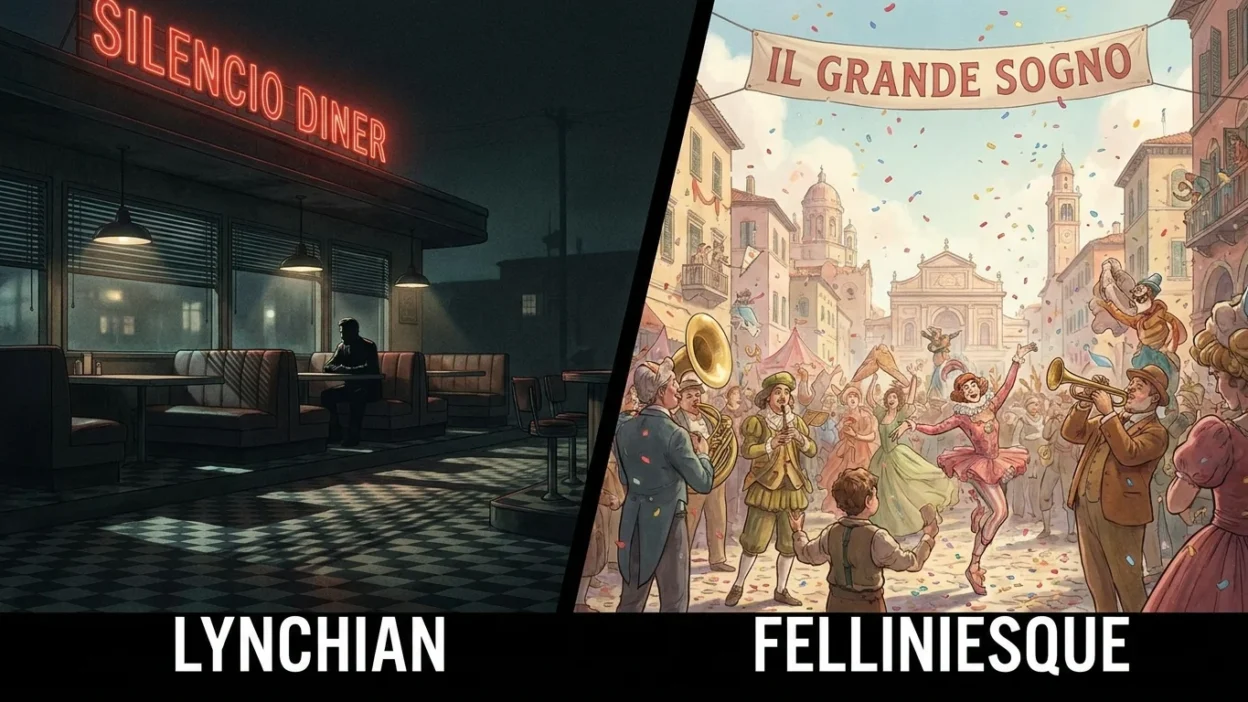
Example of a Lynchian Scene
Imagine:
- A quiet diner at midnight
- Flickering neon lights
- Strange background sounds
- A smiling character acting slightly “off”
- Sudden unexplained tension
That unsettling atmosphere is deeply Lynchian.
What Does Felliniesque Mean?
The term Felliniesque comes from Federico Fellini, famous for visually rich masterpieces like La Dolce Vita and 8½.
Felliniesque storytelling often includes:
- Dreamlike fantasy
- Circus-like imagery
- Emotional spectacle
- Nostalgia
- Beautiful chaos
- Large expressive characters
Common Felliniesque Elements
Theatrical Visuals
Scenes often feel grand, exaggerated, and visually poetic.
Emotional Surrealism
Fantasy mixes with personal memories and emotions.
Celebration of Humanity
Characters may be flawed, funny, tragic, and vibrant all at once.
Carnival Atmosphere
Many Felliniesque scenes feel playful and extravagant.
Example of a Felliniesque Scene
Imagine:
- A crowded Italian street festival
- Musicians playing loudly
- Eccentric characters dancing
- Dramatic costumes
- Emotional nostalgia and beauty
That rich visual chaos feels Felliniesque.
Lynchian vs Felliniesque: Main Difference
| Feature | Lynchian | Felliniesque |
|---|---|---|
| Mood | Dark and unsettling | Dreamy and extravagant |
| Inspiration | David Lynch | Federico Fellini |
| Tone | Psychological tension | Emotional spectacle |
| Visual Style | Minimal yet eerie | Grand and theatrical |
| Reality | Distorted and disturbing | Fantastical and poetic |
| Emotion | Anxiety and mystery | Nostalgia and wonder |
| Common Themes | Identity, fear, subconscious | Memory, humanity, fantasy |
Themes in Lynchian Storytelling
Lynchian works often explore:
- Hidden evil
- Identity confusion
- Dual personalities
- Dreams and nightmares
- Suburban darkness
- Fear beneath normal life
Many viewers describe Lynchian films as emotionally haunting rather than traditionally scary.
Themes in Felliniesque Storytelling
Felliniesque works often focus on:
- Memory and nostalgia
- Human absurdity
- Artistic imagination
- Romance and desire
- Emotional beauty
- Spectacle and fantasy
The experience often feels emotionally overwhelming in a beautiful way.
Visual Style Comparison
Lynchian Visuals
- Dark lighting
- Empty spaces
- Slow pacing
- Strange sound design
- Quiet tension
Felliniesque Visuals
- Large crowds
- Rich costumes
- Dynamic movement
- Bright visual compositions
- Dreamlike pageantry
Emotional Experience for Viewers
One major difference in Lynchian vs Felliniesque lies in emotional impact.
Lynchian Feeling
Viewers often feel:
- Uneasy
- Curious
- Disturbed
- Hypnotized
- Confused
Felliniesque Feeling
Viewers often feel:
- Amazed
- Nostalgic
- Emotional
- Inspired
- Overwhelmed by beauty
Influence on Modern Cinema
Both styles continue influencing filmmakers worldwide.
Directors Influenced by Lynch
- Denis Villeneuve
- Charlie Kaufman
- Ari Aster
Directors Influenced by Fellini
- Paolo Sorrentino
- Guillermo del Toro
- Baz Luhrmann
Common Mistakes People Make
Mistake 1: Thinking Both Terms Mean “Weird”
While both styles can feel surreal, they create very different emotional experiences.
Mistake 2: Assuming Lynchian Means Random
Lynchian storytelling often follows emotional or subconscious logic rather than traditional narrative rules.
Mistake 3: Confusing Felliniesque with Simple Fantasy
Felliniesque cinema is emotionally symbolic and deeply personal, not just visually extravagant.
American vs European Cinematic Sensibility
Lynchian Style
Often reflects American suburban anxiety and psychological tension.
Felliniesque Style
Often reflects European artistic romanticism and emotional spectacle.
This cultural difference shapes how each style feels emotionally and visually.
Related Terms and LSI Keywords
Related Keywords
- surreal cinema
- dreamlike filmmaking
- David Lynch style
- Federico Fellini style
- psychological surrealism
- cinematic symbolism
- arthouse film aesthetics
- surreal movie atmosphere
- Lynchian meaning
- Felliniesque meaning
Examples in Pop Culture
Lynchian Examples
- Twin Peaks
- Blue Velvet
- Eraserhead
Felliniesque Examples
- Amarcord
- La Dolce Vita
- 8½
FAQs
1. What does Lynchian mean?
Lynchian describes a surreal, mysterious, psychologically unsettling artistic style inspired by David Lynch.
2. What does Felliniesque mean?
Felliniesque refers to a dreamlike, extravagant, emotionally rich cinematic style inspired by Federico Fellini.
3. Are Lynchian and Felliniesque both surreal?
Yes, but they use surrealism differently. Lynchian surrealism feels disturbing, while Felliniesque surrealism feels poetic and emotional.
4. Which style is darker?
Lynchian storytelling is generally darker and more psychologically unsettling.
5. Which style is more visually extravagant?
Felliniesque cinema is usually more theatrical and visually elaborate.
6. Is Twin Peaks Lynchian?
Yes. Twin Peaks is one of the most famous examples of Lynchian storytelling.
7. Why is Fellini considered influential?
Federico Fellini transformed cinema through emotional symbolism, surreal imagery, and deeply personal storytelling.
8. Can a film be both Lynchian and Felliniesque?
Some films may contain elements of both styles, though usually one influence dominates emotionally and visually.
Final Summary
The comparison between Lynchian vs Felliniesque reveals two very different approaches to surreal and artistic filmmaking. Lynchian cinema explores mystery, subconscious fear, identity, and psychological discomfort through eerie atmospheres and fragmented reality. Felliniesque cinema embraces spectacle, emotional memory, theatrical beauty, and poetic imagination through rich visual storytelling.
Both styles have shaped modern cinema profoundly and continue inspiring filmmakers across the world. Understanding the emotional and visual differences between them can deepen your appreciation of film, symbolism, and cinematic language.
Actionable Takeaway
Next time you watch a surreal movie or television show, ask yourself:
- Does it make me feel uneasy, psychologically tense, and mysteriously disturbed? → It may be Lynchian.
- Does it feel emotionally grand, nostalgic, theatrical, and dreamlike? → It may be Felliniesque.
Recognizing these artistic styles can completely change how you experience and interpret cinema.