
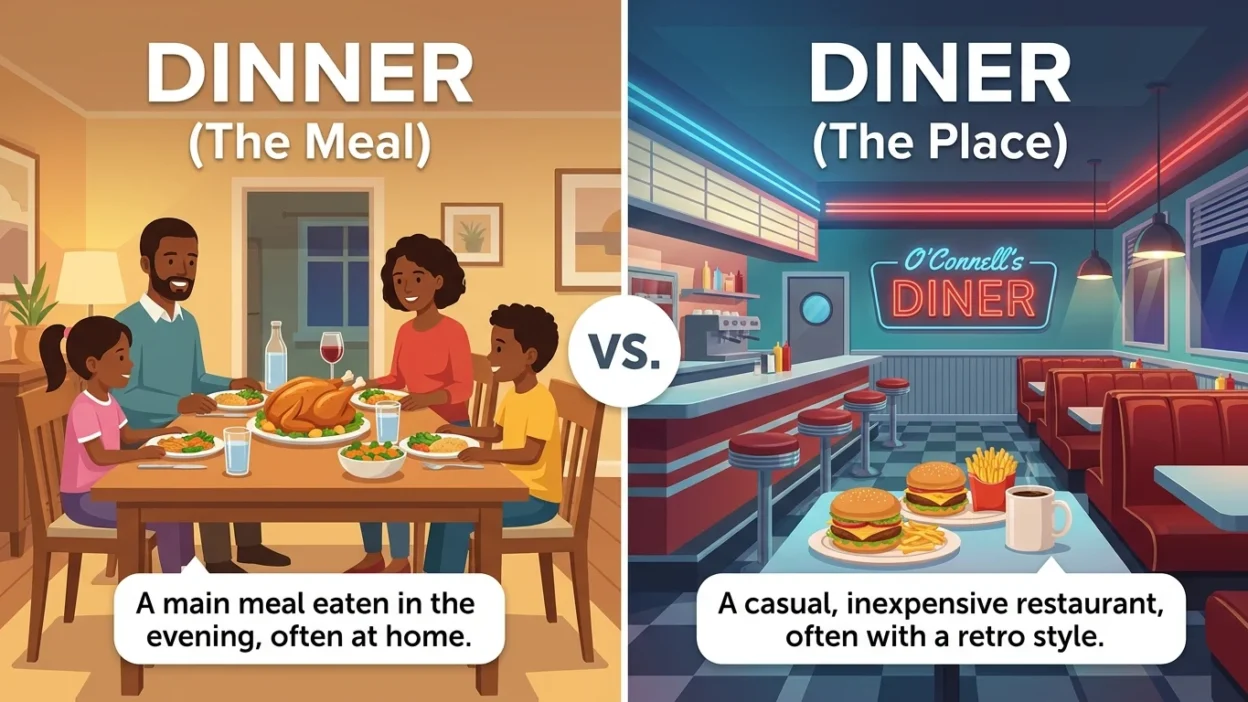
Many English learners confuse dinner vs diner because the two words look and sound very similar. However, they have completely different meanings. One refers to a meal, while the other refers to either a person eating or a type of restaurant.
This confusion is extremely common in spoken and written English. You may hear someone say “Let’s go to dinner” or “We ate at a diner,” and if you are learning English, the meanings can easily blend together. The good news is that the difference is simple once you understand the context. In this guide, you will learn the meaning of dinner and diner, examples, pronunciation, grammar tips, common mistakes, and American vs British English differences.
Quick Answer
- Dinner = a meal, usually the main meal of the day
- Diner = a person eating or a casual restaurant
Examples:
- “We had dinner at 8 PM.”
- “The diner ordered coffee and pancakes.”
- “They ate at a roadside diner.”
What Does Dinner Mean?
Dinner refers to a meal, usually eaten in the evening. In many cultures, dinner is considered the largest or most important meal of the day.
Common Uses of Dinner
- Evening meal
- Family gathering
- Formal meal
- Celebration meal
Examples of Dinner in Sentences
- “We had chicken for dinner.”
- “Dinner will be ready soon.”
- “They invited us to dinner.”
- “What are you cooking for dinner?”
What Does Diner Mean?
The word diner has two common meanings in English.
Meaning 1: A Person Who Eats
A diner can simply mean someone eating at a restaurant or meal.
Example:
- “The diners enjoyed the food.”
Meaning 2: A Casual Restaurant
In American English, a diner is also a small informal restaurant, often serving classic comfort food.
American diner is especially associated with roadside restaurants in the United States.
Examples of Diner in Sentences
- “We stopped at a diner for breakfast.”
- “The diner served burgers and milkshakes.”
- “Several diners complained about the noise.”
Dinner vs Diner Comparison Table
| Word | Meaning | Type |
|---|---|---|
| Dinner | A meal | Noun |
| Diner | A person eating or a restaurant | Noun |
Main Difference Between Dinner and Diner
The easiest way to remember the difference is:
- Dinner = food or meal
- Diner = eater or restaurant
Simple Example
- “We ate dinner at a diner.”
This sentence uses both words correctly.
Pronunciation Difference
Although similar, the pronunciation is slightly different.
| Word | Pronunciation |
|---|---|
| Dinner | DIN ner |
| Diner | DYE ner |
Pronunciation Tip
- Dinner sounds softer.
- Diner has a stronger “eye” sound.
Dinner in American vs British English
The meaning of dinner changes slightly depending on culture and region.
American English
Dinner usually means the evening meal.
Example:
- “We eat dinner around 7 PM.”
British English
Dinner may sometimes refer to:
- The evening meal
- The midday meal in schools or traditional settings
For example:
- “School dinner”
- “Sunday dinner”
What Foods Are Common for Dinner?
Dinner varies by culture, but common dinner foods include:
- Rice
- Pasta
- Meat dishes
- Vegetables
- Soup
- Bread
- Salads
Dinner is often associated with family time and relaxation after work or school.
What Is a Traditional American Diner?
An American diner is a casual restaurant style famous for:
- Booth seating
- Counter stools
- Coffee service
- Breakfast all day
- Burgers and fries
- Retro design
Classic diners became popular across the United States during the 20th century.
Common Foods in Diners
- Pancakes
- Burgers
- Sandwiches
- Milkshakes
- Eggs and bacon
- Coffee
Common Mistakes with Dinner vs Diner
Mistake 1: Using Diner Instead of Dinner
❌ “We ate diner at 6 PM.”
✅ “We ate dinner at 6 PM.”
Why?
Because dinner refers to the meal.
Mistake 2: Using Dinner Instead of Diner
❌ “We went to a dinner for burgers.”
✅ “We went to a diner for burgers.”
Why?
Because diner refers to the restaurant.
Mistake 3: Pronunciation Confusion
Many learners pronounce both words identically.
Remember:
- Dinner = DIN ner
- Diner = DYE ner
Dinner vs Supper
Some people also compare dinner with supper.
Dinner
Usually the main meal of the day.
Supper
A lighter evening meal in some regions.
In many modern conversations, dinner and supper are used interchangeably.
Easy Memory Tricks
Dinner Memory Tip
Dinner has two “n” letters like “night meal.”
Diner Memory Tip
Diner sounds like “driver” stopping at a roadside restaurant.
Simple Reminder
- Eat dinner
- Visit a diner
Examples in Everyday English
Examples Using Dinner
- “Dinner smells delicious.”
- “We had dinner together.”
- “She cooked Italian dinner.”
Examples Using Diner
- “The diner stays open all night.”
- “We stopped at a diner during our trip.”
- “The diners loved the dessert.”
Dinner vs Diner in Pop Culture
American diners often appear in movies and television because they symbolize:
- Road trips
- Nostalgia
- Small town culture
- Late night conversations
Classic diners became iconic in American culture during the 1950s and beyond.
FAQs About Dinner vs Diner
1. What is the difference between dinner and diner?
Dinner is a meal, while diner refers to a person eating or a casual restaurant.
2. Is diner a restaurant?
Yes. In American English, a diner is a small casual restaurant.
3. Can diner mean a person?
Yes. A diner can also mean someone eating at a restaurant.
4. Is dinner always eaten at night?
Usually yes, but some cultures use dinner for the main meal earlier in the day.
5. How do you pronounce diner?
Diner is pronounced “DYE ner.”
6. What foods are common in diners?
Burgers, pancakes, fries, coffee, sandwiches, and breakfast foods are common.
7. Is dinner the same as supper?
Sometimes, though regional differences exist.
8. Which word refers to food: dinner or diner?
Dinner refers to food or the meal itself.
Final Summary
Understanding dinner vs diner is easier once you know the core difference. Dinner refers to a meal, especially the evening meal, while diner refers either to a person eating or a casual restaurant commonly found in American culture. Even though the words sound similar, they belong to completely different contexts.
Learning these small vocabulary differences can improve your speaking, listening, writing, and confidence in English. With practice and real examples, you will quickly recognize which word fits naturally in conversation.
Actionable Takeaway
Before using the word, ask yourself:
- Am I talking about a meal? → Use dinner
- Am I talking about a restaurant or person eating? → Use diner
This quick check can help you avoid one of the most common English vocabulary mistakes.