Choosing between Apple vs Android is one of the biggest decisions smartphone buyers make today. Some people love the simplicity and premium feel of Apple devices, while others prefer the flexibility, customization, and variety offered by Android phones. Because both ecosystems are powerful and popular, many users feel confused about which one truly fits their needs.
The good news is that there is no single “perfect” choice for everyone. Your ideal smartphone depends on your budget, lifestyle, apps, privacy preferences, and how you use technology every day. In this guide, you will learn the key differences between Apple and Android, including performance, design, security, customization, cameras, gaming, pricing, and user experience.
Quick Answer
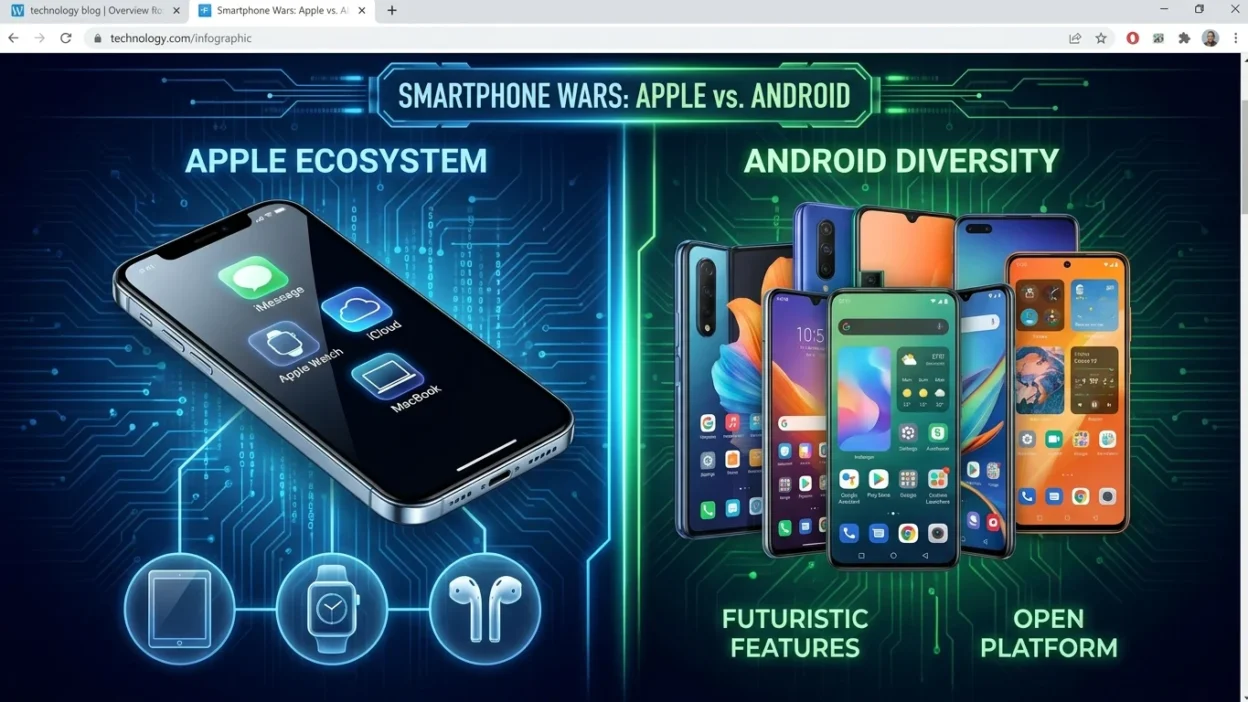
- Apple offers a smooth, premium, secure, and tightly connected ecosystem through the iPhone and other Apple devices.
- Android offers more flexibility, customization, device variety, and price options across many brands.
Simple summary:
- Apple = simplicity and ecosystem
- Android = freedom and customization
What Is Apple?
Apple Inc. creates the iPhone and its iOS operating system.
Apple focuses on:
- Premium design
- Smooth performance
- Security
- Ecosystem integration
- Long software support
Popular Apple Products
- iPhone
- iPad
- MacBook
- Apple Watch
- AirPods
Apple devices work closely together inside one ecosystem.
What Is Android?
Google developed the Android operating system.
Unlike Apple, Android is used by many smartphone brands, including:
- Samsung
- Xiaomi
- OnePlus
- Motorola
Android focuses on:
- Customization
- Flexibility
- Device variety
- Open ecosystem
- Wider pricing range
Apple vs Android Comparison Table
| Feature | Apple | Android |
|---|---|---|
| Operating System | iOS | Android OS |
| Device Variety | Limited | Huge variety |
| Customization | Limited | Extensive |
| Security | Very strong | Strong but varies |
| App Store Control | Strict | More open |
| Price Range | Mostly premium | Budget to premium |
| Software Updates | Long support | Depends on brand |
| Ecosystem | Highly integrated | Flexible ecosystem |
Design and Build Quality
Apple Design
Apple devices are known for:
- Premium materials
- Minimalist appearance
- Consistent quality
- Sleek user interface
Apple keeps a very recognizable design style.
Android Design
Android phones vary widely depending on brand.
You can find:
- Foldable phones
- Gaming phones
- Budget models
- Ultra premium devices
- Experimental designs
Android offers more variety in shapes, features, and styles.
Performance and Speed
Apple Performance
Apple designs both hardware and software together, which often creates:
- Smooth performance
- Excellent optimization
- Strong gaming capability
- Long term speed consistency
Android Performance
High end Android phones are extremely powerful too.
Performance depends on:
- Brand
- Processor
- Software optimization
Premium Android phones can compete closely with Apple in speed and gaming.
Customization Comparison
This is one of the biggest differences in Apple vs Android.
Apple Customization
Apple allows some personalization but maintains tighter control.
Users can change:
- Wallpapers
- Widgets
- Themes to a limited extent
Android Customization
Android is far more flexible.
Users can customize:
- Home screens
- App launchers
- Icons
- Themes
- System behavior
- Default apps
Android is ideal for people who enjoy personalization.
Camera Quality
Both ecosystems now offer excellent cameras.
Apple Cameras
Known for:
- Natural colors
- Consistent video quality
- Reliable photography
- Excellent social media optimization
Android Cameras
Many Android phones offer:
- Higher zoom levels
- Advanced camera modes
- More experimental features
- Strong AI photography tools
Some Android flagships outperform iPhones in certain camera areas.
Security and Privacy
Apple Security
Apple has a strong reputation for:
- Privacy protection
- Secure app ecosystem
- Long security updates
Its closed system helps reduce certain risks.
Android Security
Android security has improved greatly, but quality varies by manufacturer.
Premium Android brands now offer strong security features too.
Software Updates
Apple
Apple devices often receive updates for many years.
Older iPhones commonly stay supported longer.
Android
Update quality depends on the manufacturer.
Some brands offer excellent support, while cheaper phones may receive fewer updates.
App Experience
Apple App Store
App Store is known for:
- Strict quality control
- Better optimization
- Strong security review process
Android Google Play Store
Google Play offers:
- More flexibility
- Larger variety
- Easier app publishing
Apple vs Android for Gaming
Apple Gaming Strengths
- Powerful processors
- Excellent optimization
- Smooth graphics performance
Android Gaming Strengths
- Dedicated gaming phones
- Higher refresh rates
- Advanced cooling systems
- Hardware variety
Gaming preference often depends on specific devices rather than the entire ecosystem.
Apple vs Android for Students
Apple Benefits for Students
- Reliable performance
- Long lifespan
- Strong educational apps
- Easy ecosystem syncing
Android Benefits for Students
- Budget friendly options
- Wider hardware choices
- Expandable storage on some devices
Apple vs Android for Business Users
Apple Business Advantages
- Security
- Stable ecosystem
- Professional integration
Android Business Advantages
- Device flexibility
- More pricing options
- Enterprise customization
Common Mistakes People Make
Mistake 1: Assuming One Is Perfect
Both ecosystems have strengths and weaknesses.
Mistake 2: Choosing Based Only on Brand Popularity
Your daily needs matter more than internet arguments.
Mistake 3: Ignoring Ecosystem Compatibility
Switching ecosystems can affect apps, accessories, and device syncing.
American vs Global Smartphone Trends
Apple Popularity
Apple is especially dominant in:
- United States
- Japan
- Premium market segments
Android Popularity
Android dominates globally because of:
- Affordable devices
- Brand diversity
- Wider availability
Which One Should You Choose?
Choose Apple If You Want
- Simplicity
- Strong ecosystem integration
- Long software support
- Premium experience
- Better device syncing
Choose Android If You Want
- More customization
- Wider phone choices
- Flexible pricing
- Experimental features
- Greater control
FAQs About Apple vs Android
1. Which is better: Apple or Android?
It depends on your needs. Apple focuses on simplicity and ecosystem integration, while Android focuses on flexibility and variety.
2. Is Apple safer than Android?
Apple generally has a stronger security reputation, though premium Android phones are also highly secure.
3. Which is cheaper: Apple or Android?
Android offers far more budget friendly options.
4. Which is better for customization?
Android is much more customizable.
5. Do iPhones last longer?
iPhones often receive longer software support, which helps extend usability.
6. Which is better for gaming?
Both are excellent, though performance depends on the specific device.
7. Is Android harder to use?
Not necessarily. Modern Android phones are very user friendly.
8. Can you switch from Android to Apple easily?
Yes, though transferring apps and data may require adjustment.
Final Summary
The debate around Apple vs Android continues because both ecosystems offer excellent experiences in different ways. Apple focuses on simplicity, premium quality, security, and ecosystem integration. Android focuses on customization, flexibility, affordability, and hardware variety. Neither option is universally better for everyone.
The best smartphone ecosystem depends on your personal lifestyle, budget, work habits, and technology preferences. Understanding the strengths of each platform helps you make a smarter long term decision instead of simply following trends or marketing hype.
Actionable Takeaway
Before choosing your next smartphone, ask yourself:
- Do I value simplicity and ecosystem integration? → Choose Apple
- Do I want customization and flexibility? → Choose Android
Your ideal phone should match how you actually use technology every day.