The confusion between Mr vs Mrs is very common, especially for English learners, students, and even professionals writing formal emails or invitations. These titles may look simple, but using the wrong one can sometimes feel awkward or disrespectful in formal communication.
Understanding the difference between “Mr” and “Mrs” is important because these titles show respect and help identify a person’s gender and marital status in traditional English usage. In this guide, you will learn the meaning of Mr and Mrs, how to use them correctly, examples, pronunciation tips, common mistakes, British vs American English differences, and modern alternatives.
Quick Answer
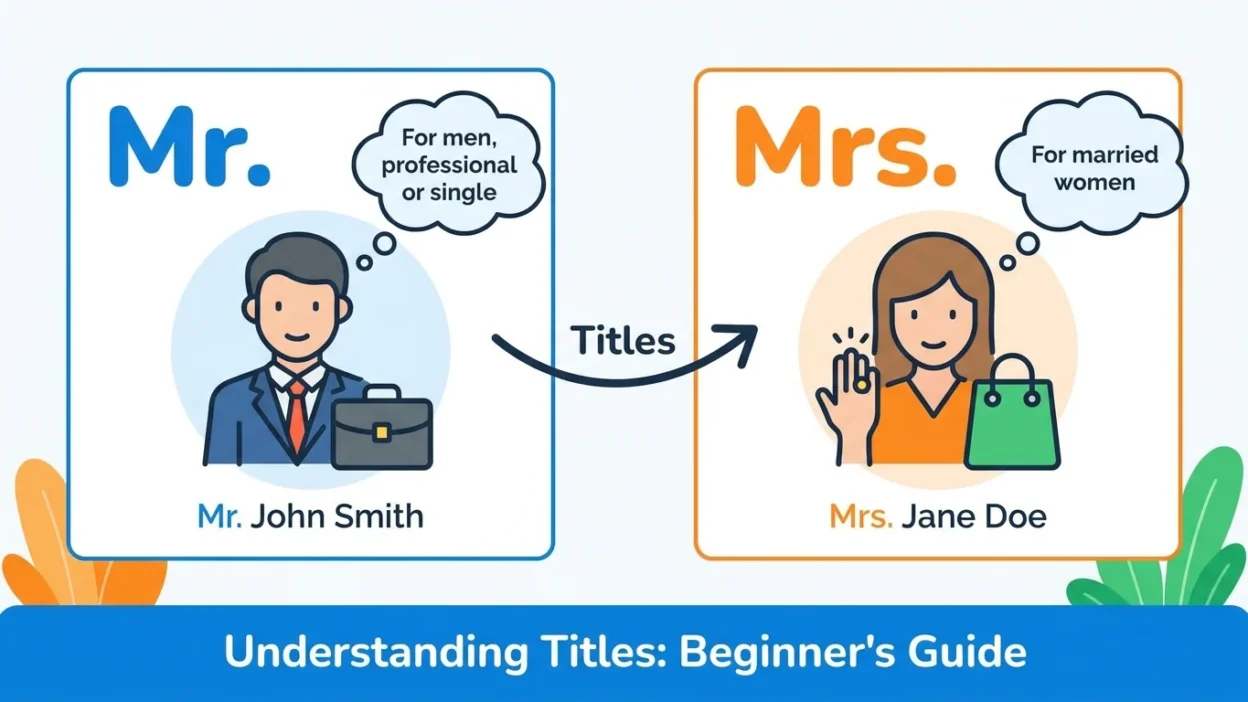
- Mr is used for men, regardless of whether they are married or unmarried.
- Mrs is used for married women.
Examples:
- “Mr Smith is our teacher.”
- “Mrs Johnson lives next door.”
So:
- Mr = male title
- Mrs = married female title
What Does Mr Mean?
Mr is a respectful title used before a man’s name.
It does not indicate whether the man is married or unmarried.
Examples of Mr
- Mr Brown
- Mr Ahmed
- Mr Wilson
Example Sentences
- “Mr Khan will arrive tomorrow.”
- “I spoke with Mr Taylor yesterday.”
- “Mr Lee works at the hospital.”
Pronunciation of Mr
“Mr” is usually pronounced:
- “Mister”
Even though it is abbreviated as “Mr,” people say the full word “Mister” while speaking.
What Does Mrs Mean?
Mrs is a title traditionally used for married women.
It is usually followed by the husband’s surname or the woman’s married surname.
Examples of Mrs
- Mrs Davis
- Mrs Wilson
- Mrs Patel
Example Sentences
- “Mrs Clark teaches mathematics.”
- “I received an email from Mrs Green.”
- “Mrs Thomas attended the meeting.”
Pronunciation of Mrs
“Mrs” is commonly pronounced:
- “Missiz”
The pronunciation differs from the spelling, which often confuses English learners.
Mr vs Mrs Comparison Table
| Title | Used For | Marital Status | Pronunciation |
|---|---|---|---|
| Mr | Men | Any status | Mister |
| Mrs | Women | Married | Missiz |
Main Difference Between Mr and Mrs
The biggest difference is gender and marital status.
Mr
- Used for men
- Marriage status does not matter
Mrs
- Used for married women
- Indicates traditional marital status
When to Use Mr
Use Mr in formal or respectful situations involving men.
Common Situations
- Emails
- Letters
- School communication
- Business conversations
- Invitations
Examples
- “Dear Mr Adams”
- “Thank you, Mr Ali.”
- “Mr Roberts will lead the presentation.”
When to Use Mrs
Use Mrs when referring respectfully to a married woman.
Common Situations
- Formal invitations
- School communication
- Business settings
- Official documents
Examples
- “Dear Mrs Carter”
- “Mrs Wilson called earlier.”
- “Please welcome Mrs Johnson.”
Common Mistakes with Mr vs Mrs
Mistake 1: Using Mrs for Unmarried Women
❌ “Mrs Emma Brown” for an unmarried woman
✅ Use “Miss” or “Ms” instead
Mistake 2: Using Mr for Women
❌ “Mr Sarah Lee”
✅ “Mrs Sarah Lee” or another appropriate title
Mistake 3: Forgetting the Period
In American English, abbreviations usually include periods:
- Mr.
- Mrs.
In British English, periods are often omitted:
- Mr
- Mrs
Mr vs Mrs vs Ms vs Miss
People often confuse these titles together.
| Title | Gender | Marital Status |
|---|---|---|
| Mr | Male | Any |
| Mrs | Female | Married |
| Miss | Female | Unmarried |
| Ms | Female | Unknown or not specified |
What Is Ms?
Ms became popular as a neutral title for women.
It does not reveal marital status.
Example
- “Ms Taylor”
Many workplaces and professional environments prefer “Ms” today because it is more neutral and modern.
British vs American English Differences
The meanings remain the same in both British and American English.
American English
Usually includes periods:
- Mr.
- Mrs.
British English
Often omits periods:
- Mr
- Mrs
Both versions are considered correct depending on regional style.
Formal vs Informal Usage
Formal Situations
Titles like Mr and Mrs are common in:
- Professional emails
- School settings
- Official letters
- Business meetings
Informal Situations
Friends and family usually use first names instead.
Example:
- Formal: “Mrs Wilson”
- Informal: “Sarah”
Cultural Importance of Titles
Titles can show:
- Respect
- Professionalism
- Social etiquette
In many cultures, using proper titles is considered polite and professional.
Pronunciation Guide
| Title | Spoken Form |
|---|---|
| Mr | Mister |
| Mrs | Missiz |
This pronunciation difference is one reason English learners sometimes struggle with these abbreviations.
Easy Memory Tricks
Remember This
- Mr = Man
- Mrs = Married woman
Simple Trick
The extra “s” in “Mrs” can remind you of spouse or शादी in concept of marriage association.
Examples in Everyday English
Using Mr
- “Mr Khan teaches science.”
- “Please speak to Mr Lewis.”
- “I met Mr Brown yesterday.”
Using Mrs
- “Mrs Taylor is very kind.”
- “I emailed Mrs Ahmed.”
- “Mrs Clark organized the event.”
FAQs About Mr vs Mrs
1. What is the difference between Mr and Mrs?
Mr is used for men, while Mrs is used for married women.
2. Does Mr show marital status?
No. Mr can be used for any adult man regardless of marriage status.
3. Is Mrs only for married women?
Traditionally, yes.
4. What is the female version of Mr?
There is no exact direct equivalent, but Mrs, Miss, and Ms are female titles.
5. How do you pronounce Mrs?
Mrs is pronounced “Missiz.”
6. Which is more modern: Mrs or Ms?
Ms is considered more modern and neutral because it does not indicate marital status.
7. Is it rude to use the wrong title?
Sometimes yes, especially in formal or professional settings.
8. Do British and American English use these titles differently?
The meaning is the same, but punctuation styles differ slightly.
Final Summary
Understanding Mr vs Mrs is important for respectful and professional English communication. Mr is a title used for men regardless of marital status, while Mrs is traditionally used for married women. These titles appear often in schools, workplaces, invitations, emails, and official documents.
Although modern English increasingly uses neutral titles like Ms, Mr and Mrs remain very common around the world. Learning the correct usage helps improve grammar, etiquette, confidence, and communication skills in both formal and everyday situations.
Actionable Takeaway
Before using a title, ask yourself:
- Is the person male? → Use Mr
- Is the woman married and prefers traditional titles? → Use Mrs
- Unsure about marital status? → Consider using Ms
Choosing the correct title shows respect, professionalism, and strong English communication skills.