If you’ve ever seen both mustache and moustache used in books, articles, or online searches, you may have wondered whether they mean different things. The answer is simple: mustache and moustache refer to the exact same facial hair style. The only difference is the spelling.
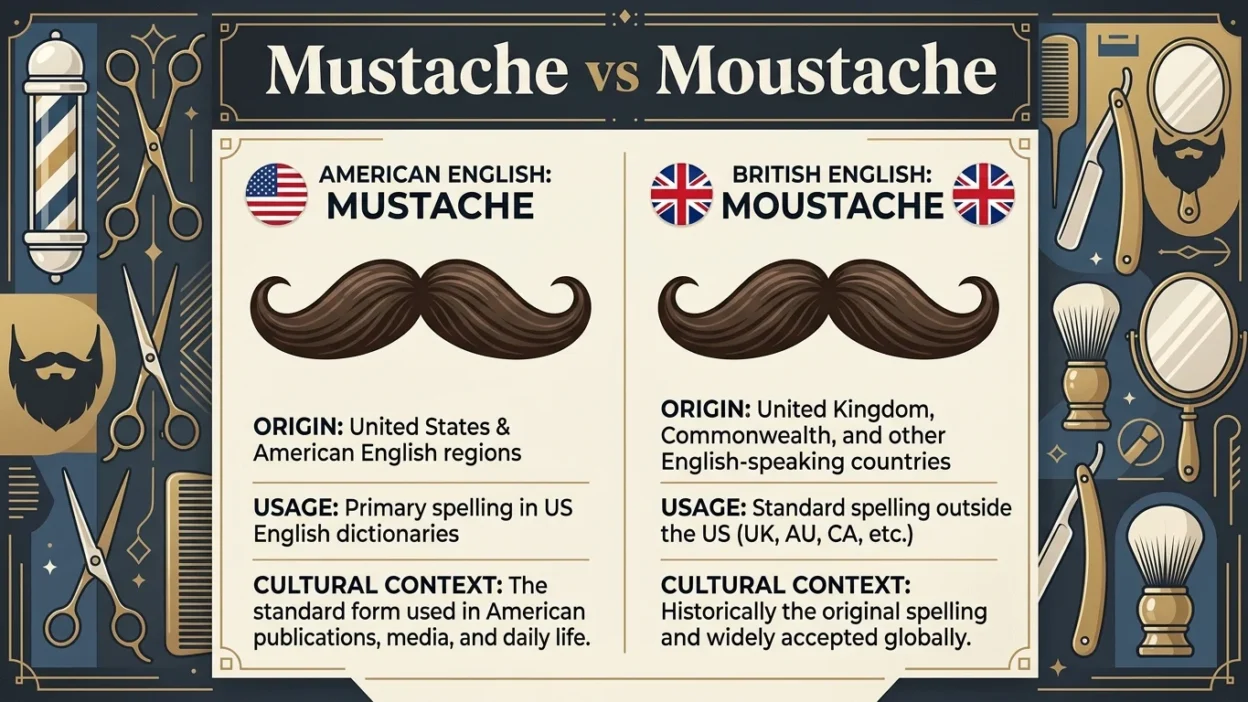
The distinction between mustache vs moustache comes down primarily to regional language preferences. While both spellings are correct, one is more common in American English and the other is more common in British English and several other English-speaking countries.
Quick Answer
- Mustache is the preferred spelling in American English.
- Moustache is the preferred spelling in British English, Canadian English, Australian English, and many other varieties of English.
- Both words mean the same thing: facial hair that grows above the upper lip.
What Does Mustache Mean?
A mustache is a strip of facial hair grown on the upper lip, often groomed, trimmed, or styled in various ways.
The term refers exclusively to upper lip hair and does not include a beard unless specifically combined with one.
Examples
- A neatly trimmed mustache.
- A thick handlebar mustache.
- A penc ilthin mustache.
- A horseshoe mustache.
What Does Moustache Mean?
A moustache has exactly the same meaning as mustache. It refers to facial hair growing above the upper lip.
The spelling simply reflects a different English-language convention.
Example Sentence
Whether you write mustache or moustache, readers will understand the same thing.
Mustache vs Moustache: Key Differences
| Feature | Mustache | Moustache |
|---|---|---|
| Meaning | Facial hair above the upper lip | Facial hair above the upper lip |
| American English | Preferred spelling | Less common |
| British English | Accepted but uncommon | Preferred spelling |
| Canadian English | Less common | More common |
| Australian English | Less common | More common |
| Pronunciation | Same | Same |
The pronunciation remains identical regardless of spelling.
Why Are There Two Spellings?
The word originated from the French word moustache.
Over time, American English simplified the spelling to mustache, following a broader trend of shortening or streamlining certain words.
Examples of similar spelling differences include:
| American English | British English |
|---|---|
| Color | Colour |
| Favor | Favour |
| Center | Centre |
| Mustache | Moustache |
This explains why both spellings continue to exist today.
Which Spelling Is More Common?
The answer depends on where you are writing.
In the United States
Mustache is overwhelmingly more common.
Examples:
- Newspapers
- Blogs
- Marketing materials
- Dictionaries
- Style guides
In the United Kingdom
Moustache is generally preferred.
Examples:
- Newspapers
- Magazines
- Educational materials
- Formal writing
In Canada and Australia
Moustache is often more common, although both spellings are understood.
Popular Types of Mustaches (or Moustaches)
Regardless of spelling, there are many famous styles.
Handlebar
Features long ends curled upward.
Chevron
A thick, full mustache covering the upper lip.
Pencil
A thin, carefully groomed line above the lip.
Horseshoe
Extends downward on both sides of the mouth.
Walrus
Large, bushy, and often extends over the upper lip.
English
Long and narrow with carefully styled ends.
Famous Mustaches in History
Many well-known figures have been recognized for their mustaches.
Mark Twain was known for his distinctive facial hair.
Salvador Dalí became famous for his dramatic, upward-pointing mustache.
Theodore Roosevelt often wore a prominent mustache during his public life.
These examples demonstrate how facial hair styles can become part of a person’s identity.
Common Mistakes People Make
Thinking They Mean Different Things
The most common misunderstanding is assuming mustache and moustache refer to different facial hair styles.
They do not.
Mixing Spellings in the Same Document
Choose one spelling and use it consistently throughout your writing.
Using the Wrong Regional Style
If writing for an American audience, mustache usually feels more natural.
If writing for a British audience, moustache is often preferred.
Assuming One Is Incorrect
Both spellings are recognized by major dictionaries and style guides.
SEO Considerations: Which Keyword Should You Use?
If you’re creating content online, audience location matters.
Use “Mustache” When Targeting:
- United States readers
- American search traffic
- U.S.-based businesses
Use “Moustache” When Targeting:
- United Kingdom readers
- Canadian audiences
- Australian audiences
- International English audiences
Many websites include both spellings naturally to capture broader search visibility.
American vs British English
This is one of the clearest examples of a regional spelling difference.
American English
Mustache
Example:
British English
Moustache
Example:
The meaning and pronunciation remain exactly the same.
Frequently Asked Questions
Is mustache the same as moustache?
Yes. Both words refer to facial hair growing above the upper lip.
Which spelling is correct?
Both are correct. The preferred spelling depends on the regional variety of English being used.
Is mustache American English?
Yes. Mustache is the standard spelling in American English.
Is moustache British English?
Yes. Moustache is the traditional spelling in British English and several other English-speaking countries.
Do they have different pronunciations?
No. Both words are pronounced the same way.
Which spelling should I use in a blog?
Use the spelling that matches your target audience. For U.S. readers, use mustache. For UK readers, use moustache.
Is one spelling more formal?
No. Neither spelling is inherently more formal than the other.
Can I use both spellings in the same article?
You can, but consistency is usually recommended unless you’re specifically discussing the spelling difference.
Summary
The debate over mustache vs moustache is really a matter of regional spelling preference rather than meaning. Both words describe the same type of facial hair that grows above the upper lip. The American English spelling is mustache, while moustache is preferred in British English and many other English-speaking regions.
Since both spellings are widely accepted, the best choice depends on your audience. Use mustache when writing for American readers and moustache when writing for British or international audiences that follow British spelling conventions.
Actionable Takeaway
Remember this simple rule: Mustache = American English, Moustache = British English. The meaning stays the same, so choose the spelling that best matches your audience and remain consistent throughout your writing.