
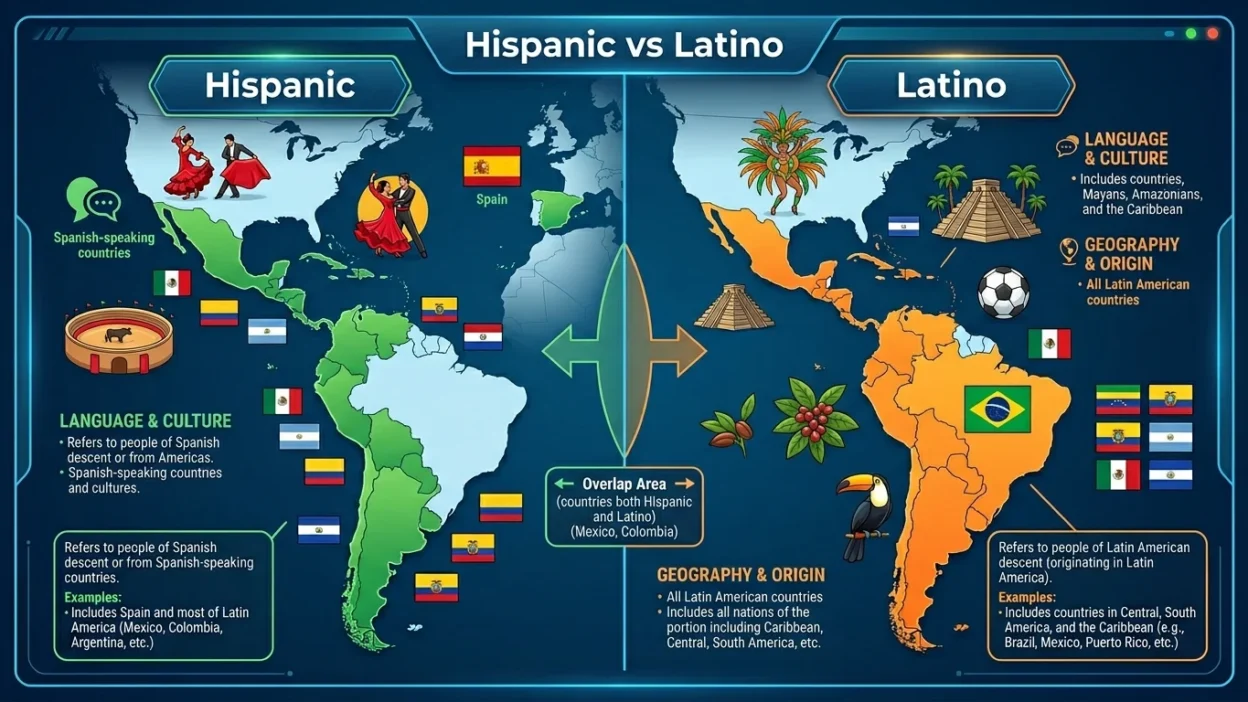
The terms Hispanic and Latino are often used interchangeably in conversations, media, and official documents. However, they do not mean the same thing. Understanding Hispanic vs Latino is important because these terms describe different aspects of identity, including language, culture, and geographic origin.
While many people identify as both Hispanic and Latino, others identify with only one of these terms or neither. Learning the distinction can help you communicate respectfully and accurately when discussing ethnicity, culture, and heritage.
Quick Answer
- Hispanic refers to people from or descended from Spanish-speaking countries.
- Latino refers to people from or descended from Latin American countries.
Simple Example
- A person from Mexico is generally both Hispanic and Latino.
- A person from Spain is Hispanic but not Latino.
- A person from Brazil is Latino but generally not Hispanic because Portuguese, not Spanish, is the primary language.
What Does Hispanic Mean?
Hispanic is a term connected primarily to the Spanish language and countries where Spanish is the dominant language.
People considered Hispanic typically have origins in:
- Mexico
- Argentina
- Colombia
- Peru
- Chile
- Spain
- Most Spanish-speaking countries in Central and South America
Examples of Hispanic People
Someone whose family comes from:
- Spain
- Mexico
- Colombia
would generally be considered Hispanic.
Key Point
Hispanic is primarily a language-based and cultural designation, not a race.
What Does Latino Mean?
Latino refers to people who come from or have ancestry in Latin America.
Latin America includes countries in:
- North America
- Central America
- South America
- The Caribbean
where languages derived from Latin (Spanish, Portuguese, and French) have historically been spoken.
Examples of Latino People
Someone whose heritage comes from:
- Mexico
- Brazil
- Argentina
- Chile
would generally be considered Latino.
Key Point
Latino is primarily a geographic and cultural designation.
Hispanic vs Latino: Key Differences
| Feature | Hispanic | Latino |
|---|---|---|
| Based On | Spanish language | Latin American geography |
| Includes Spain | Yes | No |
| Includes Brazil | Generally No | Yes |
| Focus | Language and heritage | Geographic origin |
| Refers to Race? | No | No |
| Can Someone Be Both? | Yes | Yes |
The biggest difference is that Hispanic relates to Spanish-speaking heritage, while Latino relates to origins in Latin America.
Who Is Both Hispanic and Latino?
Many people fit into both categories.
Examples include individuals with roots in:
- Mexico
- Colombia
- Peru
- Argentina
These countries are located in Latin America and primarily speak Spanish.
Therefore, many people from these nations are both Hispanic and Latino.
Who Is Hispanic but Not Latino?
The most common example is someone from:
- Spain
Spain is a Spanish-speaking country, making its people Hispanic.
However, Spain is located in Europe, not Latin America, so Spaniards are generally not considered Latino.
Who Is Latino but Not Hispanic?
The most common example is someone from:
- Brazil
Brazil is part of Latin America, making Brazilians Latino.
However, Portuguese not Spanish is the official language, so Brazilians are generally not classified as Hispanic.
What About Latino, Latina, and Latinx?
Latino
Traditionally refers to males or mixed-gender groups.
Latina
Traditionally refers to females.
Latinx
A gender neutral term that emerged in recent years.
Latine
Another gender inclusive term that some people prefer because it aligns more naturally with Spanish pronunciation.
Preferences vary widely among individuals and communities, so it is often best to use the term a person prefers for themselves.
Why These Terms Can Be Complicated
Identity is personal and complex.
Some people identify as:
- Hispanic
- Latino
- Both Hispanic and Latino
- Nationality specific (Mexican, Colombian, Cuban, etc.)
- Indigenous
- Afro Latino
- Other cultural identities
Not everyone uses the same labels, and personal preference matters.
Common Mistakes People Make
Assuming Hispanic and Latino Mean the Same Thing
Although they overlap, they are not identical.
Treating Them as Racial Categories
Neither Hispanic nor Latino is a race.
People who identify as Hispanic or Latino can belong to any racial background.
Assuming Everyone Uses These Labels
Some individuals prefer identifying by their nationality or cultural heritage rather than broader terms.
Forgetting About Brazil
Brazil is often overlooked in discussions about Latino identity.
Brazilians are generally considered Latino but not Hispanic.
Including Spain as Latino
Spain is Hispanic but not Latino because it is located in Europe.
Examples to Remember
| Country | Hispanic | Latino |
|---|---|---|
| Mexico | Yes | Yes |
| Colombia | Yes | Yes |
| Argentina | Yes | Yes |
| Peru | Yes | Yes |
| Spain | Yes | No |
| Brazil | No (generally) | Yes |
| Portugal | No | No |
| France | No | No |
When Should You Use Hispanic?
Use Hispanic when discussing:
- Spanish-speaking heritage
- Spanish-language communities
- Cultural connections to Spain or Spanish-speaking countries
When Should You Use Latino?
Use Latino when discussing:
- Latin American heritage
- Geographic origins in Latin America
- Communities connected to Latin American cultures
American vs British English
The terms Hispanic and Latino are used far more frequently in the United States than in the United Kingdom.
In American English:
- Hispanic and Latino are commonly used in demographics, government surveys, education, and media.
In British English:
- People are more often identified by nationality, ethnicity, or country of origin rather than the Hispanic/Latino distinction.
The meanings remain the same, but the frequency of use differs.
Frequently Asked Questions
Is Hispanic the same as Latino?
No. Hispanic relates to Spanish-speaking heritage, while Latino relates to Latin American origins.
Can someone be both Hispanic and Latino?
Yes. Many people from Spanish-speaking Latin American countries are both.
Are Brazilians Hispanic?
Generally, no. Brazil’s primary language is Portuguese.
Are Brazilians Latino?
Yes. Brazil is part of Latin America.
Are Spaniards Latino?
No. Spain is located in Europe.
Are Spaniards Hispanic?
Yes. Spain is a Spanish-speaking country.
Is Hispanic a race?
No. Hispanic is an ethnic or cultural designation, not a racial category.
Which term should I use?
When possible, use the term an individual prefers. If unsure, asking respectfully is often the best approach.
Summary
Understanding Hispanic vs Latino comes down to recognizing the difference between language and geography. Hispanic generally refers to people connected to Spanish speaking cultures and countries, while Latino refers to people with origins in Latin America. Because many Latin American countries also speak Spanish, there is significant overlap between the two terms.
However, important exceptions exist. People from Spain are generally Hispanic but not Latino, while people from Brazil are generally Latino but not Hispanic. Since identity is personal, it’s always helpful to respect individual preferences and remember that these broad categories do not define everyone’s experience.
Actionable Takeaway
When discussing heritage or identity, remember this simple rule: Hispanic = Spanish speaking heritage; Latino = Latin American origin. If you’re unsure how someone identifies, respectfully ask rather than assume.