Have you ever paused mid-sentence and wondered whether to write “afterward” or “afterwards”? The extra “s” might seem small, but it often raises a big question about correctness.
The good news? Both forms are correct. The choice simply depends on whether you’re using American or British English and your writing style.
In this guide, we’ll break down afterward vs afterwards, explain the difference, provide examples, highlight common mistakes, and help you choose the right one with confidence.
Quick Answer
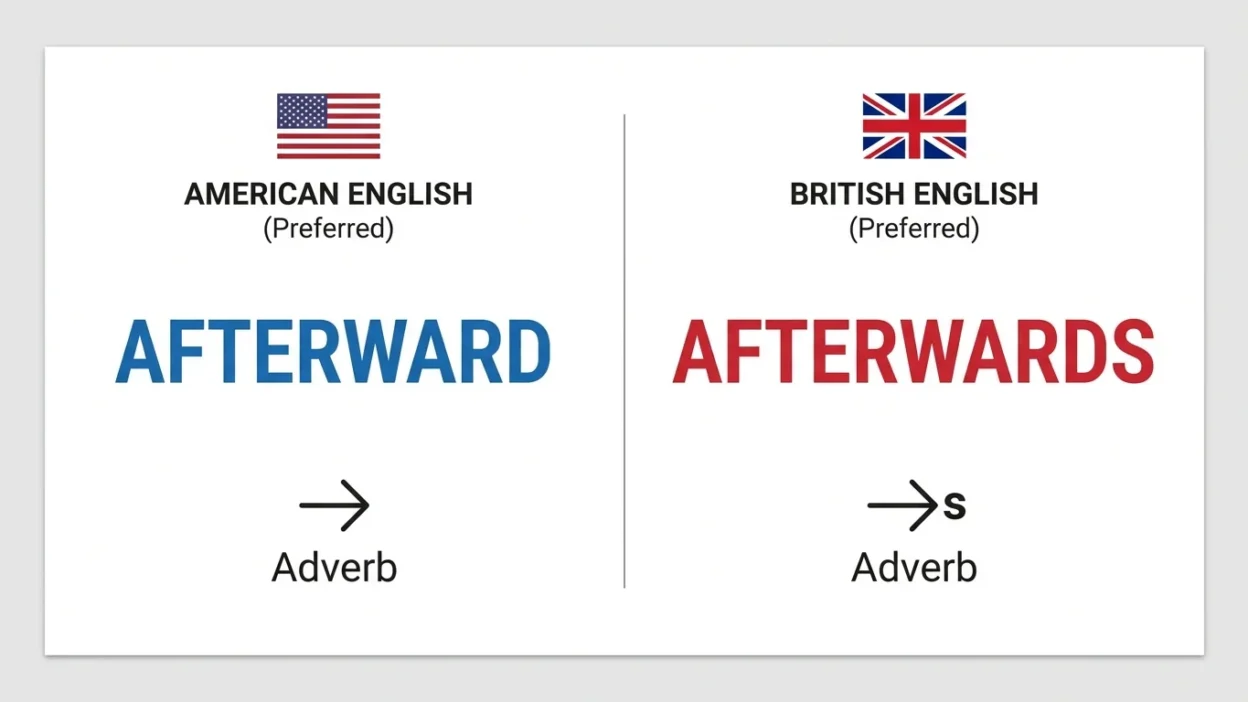
- 🇺🇸 Afterward = American English
- 🇬🇧 Afterwards = British English
👉 Simple rule:
Both are correct just match your audience and stay consistent.
What Do “Afterward” and “Afterwards” Mean?
Both afterward and afterwards are adverbs that mean at a later time or after something has happened.
Common Meanings
- Later
- After that
- Following an event
Example Sentences
- We went out for dinner and talked afterward. (American)
- We went out for dinner and talked afterwards. (British)
- She finished her work and relaxed afterward/afterwards.
👉 Meaning is identical only spelling differs.
Afterward vs Afterwards: Key Differences
The only difference is regional spelling preference.
Comparison Table: Afterward vs Afterwards
| Feature | Afterward 🇺🇸 | Afterwards 🇬🇧 |
|---|---|---|
| Region | American English | British English |
| Spelling Style | No “s” | Ends with “s” |
| Meaning | Same | Same |
| Usage | U.S., global content | UK, Commonwealth countries |
Why Do These Forms Exist?
This difference comes from a broader pattern in English.
Common Pattern
Some adverbs have two forms:
- American English → without -s
- British English → with -s
Similar Examples
- Forward / forwards
- Toward / towards
- Backward / backwards
👉 Both versions are correct, just region specific.
When Should You Use “Afterward”?
Use afterward if you are writing in American English or for an international audience.
Best Situations
- Blogs and online content
- Business or marketing writing
- U.S.-based readers
Examples
- “We’ll discuss it afterward.”
- “She called me afterward.”
👉 Think of afterward as the American default.
When Should You Use “Afterwards”?
Use afterwards if you are writing in British English or for a UK audience.
Best Situations
- UK-based writing
- Academic or regional publications
- British English style guides
Examples
- “They went home afterwards.”
- “We spoke about it afterwards.”
👉 Think of afterwards as the British preference.
Common Mistakes to Avoid
1. Mixing Both Forms
❌ We talked afterward and met again afterwards
✔ Choose one and stay consistent
2. Thinking One Is Wrong
Both are correct—there is no “incorrect” option here.
3. Ignoring Audience
Always consider who you’re writing for.
Helpful Tip to Remember
👉 Afterward = American English (no “s”)
👉 Afterwards = British English (with “s”)
Memory trick:
- US → shorter (afterward)
- UK → longer (afterwards)
More Examples in Context
Afterward (American English)
- “He apologized afterward.”
- “We met again afterward.”
Afterwards (British English)
- “She explained everything afterwards.”
- “They laughed about it afterwards.”
Synonyms and Related Words
To vary your writing, you can also use:
- Later
- Then
- Subsequently
- Following that
- Eventually
👉 These work in all types of English.
American vs British English Note
- Both afterward and afterwards are correct
- No difference in meaning or pronunciation
- Only spelling varies by region
👉 Consistency matters more than choice.
FAQs
1. Which is correct: afterward or afterwards?
Both are correct depends on American or British English.
2. Which is more common globally?
Afterward is often more common in global digital content.
3. Is “afterwards” wrong in American English?
No, but it’s less commonly used.
4. Can I use both in the same article?
It’s best to stick to one style.
5. Do they have different meanings?
No, the meaning is exactly the same.
6. Are there similar word pairs?
Yes like toward/towards and forward/forwards.
7. Which should I use for SEO?
Use the version your audience is searching for.
Summary
Understanding afterward vs afterwards is simple: both words mean the same thing at a later time but differ in spelling based on region. Afterward is preferred in American English, while afterwards is more common in British English.
Choosing the right version depends on your audience and writing style. The most important thing is to stay consistent throughout your content.
Actionable Takeaway
Next time you write, remember:
👉 Afterward = American English
👉 Afterwards = British English
Pick one style and stick with it to keep your writing clear, consistent, and professional.