Have you ever paused while writing and wondered whether to use “licensed” or “licenced”? It’s a common confusion and the answer depends on where (and how) you’re writing.
In this guide, we’ll break down licensed vs licenced, explain the differences, show clear examples, highlight common mistakes, and help you choose the right form with confidence.
Quick Answer
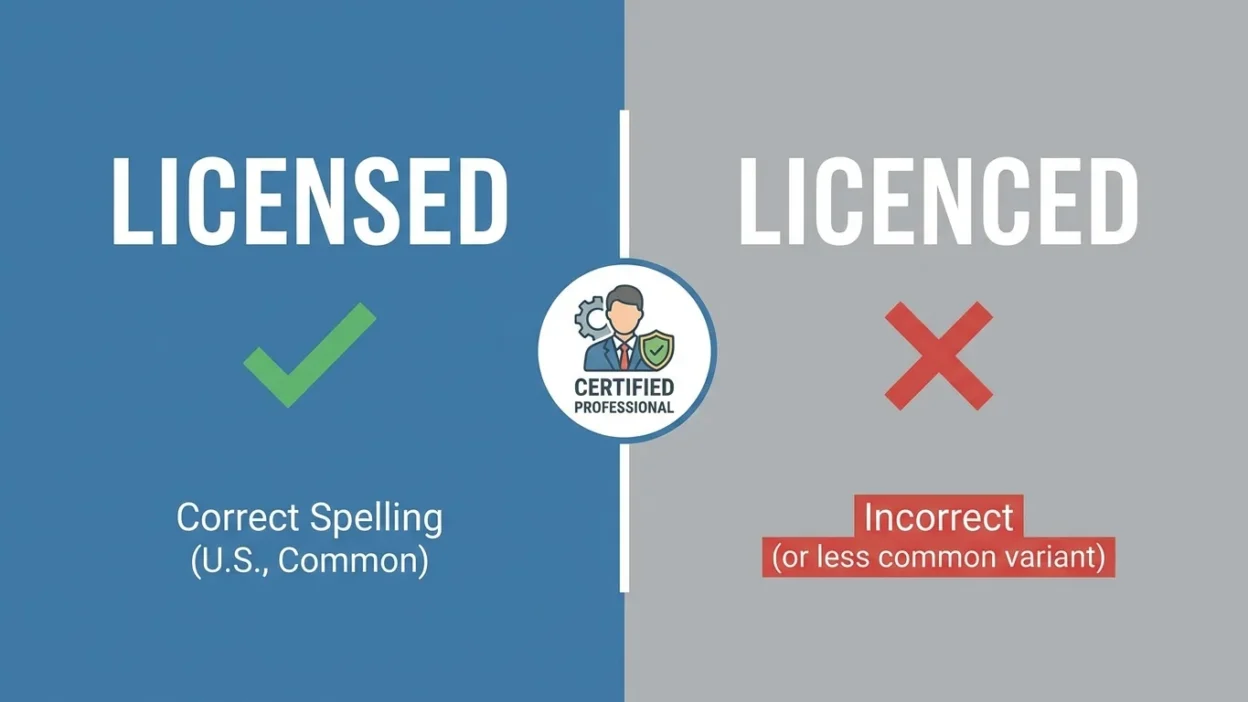
- 🇺🇸 Licensed = correct in American English (verb + adjective)
- 🇬🇧 Licensed / Licenced = both used in British English, but with different roles
👉 Simple rule:
- American English → always licensed
- British English →
- Licence (noun)
- License / Licensed / Licensing (verb forms)
What Does “Licensed” Mean?
Licensed is the past tense and past participle of the verb license, meaning to give official permission or authorization.
Common Meanings
- Officially permitted
- Certified or approved
- Authorized by law
Example Sentences
- She is a licensed doctor.
- The company is licensed to operate.
- He was licensed to drive last year.
👉 Usage: Standard in American English and also used in British English (as a verb form)
What Does “Licenced” Mean?
Licenced is a less common spelling used in British English—but it is often considered incorrect or outdated in modern usage.
Important Note
In modern British English, the correct forms are:
- Licence = noun
- License / Licensed / Licensing = verb forms
👉 So, “licenced” is generally avoided, even in British English.
Example (Incorrect or outdated)
- ❌ He was licenced to drive
✔ Correct version:
- He was licensed to drive
Licensed vs Licenced: Key Differences
Comparison Table: Licensed vs Licenced
| Feature | Licensed | Licenced |
|---|---|---|
| Correctness | ✔ Correct | ✖ Generally incorrect/outdated |
| Usage | US + UK (verb/adjective) | Rare, nonstandard |
| Meaning | Authorized or permitted | Same idea (but incorrect form) |
| Recommendation | Always use | Avoid |
Why the Confusion Happens
The confusion comes from British spelling patterns.
Key Pattern
In British English:
- Licence (noun) → permission
- License (verb) → to permit
But when adding endings:
- license → licensed ✔
Not: - licence → licenced ❌
👉 The verb always keeps the “s” spelling, even in British English.
When Should You Use “Licensed”?
Use licensed in all contexts American or British English when referring to permission or certification.
Best Situations
- Professional qualifications
- Legal permissions
- Certifications
Examples
- “She is a licensed nurse.”
- “The business is licensed by the government.”
- “He became a licensed driver.”
👉 Think of licensed as the safe, correct choice.
Common Mistakes to Avoid
1. Writing “Licenced” Instead of “Licensed”
❌ He is a licenced driver
✔ He is a licensed driver
👉 Always use licensed
2. Mixing Noun and Verb Forms (British English)
❌ I have a driving license (verb form confusion)
✔ I have a driving licence (noun)
✔ I am licensed to drive (verb)
3. Overthinking Regional Rules
Even in British English, licensed is correct for verb forms.
Helpful Tip to Remember
👉 License (verb) → Licensed (always with “s”)
Memory trick:
- S = action (verb stays with “s”)
- C = noun (licence)
More Examples in Context
- “The shop is fully licensed.”
- “He is a licensed electrician.”
- “They are licensed to sell alcohol.”
Synonyms and Related Words
To improve your writing, you can also use:
- Authorized
- Certified
- Approved
- Registered
- Permitted
👉 These work in all English varieties.
Licensed vs Licenced in American and British English
- American English → only licensed
- British English →
- Licence (noun)
- Licensed (verb/adjective)
- Licenced → generally incorrect or outdated
👉 One safe choice worldwide: licensed
FAQs
1. Is “licenced” ever correct?
It is considered outdated or incorrect in modern standard English.
2. What is the correct spelling?
Licensed is the correct form.
3. What is the British English rule?
Licence (noun) and license/licensed (verb forms).
4. Can I use “licensed” in the UK?
Yes, it is correct for verb and adjective forms.
5. Why is this confusing?
Because British English uses different spellings for noun and verb forms.
6. Is “licensed” formal?
Yes, it is appropriate in both formal and informal writing.
7. What’s the safest option?
Always use licensed for verb/adjective usage.
Summary
When comparing licensed vs licenced, the correct and modern spelling is licensed. It is used in both American and British English as the verb and adjective form of license. The form licenced is generally considered incorrect or outdated and should be avoided.
Understanding this small difference helps you write more accurately and professionally, especially in formal or legal contexts.
Actionable Takeaway
Next time you write, remember:
👉 Licensed = correct (use everywhere)
👉 Licenced = avoid
Keep it simple stick with licensed for clear, correct, and professional writing.