Have you ever typed “make due” and felt unsure if it looked right? You’re not alone. This is a very common confusion in English because both phrases sound exactly the same but only one is actually correct.
In this guide, we’ll break down make do vs make due, explain the correct usage, show examples, highlight common mistakes, and help you use the right phrase with confidence every time.
Quick Answer
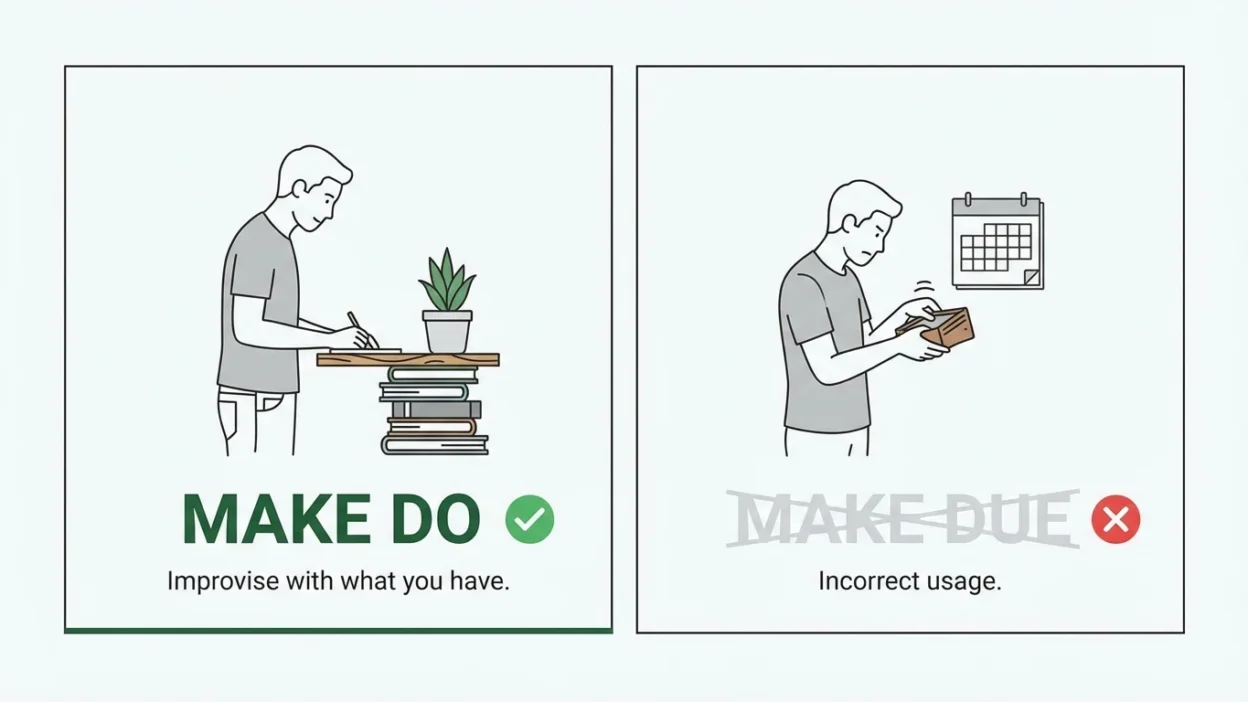
- ✅ Make do = manage with what you have
- ❌ Make due = incorrect (common misspelling)
👉 Simple rule:
Always use make do when you mean managing or coping with limited resources.
What Does “Make Do” Mean?
Make do is a verb phrase that means to manage, cope, or get by with what is available especially when something better is not available.
Common Meanings
- Managing with limited resources
- Accepting a temporary solution
- Coping in a difficult situation
Example Sentences
- We didn’t have enough chairs, so we had to make do.
- She forgot her charger and had to make do without it.
- They made do with what they had.
👉 Tone: Practical, everyday, widely used
Why “Make Due” Is Incorrect
The phrase “make due” is a common mistake caused by confusion with the word “due” (which means owed or expected).
Why the Confusion Happens
- “Do” and “due” sound identical
- People assume “due” fits because it’s a familiar word
Correct Understanding
- Do = verb meaning to perform or manage
- Due = adjective meaning owed or expected
👉 “Make due” does not make grammatical sense in standard English.
Make Do vs Make Due: Key Differences
Comparison Table: Make Do vs Make Due
| Feature | Make Do | Make Due |
|---|---|---|
| Correctness | ✔ Correct | ✖ Incorrect |
| Meaning | Manage with what you have | No valid meaning |
| Usage | Standard English | Misspelling |
| Example | Make do with less | ❌ Make due with less |
When Should You Use “Make Do”?
Use make do whenever you’re talking about coping or managing with limited options.
Best Situations for “Make Do”
- Lack of resources
- Temporary solutions
- Everyday challenges
Examples
- “We’ll have to make do for now.”
- “He made do with an old phone.”
- “They are making do until things improve.”
👉 Think of make do as “manage somehow.”
Common Mistakes to Avoid
1. Writing “Make Due” Instead of “Make Do”
❌ We had to make due
✔ We had to make do
👉 Always use do, not due
2. Overthinking the Phrase
“Make do” is simple don’t try to complicate it.
3. Confusing with “Due”
Remember:
- “Due date” ✔
- “Payment is due” ✔
- “Make due” ❌
Helpful Tip to Remember
👉 Make do = do what you can
Memory trick:
- “Do” = action → makes sense
- “Due” = timing/owed → doesn’t fit
More Examples in Context
- “We didn’t have enough ingredients, so we had to make do.”
- “She’s making do with limited resources.”
- “They made do during tough times.”
Synonyms and Related Phrases
To improve your writing, you can also use:
- Get by
- Manage
- Cope
- Get through
- Make the best of it
👉 These can add variety while keeping your meaning clear.
Make Do vs Make Due in American and British English
- Make do is correct in both American and British English
- Make due is incorrect in all standard English varieties
👉 No regional differences only one correct form exists.
FAQs
1. Is “make due” ever correct?
No, it is always incorrect in standard English.
2. What does “make do” mean?
It means to manage or cope with what you have.
3. Why do people say “make due”?
Because “do” and “due” sound the same, leading to confusion.
4. Can I use “make do” in formal writing?
Yes, it is acceptable in both formal and informal contexts.
5. What is another way to say “make do”?
You can say “manage,” “cope,” or “get by.”
6. Is “make do” a phrasal verb?
Yes, it functions as a verb phrase.
7. How can I remember the correct version?
Think: “Do what you can” → make do
Summary
When comparing make do vs make due, the correct phrase is always make do. It means managing with what you have, especially in less than ideal situations. The version make due is a common misspelling and should be avoided in all writing.
Understanding this simple difference helps you avoid a very common mistake and makes your writing clearer and more professional.
Actionable Takeaway
Next time you write, remember:
👉 Make do = correct (manage with what you have)
👉 Make due = incorrect
Keep it simple: if you mean coping or managing, always choose make do.