Have you ever seen “yea” and “nay” used in a sentence and wondered what they mean? These words may sound old-fashioned, but they still appear in formal contexts and they’re often confused with “yeah” and “no.”
In this simple guide, we’ll break down yea vs nay, explain their meanings, show examples, highlight common mistakes, and help you use them correctly with confidence.
Quick Answer
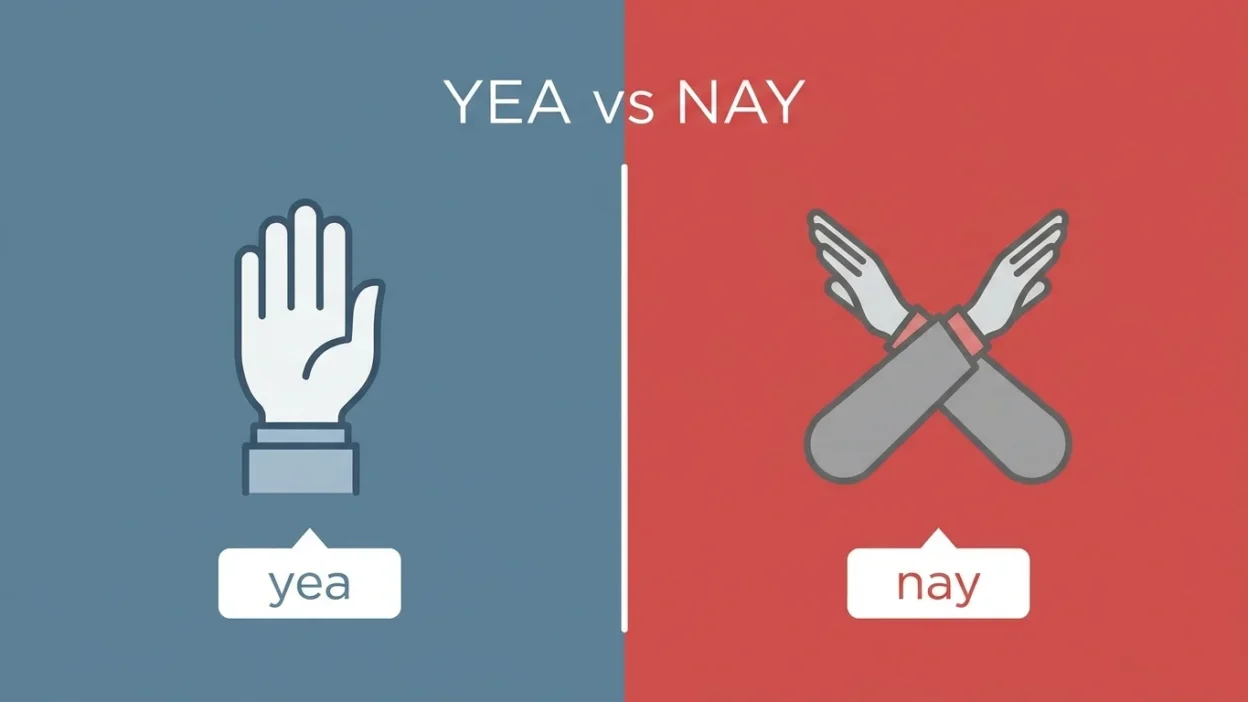
- ✅ Yea = yes (formal or archaic use)
- ❌ Nay = no (formal or archaic use)
👉 Simple rule:
- Agreement → yea
- Disagreement → nay
What Does “Yea” Mean?
Yea is an old-fashioned or formal word meaning yes. It’s mainly used in voting, official decisions, or historical language.
Common Uses of “Yea”
- Formal voting (e.g., parliament)
- Historical or literary writing
- Emphasis in older-style language
Example Sentences
- All those in favor say yea.
- The committee voted yea on the proposal.
- Yea, though I walk through the valley… (literary tone)
👉 Tone: Formal, traditional, sometimes archaic
What Does “Nay” Mean?
Nay is the opposite of yea and means no. It is also used in formal or old-fashioned contexts.
Common Uses of “Nay”
- Formal voting or decisions
- Historical or dramatic writing
- Strong or emphatic refusal
Example Sentences
- The vote was three yeas and two nays.
- He answered with a firm nay.
- Nay, I refuse to accept that.
👉 Tone: Formal, traditional, often emphatic
Yea vs Nay: Key Differences
These two words are direct opposites.
Comparison Table: Yea vs Nay
| Feature | Yea | Nay |
|---|---|---|
| Meaning | Yes | No |
| Tone | Formal/archaic | Formal/archaic |
| Usage Context | Voting, literature | Voting, literature |
| Example | Vote yea | Vote nay |
When Should You Use “Yea”?
Use yea in formal or ceremonial situations, especially voting.
Best Situations for “Yea”
- Official votes
- Formal speeches
- Historical or literary writing
Examples
- “All in favor say yea.”
- “The motion passed with ten yeas.”
👉 Think of yea as formal yes.
When Should You Use “Nay”?
Use nay in formal or dramatic contexts to express disagreement or refusal.
Best Situations for “Nay”
- Voting contexts
- Formal debate
- Dramatic or literary tone
Examples
- “All opposed say nay.”
- “She replied with a clear nay.”
👉 Think of nay as formal no.
Common Mistakes to Avoid
1. Confusing “Yea” with “Yeah”
❌ Yea, I agree (casual tone)
✔ Yeah, I agree (informal)
✔ Yea (formal context only)
👉 Yea ≠ Yeah
2. Using “Yea” and “Nay” in Casual Conversation
❌ Wanna go? Yea
✔ Wanna go? Yeah
👉 These words are not used in everyday speech.
3. Misusing Tone
Using yea/nay casually can sound unnatural or overly dramatic.
Helpful Tip to Remember
👉 Yea = yes (formal)
👉 Nay = no (formal)
Memory trick:
- Yea → sounds like “yay” (positive)
- Nay → sounds like “no way” (negative)
More Examples in Context
Yea
- “The board responded with a unanimous yea.”
- “He cast his vote as yea.”
Nay
- “The opposition responded with a strong nay.”
- “They voted nay on the proposal.”
Synonyms and Related Words
For Yea
- Yes
- Affirmative
- Agreed
For Nay
- No
- Negative
- Refusal
👉 These are more common in modern usage.
Yea vs Nay in American and British English
- Both words are used similarly in American and British English
- Common in formal settings like government or legal contexts
- Rare in everyday speech in both regions
👉 Their usage depends on formality, not location.
FAQs
1. Are yea and nay still used today?
Yes, but mostly in formal voting or historical contexts.
2. Is “yea” the same as “yeah”?
No. Yea is formal, while yeah is informal.
3. What is the opposite of yea?
The opposite of yea is nay.
4. Can I use yea in everyday conversation?
It’s better to use yes or yeah instead.
5. Where are yea and nay commonly used?
In voting, legal proceedings, and formal discussions.
6. Do they have modern equivalents?
Yes—yes (yea) and no (nay).
7. Why do they sound old fashioned?
Because they come from older forms of English still used in formal traditions.
Summary
Understanding yea vs nay is straightforward they are formal or old fashioned words meaning yes and no. While they are still used in official settings like voting or legal proceedings, they are not common in everyday conversation.
Using them correctly helps maintain the right tone. In most modern writing, you’ll prefer yes and no, but yea and nay still have their place in formal contexts.
Actionable Takeaway
Next time you write, remember:
👉 Yea = formal yes
👉 Nay = formal no
Use them only when the tone calls for formality otherwise, stick with simple, modern language.