Have you ever hesitated between “unresponsive” and “nonresponsive” while writing? Both words seem to mean the same thing—someone or something not reacting but the choice between them can affect tone, clarity, and professionalism.
In this guide, we’ll break down unresponsive vs nonresponsive in a clear, human friendly way. You’ll learn what each word means, when to use them, examples, common mistakes, and simple tips to choose the right word every time.
Quick Answer
- ✅ Unresponsive = not reacting or replying (common, everyday use)
- ✅ Nonresponsive = not responding (more formal, technical, or clinical use)
👉 Simple rule:
- General situations → unresponsive
- Medical, technical, or formal contexts → nonresponsive
What Does “Unresponsive” Mean?
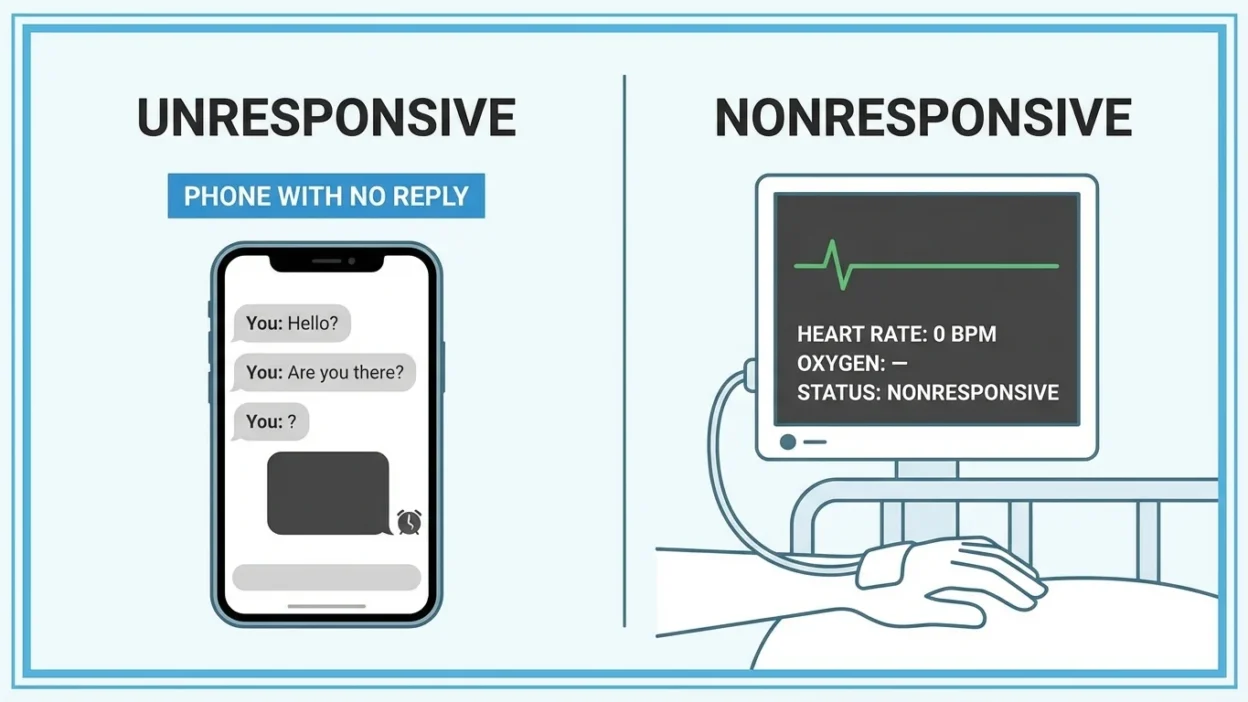
Unresponsive is an adjective that describes someone or something that does not react, reply, or respond—often in everyday situations.
Common Uses of “Unresponsive”
- Communication (emails, messages)
- Behavior or reactions
- Technology (apps, devices)
Example Sentences
- He has been unresponsive to my emails.
- The app became unresponsive suddenly.
- She seemed unresponsive during the conversation.
👉 Tone: Natural, conversational, widely used
What Does “Nonresponsive” Mean?
Nonresponsive also means not responding, but it is more commonly used in formal, medical, or technical contexts.
Common Uses of “Nonresponsive”
- Medical situations (patients)
- Scientific or technical reports
- Formal documentation
Example Sentences
- The patient was nonresponsive upon arrival.
- The system remained nonresponsive during testing.
- The treatment group was nonresponsive to the medication.
👉 Tone: Formal, clinical, precise
Unresponsive vs Nonresponsive: Key Differences
Although similar, these words differ in tone and context.
Comparison Table: Unresponsive vs Nonresponsive
| Feature | Unresponsive | Nonresponsive |
|---|---|---|
| Meaning | Not reacting or replying | Not responding |
| Tone | Casual to neutral | Formal, clinical |
| Usage Context | Everyday communication | Medical, technical, formal |
| Example | Unresponsive email | Nonresponsive patient |
When Should You Use “Unresponsive”?
Use unresponsive in everyday situations when something or someone isn’t reacting.
Best Situations for “Unresponsive”
- Emails or communication
- Apps or devices
- Social interactions
Examples
- “The website is unresponsive.”
- “He became unresponsive to calls.”
👉 Think of unresponsive as general and natural.
When Should You Use “Nonresponsive”?
Use nonresponsive in formal or specialized contexts where precision is important.
Best Situations for “Nonresponsive”
- Medical reports
- Scientific research
- Technical documentation
Examples
- “The patient is nonresponsive.”
- “The system is nonresponsive under stress.”
👉 Think of nonresponsive as formal and technical.
Unresponsive vs Nonresponsive in American and British English
- Both words are used similarly in American and British English
- No spelling differences
- The distinction is based on tone and context, not region
👉 However, nonresponsive appears more often in professional and clinical writing worldwide.
Common Mistakes to Avoid
1. Using “Nonresponsive” in Casual Contexts
❌ He is nonresponsive to my texts
✔ He is unresponsive to my texts
👉 Use unresponsive in everyday communication
2. Using “Unresponsive” in Clinical Writing
❌ The patient is unresponsive (acceptable but less precise)
✔ The patient is nonresponsive (more formal/preferred)
👉 Use nonresponsive for professional tone
3. Assuming They Are Always Interchangeable
While similar, tone and context matter for clarity.
Helpful Tip to Remember
👉 Unresponsive = everyday situations
👉 Nonresponsive = professional/clinical situations
Memory trick:
- Nonresponsive → “non-” sounds more formal/scientific
- Unresponsive → more common and natural
More Examples in Context
Unresponsive
- “The teacher was unresponsive to feedback.”
- “My phone became unresponsive.”
Nonresponsive
- “The patient remained nonresponsive.”
- “The sample was nonresponsive to treatment.”
Synonyms and Related Words
For Unresponsive
- Silent
- Ignoring
- Inactive
- Unreactive
For Nonresponsive
- Unreactive
- Insensitive
- Resistant (in medical context)
- Inert
👉 These can help improve variety and clarity.
FAQs
1. Are unresponsive and nonresponsive the same?
They are similar, but nonresponsive is more formal, while unresponsive is more common.
2. Which word is better for emails?
Use unresponsive in everyday communication.
3. Which is used in medical contexts?
Nonresponsive is preferred in clinical or medical writing.
4. Can I use them interchangeably?
Sometimes, but it’s better to match tone and context.
5. Which sounds more formal?
Nonresponsive sounds more formal and technical.
6. Is “unresponsive” incorrect in professional writing?
No, but nonresponsive may be more precise in technical contexts.
7. Which is more common?
Unresponsive is more commonly used in everyday language.
Summary
Understanding unresponsive vs nonresponsive comes down to tone and context. Both words mean not responding, but unresponsive is more common and used in everyday situations, while nonresponsive is more formal and often used in medical or technical fields.
Choosing the right word helps your writing sound natural and appropriate. Using unresponsive keeps things simple, while nonresponsive adds precision in professional contexts.
Actionable Takeaway
Next time you write, remember:
👉 Unresponsive = everyday use
👉 Nonresponsive = formal/technical use
Match your word to the situation, and your writing will feel clear, accurate, and professional.