Have you ever paused mid sentence and wondered whether to say “blatantly” or “bluntly”? Both words can sound strong and direct, but they don’t mean the same thing and using the wrong one can change your tone completely.
In this guide, we’ll break down blatantly vs bluntly in a simple, human friendly way. You’ll learn what each word means, when to use them, examples, common mistakes, and easy tips to choose the right word with confidence.
Quick Answer
- ✅ Blatantly = something obvious, done openly (often negative)
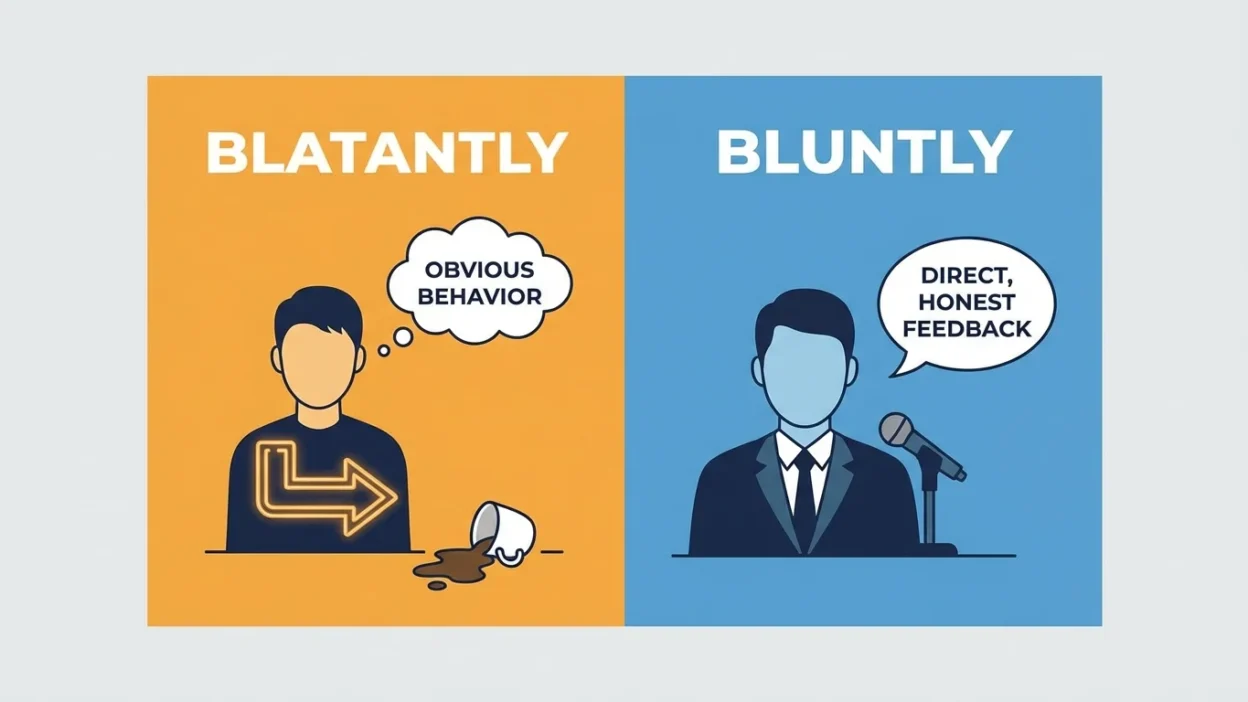
- ✅ Bluntly = something said in a direct, honest, sometimes rude way
👉 Simple rule:
- Obvious or clearly noticeable → blatantly
- Direct or straightforward speech → bluntly
What Does “Blatantly” Mean?
Blatantly is an adverb that describes something done in an obvious, open, or shameless way often without trying to hide it.
Common Uses of “Blatantly”
- Describing obvious behavior
- Highlighting something clearly wrong or noticeable
- Expressing strong criticism
Example Sentences
- He was blatantly ignoring the rules.
- The mistake was blatantly obvious.
- She blatantly lied during the interview.
👉 Tone: Strong, often negative, emphasizes obviousness
What Does “Bluntly” Mean?
Bluntly is an adverb that describes speaking in a direct, straightforward way—sometimes without concern for politeness.
Common Uses of “Bluntly”
- Honest communication
- Direct opinions
- Straightforward advice
Example Sentences
- She spoke bluntly about the issue.
- Bluntly, I don’t agree with your idea.
- He told them bluntly that the plan wouldn’t work.
👉 Tone: Honest, direct, sometimes harsh
Blatantly vs Bluntly: Key Differences
Although both words can feel strong, they focus on different ideas.
Comparison Table: Blatantly vs Bluntly
| Feature | Blatantly | Bluntly |
|---|---|---|
| Meaning | Obviously, openly | Directly, honestly |
| Focus | Visibility or obviousness | Communication style |
| Tone | Often negative | Neutral to slightly harsh |
| Usage Context | Actions or behavior | Speech or expression |
| Example | Blatantly wrong | Bluntly speaking |
When Should You Use “Blatantly”?
Use blatantly when something is clearly obvious, especially in a negative or critical sense.
Best Situations for “Blatantly”
- Describing obvious mistakes
- Highlighting clear wrongdoing
- Emphasizing visibility
Examples
- “It was blatantly unfair.”
- “He blatantly ignored the warning.”
👉 Think of blatantly as impossible to miss.
When Should You Use “Bluntly”?
Use bluntly when describing how someone speaks directly and honestly, sometimes without softness.
Best Situations for “Bluntly”
- Giving honest opinions
- Direct communication
- Straightforward advice
Examples
- “Bluntly, this won’t work.”
- “She answered bluntly.”
👉 Think of bluntly as straight to the point.
Common Mistakes to Avoid
1. Using “Blatantly” for Speech Style
❌ He spoke blatantly about the issue
✔ He spoke bluntly about the issue
👉 Use bluntly for how someone speaks
2. Using “Bluntly” for Obvious Actions
❌ He bluntly ignored the rules
✔ He blatantly ignored the rules
👉 Use blatantly for obvious behavior
3. Confusing Tone
- Blatantly = criticism of actions
- Bluntly = style of communication
Helpful Tip to Remember
👉 Blatantly = obvious action
👉 Bluntly = direct speech
Memory trick:
- Blatantly → “blatant” (obvious)
- Bluntly → “blunt” (direct)
More Examples in Context
Blatantly
- “The error was blatantly clear.”
- “They were blatantly breaking the rules.”
Bluntly
- “He said it bluntly.”
- “Bluntly, I think you’re wrong.”
Synonyms and Related Words
For Blatantly
- Obviously
- Clearly
- Openly
- Plainly
For Bluntly
- Directly
- Honestly
- Frankly
- Straightforwardly
👉 These can help add variety to your writing.
Blatantly vs Bluntly in American and British English
- Both words are used the same way in American and British English
- No spelling differences
- The distinction is based on meaning, not region
FAQs
1. Are blatantly and bluntly the same?
No. Blatantly refers to something obvious, while bluntly refers to direct speech.
2. Which word is more negative?
Blatantly often has a stronger negative tone.
3. Can I use bluntly in a sentence like “bluntly speaking”?
Yes, that is a very common and correct phrase.
4. Which is used for behavior?
Use blatantly for actions or behavior.
5. Which is used for communication?
Use bluntly for speech or expression.
6. Can they be interchangeable?
No, they are used in different contexts.
7. Which sounds more polite?
Neither is particularly soft, but bluntly can sound more neutral depending on context.
Summary
Understanding blatantly vs bluntly is all about focus and tone. Blatantly is used to describe actions that are obvious or openly done often in a negative way. Bluntly, on the other hand, describes how something is said directly and honestly, sometimes without politeness.
Choosing the right word helps your message stay clear and accurate. Mixing them up can change meaning, so it’s important to match the word with the context.
Actionable Takeaway
Next time you write, remember:
👉 Blatantly = obvious action
👉 Bluntly = direct speech
A quick check of what you’re describing action or communication will help you pick the right word every time.