When you receive a bill, charge, invoice, or financial claim that seems questionable, you often face two choices: pay the amount or dispute it. Understanding the difference between pay vs dispute can save you money, protect your rights, and help you avoid unnecessary financial problems.
Many people feel uncertain when they see an unexpected charge on a credit card statement, utility bill, insurance claim, or service invoice. Should you simply pay it to avoid complications, or should you challenge the charge because it appears incorrect? This guide explains everything you need to know about pay vs dispute, including definitions, examples, common mistakes, and practical tips.
Quick Answer
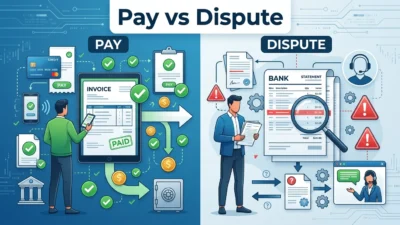
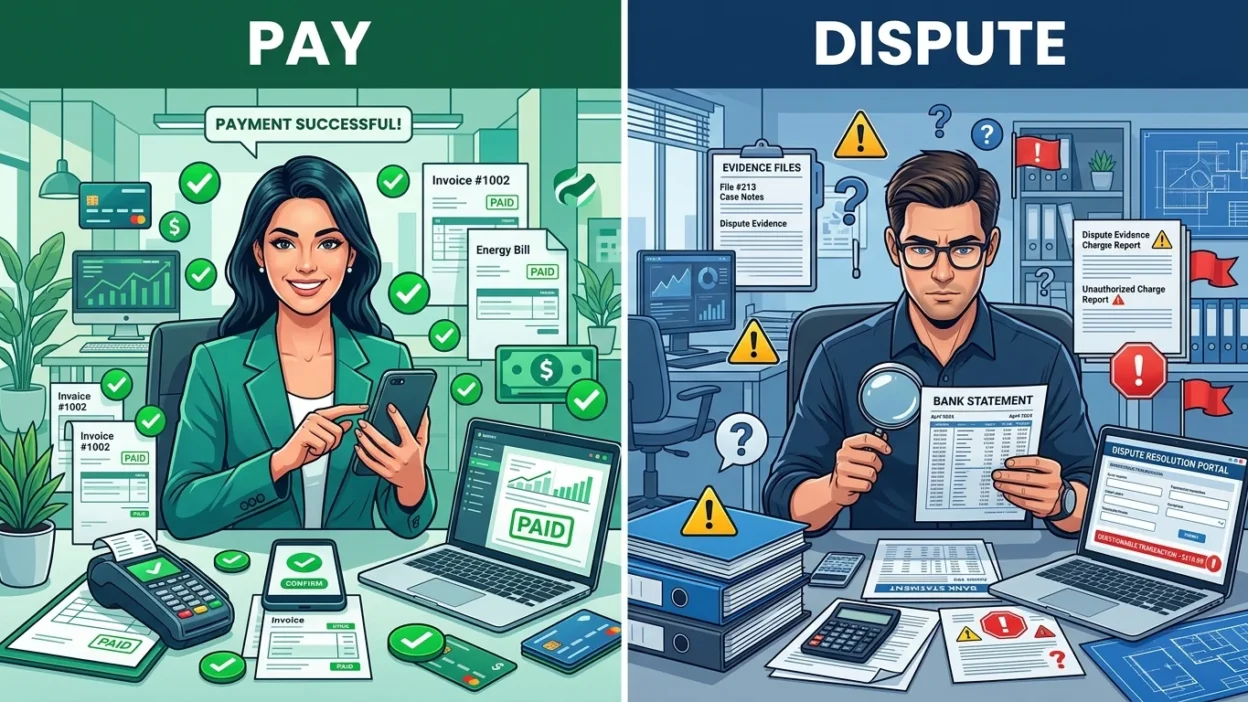
Pay means accepting the charge and submitting payment for the amount owed.
Dispute means formally challenging a charge, bill, transaction, or claim because you believe it is incorrect, unauthorized, unfair, or inaccurate.
In general:
- Pay when the charge is legitimate and accurate.
- Dispute when there is an error, fraud, duplicate charge, or billing mistake.
- Always review supporting documents before making a decision.
What Does Pay Mean?
The term pay refers to giving money to settle a debt, bill, invoice, purchase, or financial obligation.
When you choose to pay:
- You acknowledge the amount owed.
- You complete the transaction.
- The account is usually marked as settled.
- No formal challenge is made regarding the charge.
Examples of Paying
- Paying a monthly internet bill.
- Paying a restaurant bill after dining.
- Paying a legitimate credit card charge.
- Paying an invoice from a contractor who completed the agreed work.
In these situations, payment indicates acceptance of the charge and responsibility for the amount.
What Does Dispute Mean?
A dispute occurs when you challenge a charge, transaction, invoice, or claim because you believe something is wrong.
Disputes are common in:
- Credit card transactions
- Bank transfers
- Utility bills
- Insurance claims
- Online purchases
- Service contracts
When disputing a charge, you typically provide evidence showing why the amount should be corrected, reversed, or investigated.
Examples of Disputing
- A credit card charge you never authorized.
- A duplicate payment appearing on your statement.
- An online order that never arrived.
- A phone bill containing charges for services you never used.
- An invoice with incorrect pricing.
Pay vs Dispute: Key Differences
| Factor | Pay | Dispute |
|---|---|---|
| Purpose | Settle an obligation | Challenge a charge |
| Acceptance | Accepts the amount | Questions the amount |
| Process | Simple payment | Investigation or review |
| Documentation | Usually not required | Evidence often required |
| Outcome | Charge is settled | Charge may be corrected or reversed |
| Time Required | Immediate | Can take days or weeks |
| Risk | Paying an incorrect charge | Losing the dispute if evidence is weak |
When Should You Pay?
Paying is usually the best option when:
The Charge Is Accurate
If the amount matches the agreed price or service, paying promptly avoids late fees and penalties.
You Received the Product or Service
When the business fulfilled its obligations correctly, payment is generally appropriate.
You Have Reviewed the Details
Always verify:
- Amount charged
- Date of transaction
- Product or service received
- Applicable taxes and fees
The Cost of Disputing Is Greater
In some cases, a small error may not justify the time and effort required for a formal dispute.
When Should You Dispute?
Disputing is often appropriate when:
The Charge Is Unauthorized
Fraudulent transactions should be reported immediately.
The Amount Is Incorrect
Billing errors happen more often than many people realize.
You Were Charged Twice
Duplicate transactions are a common reason for disputes.
The Product Never Arrived
Many consumer protection laws allow buyers to challenge charges for undelivered goods.
Services Were Not Provided
If a company failed to perform agreed work, a dispute may be justified.
Real Life Pay vs Dispute Examples
Example 1: Restaurant Bill
You order food totaling $45 and receive a bill for $45.
Best option: Pay
The charge is correct and expected.
Example 2: Credit Card Fraud
You notice a $300 online purchase from a store you’ve never used.
Best option: Dispute
The transaction appears unauthorized.
Example 3: Utility Billing Error
Your electricity bill is double your normal usage due to a meter reading mistake.
Best option: Dispute
The amount may be inaccurate.
Example 4: Subscription Renewal
A streaming service renews according to terms you previously agreed to.
Best option: Pay
The charge was authorized under the subscription agreement.
Benefits of Paying
Choosing to pay can provide several advantages:
- Avoids late fees
- Prevents account delinquency
- Maintains good customer relationships
- Reduces stress and administrative work
- Resolves obligations quickly
For legitimate charges, paying promptly is usually the simplest solution.
Benefits of Disputing
A valid dispute can help you:
- Recover lost money
- Correct billing mistakes
- Prevent fraud losses
- Protect consumer rights
- Improve account accuracy
Disputing incorrect charges is an important financial protection tool.
Common Mistakes People Make
Paying Before Reviewing
Many people automatically pay bills without checking for errors.
Always review:
- Dates
- Amounts
- Account information
- Purchased items
Disputing Legitimate Charges
Not every unexpected charge is fraudulent. Sometimes customers simply forget a purchase.
Missing Dispute Deadlines
Banks and credit card companies often impose strict time limits.
Delaying action may reduce your chances of success.
Failing to Keep Evidence
Save:
- Receipts
- Emails
- Screenshots
- Contracts
- Delivery confirmations
Strong documentation strengthens a dispute.
Ignoring Communication
Respond quickly if a bank, merchant, or billing department requests additional information.
Tips for Handling a Dispute Successfully
If you decide to dispute a charge:
- Act quickly.
- Gather supporting evidence.
- Contact the merchant first when possible.
- Keep records of all communications.
- Follow official dispute procedures.
- Monitor updates regularly.
- Stay professional and factual.
The stronger your documentation, the higher your chances of a favorable outcome.
American vs British English Differences
The concepts of pay and dispute are generally the same in both American and British English.
However, some related terminology differs:
| American English | British English |
|---|---|
| Bill | Bill |
| Chargeback | Chargeback |
| Credit Card | Credit Card |
| Checking Account | Current Account |
| Billing Error | Billing Error |
| Bank Statement | Bank Statement |
In financial contexts, the meaning of pay vs dispute remains largely identical across both varieties of English.
Why Understanding Pay vs Dispute Matters
Knowing when to pay and when to dispute helps you:
- Make informed financial decisions
- Protect your money
- Avoid unnecessary losses
- Prevent fraud-related damage
- Manage personal and business finances more effectively
Whether you’re dealing with a bank transaction, subscription service, utility bill, or online purchase, understanding the distinction can save time and money.
Signs You Should Investigate Before Paying
Look closer when you notice:
- Unexpected charges
- Duplicate transactions
- Incorrect amounts
- Unknown merchants
- Missing products
- Service quality issues
- Contract discrepancies
These warning signs often justify additional review before making payment.
Frequently Asked Questions
Is it better to pay or dispute a charge?
It depends on whether the charge is legitimate. Pay accurate charges and dispute charges that appear incorrect, unauthorized, or fraudulent.
Can I dispute a charge after paying it?
Yes. In many situations, you can dispute a charge even after payment if you later discover fraud, billing errors, or contract violations.
How long does a dispute take?
The timeline varies by institution and case complexity. Some disputes are resolved within days, while others may take several weeks.
Will disputing a charge hurt my credit score?
Generally, a legitimate dispute itself does not directly damage your credit score. However, unpaid debts handled improperly may create separate credit issues.
What evidence helps win a dispute?
Receipts, invoices, emails, screenshots, contracts, tracking information, and transaction records can all support your case.
Should I contact the merchant before disputing?
Yes. Many issues can be resolved faster by contacting the merchant directly before filing a formal dispute.
What happens if my dispute is denied?
You may have the option to provide additional evidence, request a review, or pursue other consumer protection channels depending on the situation.
Can businesses dispute payments too?
Yes. Businesses frequently dispute chargebacks, incorrect invoices, contract disagreements, and payment processing errors.
Summary
Understanding pay vs dispute is essential for making smart financial decisions. Paying means accepting and settling a valid charge, while disputing means formally challenging a charge you believe is incorrect, unauthorized, or unfair. The right choice depends on the facts, supporting evidence, and legitimacy of the transaction.
Before making any decision, carefully review the details, gather documentation, and assess whether the charge is accurate. Paying legitimate charges promptly can prevent unnecessary fees, while disputing invalid charges can protect your finances and consumer rights. Knowing the difference empowers you to handle billing issues confidently and responsibly.
Actionable Takeaway
Before paying any bill, invoice, or transaction, spend a few minutes verifying the amount, merchant, and supporting details. If everything is accurate, pay promptly. If something seems wrong, document the issue immediately and begin the dispute process as soon as possible.