When you notice a charge on your bank statement, credit card bill, invoice, or account, you may wonder whether to pay it or dispute it. The decision can affect your finances, credit standing, and even your legal rights. That’s why understanding pay vs dispute is important for consumers, businesses, and anyone handling financial transactions.
Many people automatically pay a bill to avoid complications, while others immediately challenge charges they don’t recognize. However, the right choice depends on whether the charge is valid, accurate, and authorized. This guide explains the meaning of pay and dispute, highlights their differences, provides real-world examples, and helps you determine which option makes the most sense in your situation.
Quick Answer
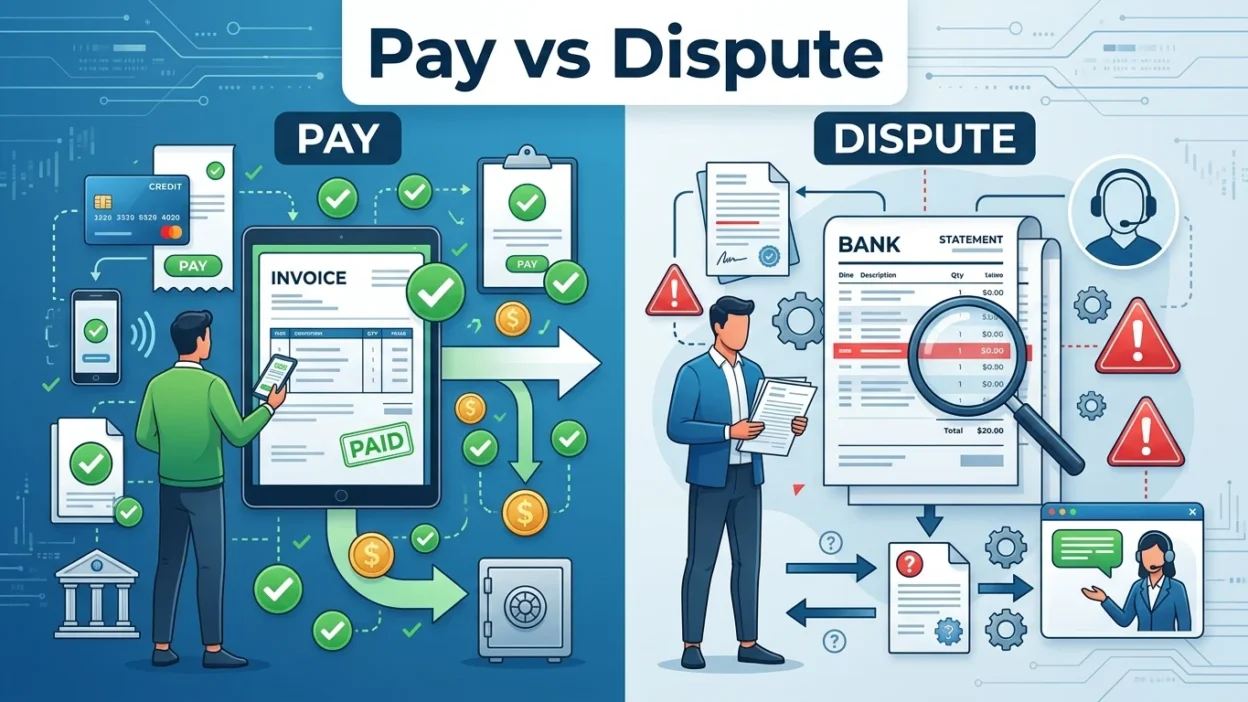
Pay means accepting a charge and submitting the required payment.
Dispute means formally challenging a charge, transaction, invoice, or bill because you believe it is incorrect, unauthorized, fraudulent, or unfair.
In simple terms:
- Pay if the charge is legitimate and accurate.
- Dispute if you believe there is an error, fraud, duplicate charge, or billing problem.
- Always review the details before deciding.
What Does “Pay” Mean?
The word pay refers to giving money to satisfy a financial obligation. When you pay a bill, invoice, subscription, or charge, you are acknowledging that the amount is owed and settling the debt.
Examples of Paying
- Paying a monthly utility bill.
- Paying a restaurant check.
- Paying a contractor after completed work.
- Paying a credit card balance.
- Paying an online shopping order.
When you choose to pay, the transaction is generally considered accepted and completed.
What Does “Dispute” Mean?
A dispute occurs when you formally challenge a charge or payment request because you believe something is wrong.
Disputes commonly arise due to:
- Unauthorized transactions
- Billing mistakes
- Duplicate charges
- Incorrect pricing
- Fraudulent activity
- Products not received
- Services not provided as promised
A dispute typically triggers an investigation by the merchant, bank, payment processor, or financial institution.
Pay vs Dispute: Key Differences
| Feature | Pay | Dispute |
|---|---|---|
| Purpose | Settle a charge | Challenge a charge |
| Acceptance | Accepts responsibility for payment | Questions the validity of payment |
| Process | Immediate payment | Investigation or review |
| Documentation Needed | Usually none | Evidence often required |
| Outcome | Charge is settled | Charge may be reversed or corrected |
| Time Required | Fast | May take days or weeks |
| Risk | Paying an incorrect charge | Dispute may be denied |
The main difference is simple: paying accepts the charge, while disputing challenges it.
When Should You Pay?
There are many situations where paying is the best option.
The Charge Is Correct
If the amount matches what you agreed to pay, there is usually no reason to dispute it.
You Received the Product or Service
When the seller delivered what was promised, payment is generally appropriate.
You Authorized the Transaction
Authorized purchases and recurring subscriptions should typically be paid according to the agreement.
You Want to Avoid Late Fees
Delaying payment on a valid charge can result in:
- Penalties
- Interest charges
- Service interruptions
- Collection efforts
When Should You Dispute?
Disputing may be the right choice if the charge appears invalid.
Unauthorized Charges
If someone used your card or account without permission, you should dispute the transaction immediately.
Duplicate Charges
Merchants occasionally process the same payment more than once.
Incorrect Billing Amounts
Mistakes can occur when calculating taxes, fees, discounts, or service costs.
Products Never Arrived
Many banks and card issuers allow disputes for goods that were never delivered.
Services Were Not Provided
If a business failed to provide agreed services, a dispute may be justified.
Real-World Examples of Pay vs Dispute
Example 1: Grocery Store Purchase
You buy groceries totaling $75, and your receipt matches the amount charged.
Best option: Pay
The charge is accurate and expected.
Example 2: Unknown Online Charge
You notice a $250 charge from a merchant you’ve never heard of.
Best option: Dispute
The transaction may be fraudulent.
Example 3: Incorrect Utility Bill
Your electricity bill suddenly triples because of a meter reading error.
Best option: Dispute
The amount appears inaccurate.
Example 4: Subscription Renewal
Your streaming service renews according to the terms you accepted.
Best option: Pay
The charge was authorized.
Benefits of Paying
Paying valid charges offers several advantages:
- Avoids late fees
- Maintains good financial standing
- Prevents service disruptions
- Saves time
- Reduces stress
- Keeps accounts current
For legitimate obligations, paying is often the fastest and simplest solution.
Benefits of Disputing
A successful dispute can protect your finances and rights.
Financial Protection
You may recover money from:
- Fraudulent transactions
- Billing errors
- Duplicate charges
Consumer Rights
Disputes help ensure businesses charge customers fairly and accurately.
Account Accuracy
Disputing incorrect charges keeps financial records accurate.
Common Mistakes People Make
Paying Without Reviewing Charges
Many people automatically pay bills without checking the details.
Always verify:
- Amount
- Date
- Merchant
- Product or service
Disputing Legitimate Transactions
Sometimes people forget they made a purchase and mistakenly file a dispute.
Review receipts and account history before taking action.
Waiting Too Long
Most financial institutions impose dispute deadlines. Delays may reduce your chances of success.
Failing to Gather Evidence
Supporting documentation is often essential.
Useful evidence includes:
- Receipts
- Emails
- Screenshots
- Contracts
- Delivery confirmations
Ignoring Merchant Communication
Respond promptly to requests for additional information during the dispute process.
How to Decide Between Paying and Disputing
Ask yourself these questions:
Did I Authorize This Charge?
If yes, payment is often appropriate.
Is the Amount Correct?
If not, further investigation may be necessary.
Did I Receive What I Paid For?
If the product or service was not delivered, a dispute may be justified.
Do I Have Evidence?
Documentation strengthens your position if you choose to dispute.
Have I Contacted the Merchant?
Many issues can be resolved quickly by speaking directly with the business.
American vs British English
The terms pay and dispute have essentially the same meanings in both American and British English.
Some related financial terminology differs slightly:
| American English | British English |
|---|---|
| Checking Account | Current Account |
| Billing Statement | Statement |
| Chargeback | Chargeback |
| Credit Card Bill | Credit Card Statement |
Despite these minor differences, the concept of pay vs dispute remains the same in both language varieties.
Related Terms
When researching pay vs dispute, you may also encounter:
- Chargeback
- Billing dispute
- Payment dispute
- Unauthorized transaction
- Fraud claim
- Invoice dispute
- Consumer protection
- Merchant dispute
- Refund request
- Transaction review
These terms often relate to the process of challenging or resolving payment issues.
Frequently Asked Questions
Is it better to pay or dispute a charge?
It depends on whether the charge is legitimate. Pay valid charges and dispute charges that are incorrect, fraudulent, or unauthorized.
Can I dispute a charge after paying it?
Yes. In many situations, you can dispute a transaction even after payment if you later discover an error or fraud.
How long does a dispute take?
Disputes may take anywhere from a few days to several weeks, depending on the institution and complexity of the case.
Will disputing a charge affect my credit score?
A legitimate dispute itself generally does not affect your credit score. However, unpaid valid debts could create separate credit issues.
What evidence helps support a dispute?
Receipts, invoices, screenshots, emails, contracts, delivery records, and account statements can all strengthen your claim.
Should I contact the merchant before disputing?
Yes. Many problems can be resolved directly with the merchant before filing a formal dispute.
What happens if my dispute is denied?
You may be able to submit additional evidence, request a review, or explore alternative consumer protection options.
Can businesses file disputes too?
Yes. Businesses frequently dispute invoices, chargebacks, payment processing errors, and contractual billing issues.
Summary
Understanding pay vs dispute helps you make smarter financial decisions when faced with a bill, charge, or transaction. Paying means accepting responsibility for a legitimate charge and settling the amount owed. Disputing means formally challenging a charge because you believe it is incorrect, unauthorized, fraudulent, or unfair.
The best approach is to carefully review every charge before taking action. If the transaction is accurate and authorized, pay it promptly. If there is evidence of an error or fraud, begin the dispute process as soon as possible. Knowing when to pay and when to dispute can protect your money, preserve your rights, and help you avoid unnecessary financial problems.
Actionable Takeaway
Before paying any charge, verify the amount, merchant, and transaction details. If everything checks out, pay promptly. If something seems suspicious or incorrect, gather evidence and initiate a dispute without delay.