Losing a tooth can affect much more than your appearance. Suddenly, eating feels awkward, smiling becomes uncomfortable, and even speaking confidently can feel different. Then comes the next challenge choosing between a dental bridge and a dental implant.
For many people, this decision feels overwhelming because both options sound similar at first. Dentists often recommend both, online opinions are mixed, and costs can vary dramatically.
One option is usually faster and more affordable upfront. The other is often considered longer-lasting and more natural. But which one is actually better for your situation?
The truth is that neither dental bridges nor implants are perfect for everyone. Your oral health, budget, age, bone condition, and long-term goals all matter.
If you are trying to understand the real difference between bridge vs implant, this guide explains everything in simple language — including costs, durability, pain levels, healing time, appearance, maintenance, and which option fits different dental needs best.
Quick Answer: Bridge vs Implant
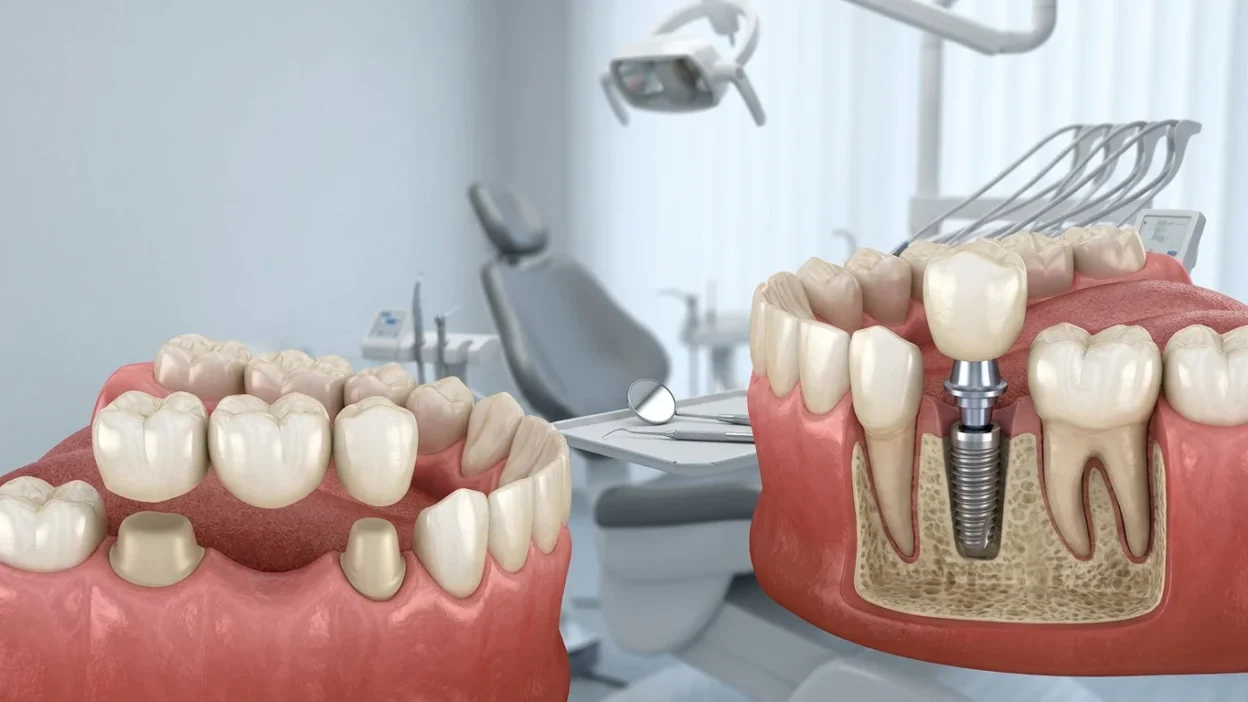
A dental bridge replaces a missing tooth by attaching an artificial tooth to nearby natural teeth. A dental implant replaces the missing tooth root itself using a titanium post placed inside the jawbone.
Dental implants usually last longer and feel more natural, while dental bridges are often faster and less expensive initially.
What Is a Dental Bridge?
A dental bridge is a false tooth held in place by neighboring teeth.
The teeth beside the missing tooth are usually reshaped and fitted with crowns to support the bridge.
Main Parts of a Dental Bridge
- Artificial tooth (pontic)
- Supporting crowns
- Adjacent natural teeth
Best Situations for Bridges
- Missing one or several teeth
- Faster treatment needs
- Limited jawbone density
- Lower upfront budget
What Is a Dental Implant?
A dental implant replaces both:
- The tooth root
- The visible tooth
The dentist surgically places a titanium post into the jawbone. Over time, the bone fuses with the implant through a process called osseointegration.
Then a crown is attached on top.
Main Parts of a Dental Implant
- Titanium implant post
- Abutment connector
- Dental crown
Best Situations for Implants
- Single missing tooth
- Healthy jawbone
- Long-term solution goals
- Preserving surrounding teeth
Bridge vs Implant: Main Differences
| Feature | Dental Bridge | Dental Implant |
|---|---|---|
| Replaces Tooth Root | No | Yes |
| Requires Surgery | No | Yes |
| Treatment Time | Faster | Longer |
| Longevity | 5–15 years | 15–30+ years |
| Jawbone Preservation | Limited | Excellent |
| Cost | Lower upfront | Higher upfront |
| Natural Feel | Good | Excellent |
| Impact on Nearby Teeth | Requires reshaping | Usually preserves teeth |
| Healing Time | Shorter | Longer |
Which Looks More Natural?
Dental implants usually look and feel more natural.
Because the implant integrates into the jawbone, it functions more like a real tooth.
Why Implants Feel More Natural
- Stronger bite stability
- Better chewing comfort
- Natural gum appearance
- Prevents bone shrinkage
Modern bridges can also look very realistic, especially high-quality ceramic bridges.
Which Lasts Longer: Bridge or Implant?
Implants usually last much longer.
Average Lifespan
Dental Bridge
- Around 5–15 years
- May need replacement eventually
Dental Implant
- Often 15–30+ years
- Sometimes lifetime with proper care
Long-term durability is one reason implants are often considered the premium solution.
Is a Dental Implant More Painful?
Implants involve surgery, so many people assume they are extremely painful.
In reality, most patients describe implant discomfort as manageable.
Implant Procedure
- Local anesthesia used
- Mild soreness afterward
- Healing takes several months
Bridge Procedure
- No jaw surgery
- Teeth reshaping required
- Faster recovery
Bridges usually involve less overall healing time.
Bridge vs Implant Cost Comparison
Cost is one of the biggest deciding factors.
| Treatment | Average Cost Range |
|---|---|
| Dental Bridge | Lower upfront cost |
| Dental Implant | Higher upfront cost |
Implants cost more because they involve:
- Surgery
- Titanium components
- Bone integration
- Multiple appointments
However, bridges may require replacement sooner, which can increase long-term costs.
Which Is Better for Bone Health?
Dental implants are significantly better for jawbone preservation.
Why Bone Loss Happens
When a tooth root disappears, the jawbone no longer receives stimulation.
This can cause:
- Bone shrinkage
- Facial changes
- Gum recession
Implants Help Prevent Bone Loss
Because implants act like artificial roots, they stimulate the jawbone similarly to natural teeth.
Bridges do not provide this benefit.
Which Option Is Faster?
Bridges are usually much faster.
Bridge Timeline
Often completed within:
- A few weeks
- 2–3 dental visits
Implant Timeline
Can take:
- Several months
- Bone healing time
- Additional procedures if needed
If speed matters most, bridges usually win.
Pros and Cons of Dental Bridges
Pros
- Faster treatment
- Lower initial cost
- No implant surgery
- Widely available
Cons
- Shorter lifespan
- Bone loss continues
- Requires altering nearby teeth
- Higher long-term replacement risk
Pros and Cons of Dental Implants
Pros
- Long-lasting solution
- Natural appearance
- Preserves jawbone
- Strong chewing ability
- Protects neighboring teeth
Cons
- Higher upfront cost
- Surgical procedure required
- Longer healing time
- Not suitable for everyone immediately
Are Dental Implants Safe?
Yes, dental implants are generally considered very safe and highly successful.
Implant success rates are very high when:
- Oral hygiene is good
- Smoking is limited
- Bone health is sufficient
However, some patients may not qualify immediately if they have:
- Severe bone loss
- Uncontrolled diabetes
- Heavy smoking habits
- Gum disease
Who Is a Better Candidate for a Bridge?
Bridges may be better if:
- You want quicker results
- Surgery feels uncomfortable
- Budget is limited
- Nearby teeth already need crowns
- Bone density is insufficient
Who Is a Better Candidate for an Implant?
Implants may be better if:
- You want long-term durability
- Jawbone health is strong
- You want the most natural feel
- You want to preserve surrounding teeth
- You can invest more upfront
Which Is Easier to Maintain?
Both require good oral hygiene.
Bridge Care
Requires:
- Floss threaders
- Special cleaning underneath bridge
Implant Care
Maintained similarly to natural teeth:
- Brushing
- Flossing
- Regular cleanings
Many patients find implants easier long-term.
Bridge vs Implant for Front Teeth
Implants are often preferred for front teeth because they:
- Look highly natural
- Preserve gum appearance
- Maintain bone structure
However, bridges can still provide excellent cosmetic results when done properly.
Bridge vs Implant for Older Adults
Age alone does not automatically disqualify someone from implants.
Many older adults successfully receive implants if they:
- Have healthy gums
- Maintain decent bone density
- Are medically stable
Bridges may still be preferred for simpler treatment plans.
Expert Advice Before Choosing
Do not choose only based on price.
Instead, consider:
- Long-term durability
- Bone health
- Comfort
- Appearance goals
- Maintenance commitment
Sometimes a higher upfront implant cost saves money over decades.
Best Overall Winner: Bridge vs Implant
Dental Implant Wins for:
- Longevity
- Natural feel
- Bone preservation
- Long-term value
- Stability
Dental Bridge Wins for:
- Faster treatment
- Lower upfront cost
- Less invasive process
- Easier short-term solution
Final Verdict
The choice between bridge vs implant depends on your budget, oral health, timeline, and long term priorities.
If you want the closest thing to a natural tooth with excellent durability and jawbone protection, dental implants are usually considered the better long-term solution.
If you want a faster, more affordable, and less invasive treatment, dental bridges remain a very effective option.
Both treatments can dramatically improve:
- Smiling confidence
- Chewing comfort
- Speech
- Oral function
The best decision comes from working closely with a qualified dentist who can evaluate your specific dental needs.
FAQs
What is the main difference between a bridge and an implant?
A bridge uses nearby teeth for support, while an implant replaces the missing tooth root with a titanium post.
Which lasts longer: bridge or implant?
Dental implants usually last much longer than bridges and may last decades with proper care.
Is a dental implant more painful than a bridge?
Implants involve surgery, but most patients report manageable discomfort during recovery.
Are implants better than bridges?
Implants are often considered better long-term because they preserve bone and neighboring teeth.
Which is cheaper: bridge or implant?
Bridges usually cost less upfront, while implants are more expensive initially.
Can older adults get dental implants?
Yes, many healthy older adults are excellent candidates for dental implants.
Do bridges damage nearby teeth?
Traditional bridges often require reshaping healthy adjacent teeth for support.
How long does implant healing take?
Complete implant healing may take several months depending on bone integration.
Which looks more natural?
Dental implants generally provide the most natural appearance and feel.
Can a bridge be replaced with an implant later?
Yes, many patients eventually replace older bridges with implants if bone health allows.