
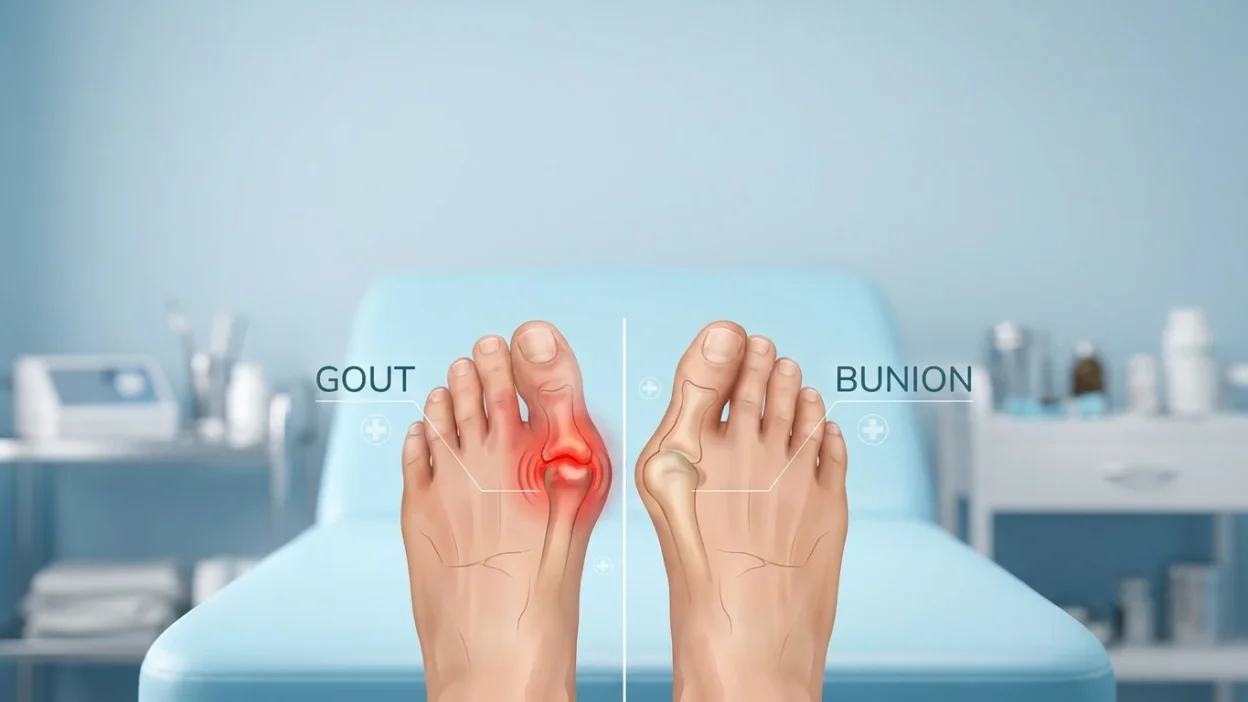
When your big toe suddenly starts hurting, swelling, or becoming difficult to walk on, it is easy to panic. Many people immediately wonder whether they have gout or a bunion because both conditions can affect the same area of the foot.
At first glance, they can look surprisingly similar. Both may cause redness, discomfort, swelling, and pain near the big toe joint. But despite the similarities, gout and bunions are actually very different medical conditions.
One is a form of inflammatory arthritis caused by uric acid crystal buildup. The other is a structural foot deformity that develops gradually over time.
Confusing the two can delay proper treatment and make symptoms worse. That is why understanding the difference between gout vs bunion is so important.
Whether your toe pain appeared suddenly overnight or slowly developed over years, this guide explains the symptoms, causes, treatments, triggers, risk factors, and warning signs in simple language.
Quick Answer: Gout vs Bunion
Gout is a painful form of arthritis caused by uric acid crystal buildup in joints, often appearing suddenly with intense pain and swelling. A bunion is a bony bump that forms gradually at the base of the big toe because of joint misalignment.
Gout usually causes sudden flare-ups, while bunions develop slowly over time.
What Is Gout?
Gout is a type of inflammatory arthritis caused by excess uric acid in the body.
When uric acid levels become too high, sharp crystals can form inside joints, especially the big toe joint.
Common Gout Symptoms
- Sudden severe pain
- Redness
- Swelling
- Warmth
- Tenderness
- Difficulty walking
Many people describe gout attacks as extremely painful.
Why the Big Toe Is Commonly Affected
The big toe joint is cooler than other body areas, making uric acid crystals more likely to form there.
What Is a Bunion?
Bunion is a structural foot deformity.
It happens when the big toe gradually shifts inward toward the other toes, causing a bony bump to form at the joint.
Common Bunion Symptoms
- Visible bump near the big toe
- Gradual pain
- Shoe discomfort
- Swelling
- Toe misalignment
- Skin irritation
Unlike gout, bunions usually worsen slowly over time.
Gout vs Bunion: Main Differences
| Feature | Gout | Bunion |
|---|---|---|
| Condition Type | Arthritis | Bone/joint deformity |
| Pain Onset | Sudden | Gradual |
| Main Cause | Uric acid crystals | Joint misalignment |
| Swelling | Severe during attacks | Mild to moderate |
| Redness | Common | Sometimes |
| Visible Bump | Usually temporary swelling | Permanent bump |
| Pain Timing | Flare-ups | Chronic pressure pain |
| Common Trigger | Diet/alcohol | Foot structure/shoes |
How to Tell if It Is Gout or a Bunion
This is where many people get confused.
Signs It May Be Gout
- Pain started suddenly
- Severe nighttime pain
- Joint feels hot
- Intense tenderness
- Red shiny skin
- Flare-ups come and go
Signs It May Be a Bunion
- Bump developed slowly
- Toe leans inward
- Pain mainly from shoes
- Chronic discomfort
- Family history of bunions
- Symptoms worsen gradually
What Causes Gout?
Gout happens when uric acid builds up in the bloodstream.
Common Gout Triggers
- Red meat
- Alcohol
- Sugary drinks
- Seafood
- Obesity
- Kidney problems
- Dehydration
Risk Factors for Gout
- Family history
- High uric acid levels
- High blood pressure
- Diabetes
- Certain medications
What Causes Bunions?
Bunions develop from long term pressure and joint misalignment.
Common Causes of Bunions
- Genetics
- Tight shoes
- High heels
- Flat feet
- Arthritis
- Foot structure problems
Contrary to popular belief, shoes alone do not usually cause bunions, but they can make them worse.
Which Hurts More: Gout or Bunion?
For most people, gout pain is much more intense.
Gout Pain
Often described as:
- Sharp
- Burning
- Throbbing
- Sudden
- Severe
Even bedsheets touching the toe may feel unbearable during an attack.
Bunion Pain
Usually:
- Aching
- Pressure-related
- Chronic
- Shoe-dependent
Bunion pain is often milder but more persistent long-term.
Can You Have Both Gout and a Bunion?
Yes.
Some people develop both conditions in the same joint area, which can make diagnosis more difficult.
A bunion can already irritate the joint, while gout attacks may create additional inflammation.
Gout vs Bunion Appearance
Gout Appearance
During a flare-up:
- Swollen joint
- Red skin
- Puffy appearance
- Warm touch
Bunion Appearance
Usually:
- Hard bony bump
- Toe angled inward
- Chronic visible deformity
The bunion bump itself does not usually disappear.
Treatment for Gout
Common Gout Treatments
- Anti inflammatory medications
- Uric acid lowering medication
- Hydration
- Dietary changes
- Ice packs
- Rest
Foods Often Limited With Gout
- Beer
- Organ meats
- Shellfish
- Sugary sodas
- Processed foods
Managing uric acid is key.
Treatment for Bunions
Common Bunion Treatments
- Wider shoes
- Orthotics
- Padding
- Toe spacers
- Ice
- Pain relievers
Severe Cases
Surgery may be recommended if:
- Walking becomes difficult
- Pain becomes severe
- Foot function declines
Which Condition Is More Serious?
Both can become serious if ignored.
Untreated Gout Risks
- Joint damage
- Kidney stones
- Chronic arthritis
- Repeated attacks
Untreated Bunion Risks
- Toe deformity progression
- Chronic pain
- Walking difficulties
- Additional foot problems
Can Diet Affect Bunions?
Not directly.
Unlike gout, bunions are not caused by food or uric acid.
However, maintaining healthy body weight may reduce pressure on the feet.
Best Shoes for Gout and Bunions
For Gout
During flare-ups:
- Soft shoes
- Minimal pressure
- Open-toe options
For Bunions
Choose:
- Wide toe box
- Good arch support
- Soft materials
- Low heels
Tight shoes often worsen bunion discomfort.
When Should You See a Doctor?
Seek medical evaluation if:
- Toe pain appears suddenly
- Walking becomes difficult
- Swelling worsens
- Fever develops
- Pain becomes severe
- Foot shape changes noticeably
Proper diagnosis matters because treatments differ significantly.
Expert Advice for Toe Joint Pain
Do not self-diagnose based only on internet photos.
Gout and bunions may appear similar, but they require completely different treatment approaches.
Helpful Steps
- Track symptoms
- Notice pain timing
- Photograph flare-ups
- Wear supportive shoes
- Stay hydrated
- Avoid ignoring recurring pain
Best Overall Understanding: Gout vs Bunion
Gout Is Mainly:
- An inflammatory arthritis condition
- Sudden and severe
- Triggered by uric acid buildup
Bunion Is Mainly:
- A structural foot deformity
- Gradual and chronic
- Related to joint alignment
Final Verdict
Understanding the difference between gout vs bunion can help you seek the right treatment faster and avoid worsening symptoms.
If your toe pain came suddenly with intense swelling, redness, and heat, gout may be more likely.
If you notice a slow growing bump with gradual toe misalignment and shoe discomfort, a bunion is probably the cause.
Although both affect the big toe area, they are completely different conditions with different causes, treatments, and long term concerns.
The safest approach is getting evaluated by a healthcare professional, especially if pain becomes severe, recurrent, or affects walking.
FAQs
What is the main difference between gout and bunion?
Gout is inflammatory arthritis caused by uric acid crystals, while a bunion is a structural foot deformity near the big toe.
Does gout cause a permanent bump like a bunion?
Usually no. Gout swelling often appears during flare-ups, while bunions create a permanent bony bump.
Which hurts more: gout or bunion?
Gout pain is typically much more severe and sudden compared to bunion discomfort.
Can bunions trigger gout?
Bunions do not directly cause gout, but both conditions can affect the same joint.
How do doctors diagnose gout?
Doctors may use blood tests, symptom history, physical exams, or joint fluid analysis.
Are bunions caused by wearing tight shoes?
Tight shoes usually worsen bunions but are not always the primary cause.
Can gout go away permanently?
Gout can often be controlled very effectively with medication and lifestyle changes.
Do bunions always require surgery?
No. Many bunions can be managed with supportive shoes and conservative treatment.
Is gout related to diet?
Yes, foods high in purines may increase uric acid levels and trigger gout attacks.
Can young people get bunions or gout?
Yes, both conditions can occur in younger adults depending on genetics, lifestyle, and health factors.