
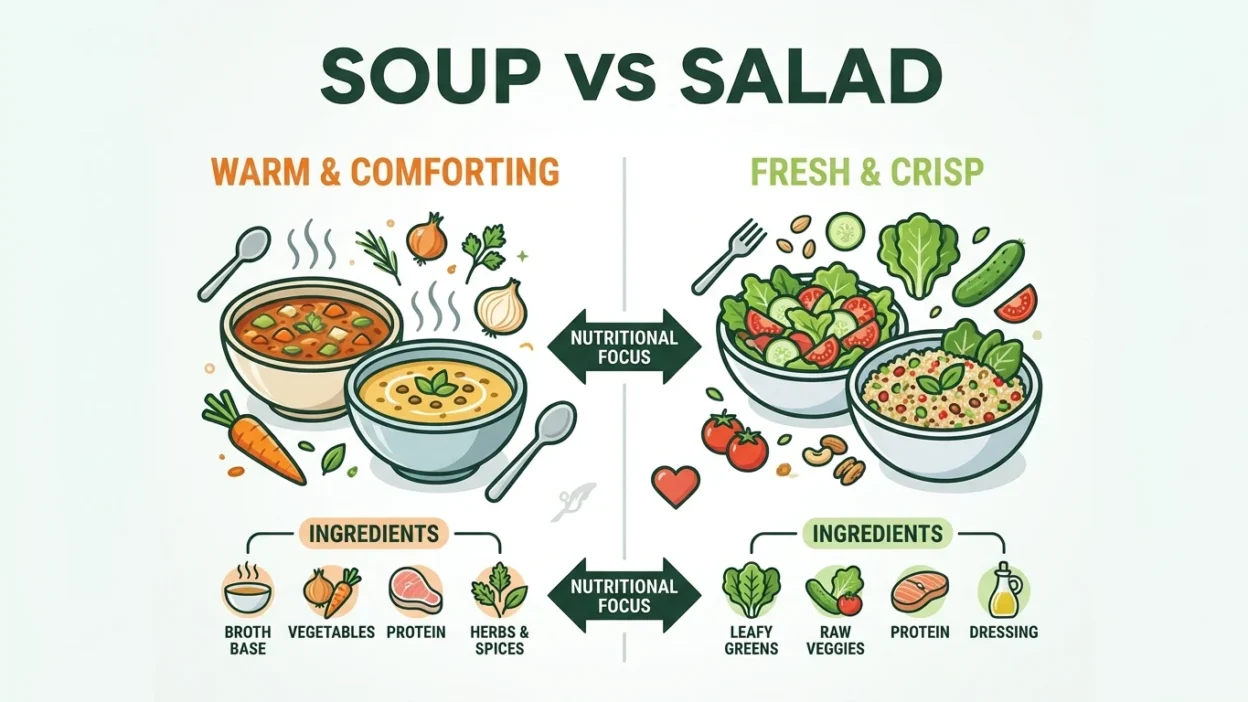
Have you ever wondered whether to choose soup or salad for a meal? Both are popular dishes served around the world, but they differ greatly in texture, ingredients, temperature, preparation, and nutrition style.
Some meals even combine elements of both, which can make the distinction confusing at times.
In this guide, we’ll explain soup vs salad, compare their characteristics, provide examples, and help you understand when each option works best.
Quick Answer
✅ Soup is usually liquid based
✅ Salad is usually made of mixed solid ingredients
👉 Simple rule:
- Soup is eaten with liquid or broth
- Salad is made from separate mixed pieces of food
What Is Soup?
Soup is a dish primarily made with:
- Liquid
- Broth
- Stock
- Cream
- Water based mixtures
It often contains:
- Vegetables
- Meat
- Beans
- Noodles
- Spices
Common Characteristics
- Usually served warm
- Eaten with a spoon
- Liquid texture
- Ingredients cooked together
Example Soups
- Tomato soup
- Chicken noodle soup
- Lentil soup
- Miso soup
What Is Salad?
Salad is a dish made from mixed ingredients, usually served without large amounts of liquid.
Common ingredients include:
- Lettuce
- Vegetables
- Fruits
- Cheese
- Grains
- Protein
- Dressing
Common Characteristics
- Usually served cold
- Ingredients remain separate
- Light or fresh texture
- Often includes dressing instead of broth
Example Salads
- Caesar salad
- Greek salad
- Fruit salad
- Pasta salad
Soup vs Salad: Key Differences
Comparison Table: Soup vs Salad
| Feature | Soup | Salad |
|---|---|---|
| Texture | Liquid based | Solid mixed ingredients |
| Main serving style | Bowl with spoon | Plate or bowl with fork |
| Temperature | Usually warm | Usually cold |
| Base | Broth or liquid | Vegetables or mixed foods |
| Cooking style | Often cooked together | Often mixed after preparation |
Temperature Differences
Soup
Most soups are:
- Hot
- Comforting
- Cooked
However, some cold soups exist:
- Gazpacho
Salad
Most salads are:
- Cold
- Fresh
- Crisp
However, warm salads also exist.
👉 Temperature alone does not fully define the dishes.
Nutritional Differences
Soup
Can be:
- Light
- Filling
- High in sodium
- Protein rich
Salad
Can be:
- Very healthy
- Vegetable focused
- High in fiber
- Sometimes high calorie because of dressing
👉 Both can be healthy or indulgent depending on ingredients.
When Should You Choose Soup?
Soup works well when you want:
- Warm comfort food
- Easy digestion
- A cozy meal
- Cold weather food
Examples
- Chicken soup during illness
- Vegetable soup on winter evenings
- Brothy soups for light meals
When Should You Choose Salad?
Salad works well when you want:
- Fresh flavors
- Crunchy textures
- A lighter meal
- Quick preparation
Examples
- Caesar salad for lunch
- Fruit salad in summer
- Green salad with dinner
Common Gray Areas
Some dishes blur the line between soup and salad.
Examples
- Pasta salad
- Thick stew like soups
- Cold soups
- Grain bowls
👉 Food categories are not always strict.
Common Mistakes to Avoid
1. Assuming Salads Must Include Lettuce
Not all salads contain leafy greens.
Examples:
- Potato salad
- Tuna salad
- Fruit salad
2. Thinking Soup Must Be Hot
Cold soups also exist.
3. Assuming Salad Is Always Healthier
Heavy dressings and toppings can make salads very calorie dense.
Helpful Tip to Remember
👉 Soup = liquid centered
👉 Salad = ingredient centered
Memory trick:
- Soup surrounds ingredients with liquid
- Salad mixes ingredients together without broth
More Examples in Context
Soup
- We ate soup on the cold evening.
- The restaurant served creamy mushroom soup.
- Soup is often comforting during winter.
Salad
- She ordered a salad with grilled chicken.
- The salad included tomatoes and cucumbers.
- Fruit salad is popular in summer.
Cultural Variations
Both soups and salads appear worldwide.
Popular Global Soups
- Ramen
- Pho
- Borscht
- Minestrone
Popular Global Salads
- Tabbouleh
- Coleslaw
- Caprese salad
- Niçoise salad
👉 Every culture has unique versions of both dishes.
FAQs
1. What is the main difference between soup and salad?
Soup is primarily liquid based, while salad is mainly made of mixed solid ingredients.
2. Is soup healthier than salad?
Either can be healthy depending on ingredients and preparation.
3. Can salad be warm?
Yes, some salads are served warm.
4. Can soup be cold?
Yes, examples include gazpacho.
5. Which is more filling?
It depends on the ingredients, protein, and portion size.
6. Are fruit salads really salads?
Yes, because they are mixtures of ingredients served together.
7. Is cereal technically soup?
This is a humorous internet debate, but cereal is generally not classified as soup.
Summary
Understanding soup vs salad is simple once you focus on the structure of each dish. Soup is mainly liquid based and often cooked together in broth or stock, while salad is usually a mixture of separate solid ingredients served with little or no liquid base.
Although some foods blur the line between the two categories, the main distinction comes down to texture, preparation, and serving style.
Actionable Takeaway
Next time you compare these dishes, remember:
👉 Soup = liquid focused meal
👉 Salad = mixed ingredient dish
Both can be delicious, healthy, comforting, or creative depending on how they are prepared.