Have you ever wondered if to write “tire” or “tyre” when talking about a car wheel? It’s a small difference but one that often causes confusion, especially for global readers.
In this guide, we’ll break down tire vs tyre, explain the meanings, provide clear examples, highlight common mistakes, and help you confidently choose the right spelling.
Quick Answer
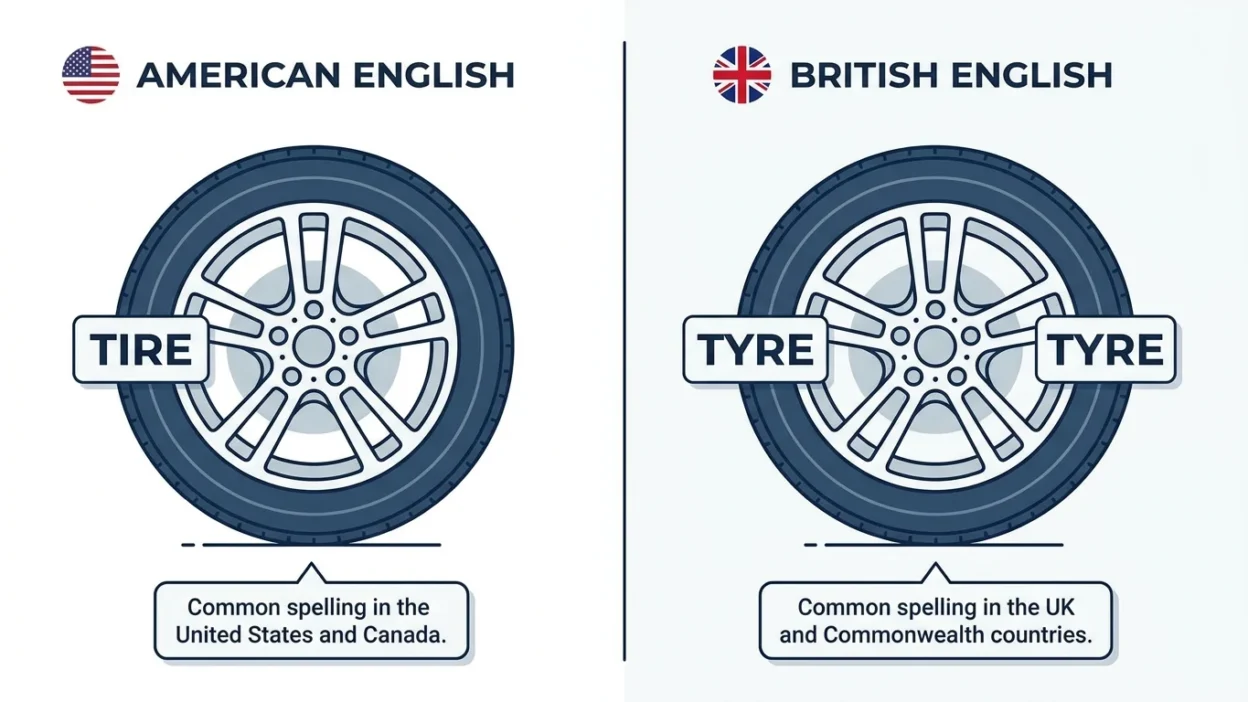
- 🇺🇸 Tire = American English
- 🇬🇧 Tyre = British English (for wheels)
👉 Simple rule:
Use tire in American English and tyre in British English when referring to vehicle wheels.
What Do “Tire” and “Tyre” Mean?
Here’s where it gets interesting “tire” has two meanings, while “tyre” has only one.
Tire (American English)
Tire can mean:
- The rubber covering of a wheel
- To become tired or fatigued
Examples
- The car needs new tires.
- I started to tire after the long walk.
Tyre (British English)
Tyre refers only to:
- The rubber covering of a wheel
Examples
- The car has a flat tyre.
- He changed the tyre quickly.
👉 Key difference:
- Tire = wheel + fatigue meaning
- Tyre = wheel only
Tire vs Tyre: Key Differences
Comparison Table: Tire vs Tyre
| Feature | Tire 🇺🇸 | Tyre 🇬🇧 |
|---|---|---|
| Region | American English | British English |
| Meaning (wheel) | Yes | Yes |
| Meaning (fatigue) | Yes | No |
| Usage | U.S., global content | UK, Commonwealth countries |
Why Do These Spellings Differ?
The difference is based on regional spelling conventions.
- American English simplified the spelling to tire
- British English kept the distinct form tyre for wheels
👉 This helps British English avoid confusion with the verb “tire” (to feel tired).
When Should You Use “Tire”?
Use tire if you are writing in American English or for a global audience.
Best Situations
- Blogs and online content
- Automotive writing (global/U.S.)
- General English usage
Examples
- “The tire needs air.”
- “Don’t tire yourself too much.”
👉 Think of tire as the global default.
When Should You Use “Tyre”?
Use tyre if you are writing in British English and referring specifically to vehicle wheels.
Best Situations
- UK-based writing
- Automotive contexts in British English
- Regional publications
Examples
- “The tyre burst on the highway.”
- “Check your tyres regularly.”
👉 Think of tyre as region specific and precise.
Common Mistakes to Avoid
1. Using “Tyre” in American English
❌ The car has a flat tyre (US context)
✔ The car has a flat tire
2. Confusing the Verb “Tire”
❌ I feel tyre after work
✔ I feel tired after work
3. Mixing Both Spellings
❌ The tire and tyre are damaged
✔ Choose one style and stay consistent
Helpful Tip to Remember
👉 Tire = American English (and also means fatigue)
👉 Tyre = British English (wheel only)
Memory trick:
- Y in “tyre” = “UK style”
- No “y” = American simplicity
More Examples in Context
Tire (American English)
- “He replaced the tire.”
- “Long trips can tire you out.”
Tyre (British English)
- “She checked the tyre pressure.”
- “The tyres need replacing.”
Synonyms
To expand your vocabulary, you can also use:
- Wheel covering
- Rubber wheel
- Car wheel
- Rim (related part)
👉 These help clarify meaning in context.
American vs British English Note
- Tire = American English (all meanings)
- Tyre = British English (wheel only)
- Pronunciation is the same
👉 Context and region both matter here.
FAQs
1. Which is correct: tire or tyre?
Both are correct depends on region and meaning.
2. Does “tyre” mean tired?
No, only tire relates to fatigue.
3. Which spelling is used in the UK?
Tyre for wheels.
4. Which is more common globally?
Tire is more common overall.
5. Can I use both in one article?
It’s best to stay consistent.
6. Why does British English use “tyre”?
To distinguish it from the verb “tire.”
7. Which should I use for SEO?
Use the version your audience prefers.
Summary
Understanding tire vs tyre is simple: both refer to the rubber covering of a wheel, but the spelling depends on the version of English you’re using. Tire is American English and also means fatigue, while tyre is British English and refers only to wheels.
Choosing the correct spelling depends on your audience and context. Staying consistent will keep your writing clear and professional.
Actionable Takeaway
Next time you write, remember:
👉 Tire = American English (wheel + fatigue)
👉 Tyre = British English (wheel only)
Match your spelling to your audience and you’ll always get it right.