Have you ever wondered whether to use “sneaked” or “snuck”? Both words are common in modern English, and many native speakers use them interchangeably. However, their history, tone, and usage patterns are slightly different.
The good news is that both are correct in modern English.
In this guide, we’ll explain sneaked vs snuck, show the differences, provide examples, highlight common mistakes, and help you choose the best option confidently.
Quick Answer
✅ Both sneaked and snuck are correct
General Preference
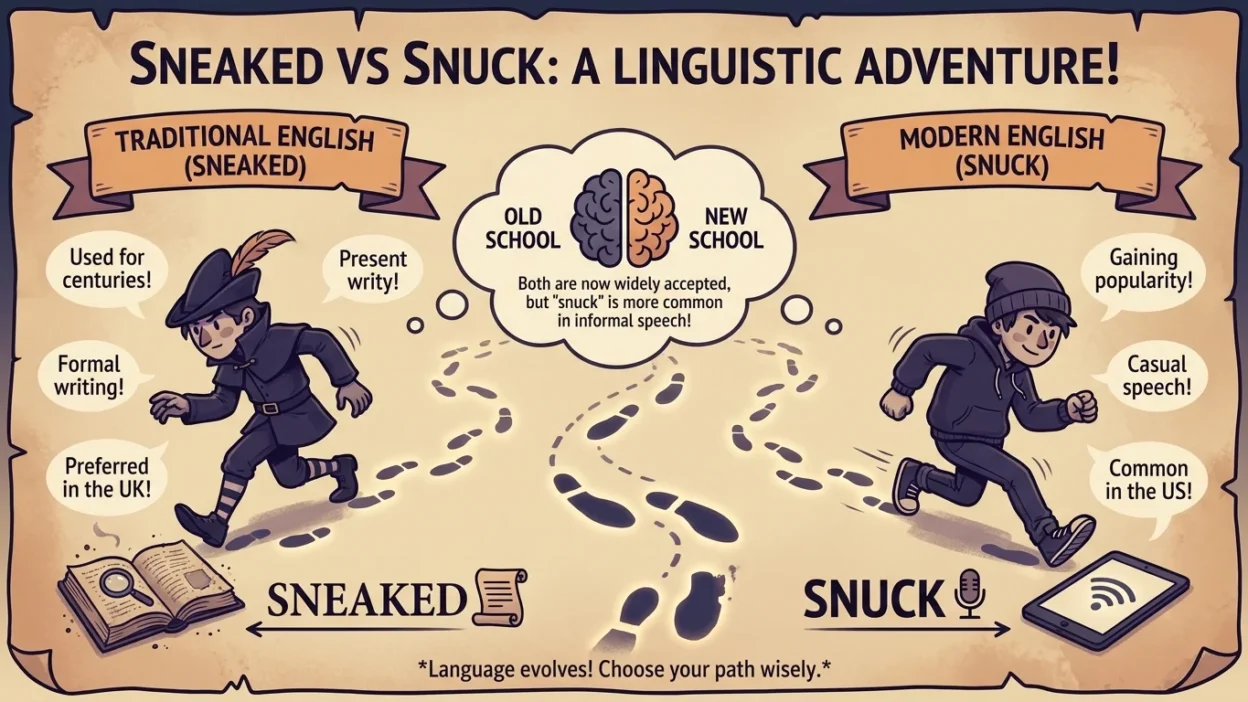
- Sneaked = the traditional standard past tense
- Snuck = an irregular modern variant that became widely accepted
👉 Simple rule:
Both work, but sneaked sounds more formal and traditional.
What Do “Sneaked” and “Snuck” Mean?
Both are past tense and past participle forms of the verb sneak.
Common Meanings
- Moved quietly or secretly
- Went somewhere unnoticed
- Did something stealthily
Example Sentences
- He sneaked into the room.
- He snuck into the room.
- They sneaked/snuck out after midnight.
👉 The meaning is identical in both forms.
Sneaked vs Snuck: Key Differences
Comparison Table: Sneaked vs Snuck
| Feature | Sneaked | Snuck |
|---|---|---|
| Correct spelling | ✔ Yes | ✔ Yes |
| Traditional form | ✔ Yes | ✖ No |
| Informal tone | Less | More |
| American English | Common | Very common |
| British English | More common | Less common |
| Meaning | Same | Same |
Why Are There Two Forms?
Originally, the standard past tense of sneak was:
- sneaked
Over time, English speakers formed:
- snuck
This followed patterns similar to:
- stick → stuck
- strike → struck
Eventually, snuck became widely accepted, especially in North American English.
👉 Today, dictionaries generally accept both forms.
When Should You Use “Sneaked”?
Use sneaked when:
- Writing formally
- Following traditional grammar style
- Writing academic or professional content
- Using British English
Examples
- She sneaked out quietly.
- He sneaked a look at the answers.
- The cat sneaked through the door.
👉 Sneaked often sounds more neutral and polished.
When Should You Use “Snuck”?
Use snuck when:
- Writing casually
- Using conversational tone
- Writing dialogue
- Using American English
Examples
- He snuck into the concert.
- They snuck away after dinner.
- She snuck a cookie before lunch.
👉 Snuck often sounds more natural in everyday speech.
Is “Snuck” Proper English?
Yes.
Although some older grammar traditions once criticized snuck, modern dictionaries and style guides widely accept it.
Today:
- Snuck is standard English
- Especially common in American English
👉 It is no longer considered incorrect.
Common Mistakes to Avoid
1. Thinking “Snuck” Is Wrong
❌ Snuck is incorrect
✔ Snuck is widely accepted modern English
2. Mixing Formal and Casual Tone
Choose the form that best matches your writing style.
3. Using Different Forms Inconsistently
Pick one version and stay consistent within the same piece of writing.
Helpful Tip to Remember
👉 Sneaked = traditional and formal
👉 Snuck = casual and conversational
Memory trick:
- Snuck sounds like stuck or struck, which helps explain its irregular form
More Examples in Context
Sneaked
- The child sneaked downstairs at night.
- She sneaked into the theater quietly.
- He sneaked a quick glance.
Snuck
- They snuck into the party.
- He snuck past security.
- She snuck out before sunrise.
Tone Difference Between Sneaked and Snuck
Sneaked
- More formal
- More traditional
- Slightly more common in British English
Snuck
- More casual
- More conversational
- Extremely common in American speech
👉 Both sound natural depending on context.
Synonyms and Related Words
Depending on context, you can also use:
- Crept
- Slipped
- Tiptoed
- Stole
- Moved quietly
👉 These alternatives can add variety to your writing.
American vs British English Note
American English
Frequently uses:
- sneaked
- snuck
Snuck is extremely common in speech.
British English
Usually prefers:
- sneaked
Though snuck is increasingly understood and used.
FAQs
1. Which is correct: sneaked or snuck?
Both are correct in modern English.
2. Which form is more formal?
Sneaked is generally considered more formal.
3. Is “snuck” proper English?
Yes, modern dictionaries accept it.
4. Which form is more common in America?
Snuck is very common in American English.
5. Which form is more common in Britain?
Sneaked is usually preferred in British English.
6. Do they mean different things?
No, both have the same meaning.
7. Which should I use in professional writing?
Sneaked is usually the safer formal choice.
Summary
Understanding sneaked vs snuck is simple once you know the style difference. Both are correct past tense forms of sneak. Sneaked is the older traditional form and often sounds more formal, while snuck is a newer irregular form that became highly popular in everyday American English.
Neither form is wrong. The best choice depends on your audience, tone, and writing style.
Actionable Takeaway
Next time you choose between these words, remember:
👉 Sneaked = traditional and formal
👉 Snuck = casual and conversational
Both are accepted English, so choose the version that best fits your tone and audience.