Have you ever wondered whether to write “dreamed” or “dreamt”? Both words appear in books, movies, songs, and everyday conversation, which can make the choice confusing.
The good news is that both are correct. They are simply different past tense forms of the verb dream, and the choice often depends on style, region, and tone.
In this guide, we’ll explain dreamed vs dreamt, show the differences, provide examples, highlight common mistakes, and help you confidently choose the best option.
Quick Answer
✅ Both dreamed and dreamt are correct
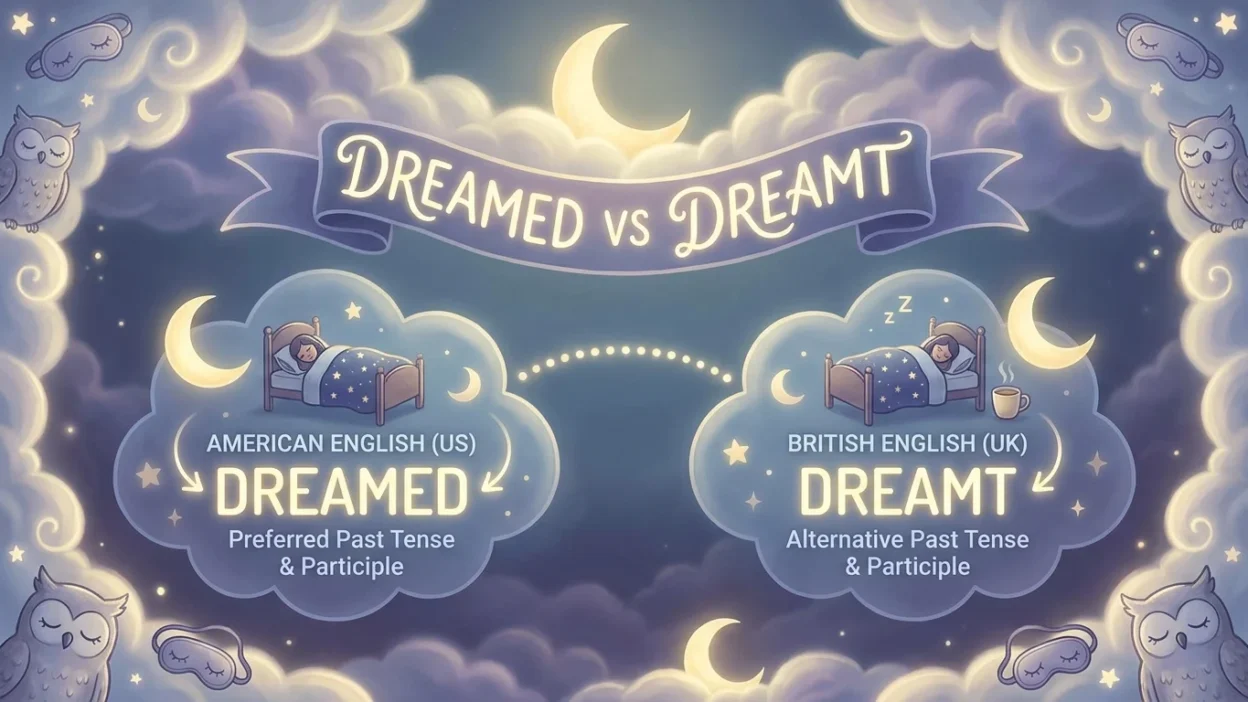
- 🇺🇸 Dreamed is more common in American English
- 🇬🇧 Dreamt is more common in British English
👉 Simple rule:
Use the form that matches your audience and writing style.
What Do “Dreamed” and “Dreamt” Mean?
Both words are past tense and past participle forms of the verb dream.
Common Meanings
- Experienced dreams during sleep
- Imagined or hoped for something
- Thought deeply about a goal or idea
Example Sentences
- I dreamed about flying last night.
- I dreamt about flying last night.
- She dreamed/dreamt of becoming a doctor.
👉 Both words mean exactly the same thing.
Dreamed vs Dreamt: Key Differences
The main differences are style and regional preference.
Comparison Table: Dreamed vs Dreamt
| Feature | Dreamed | Dreamt |
|---|---|---|
| Correct spelling | ✔ Yes | ✔ Yes |
| American English | More common | Less common |
| British English | Common | More common |
| Tone | Modern and neutral | Literary or traditional |
| Meaning | Same | Same |
Why Are There Two Forms?
English has many verbs with:
- regular past tense forms
- irregular past tense forms
Example Patterns
| Base Verb | Regular Form | Irregular Form |
|---|---|---|
| learn | learned | learnt |
| burn | burned | burnt |
| dream | dreamed | dreamt |
👉 Over time, both forms remained accepted in English.
When Should You Use “Dreamed”?
Use dreamed when:
- Writing in American English
- Using modern or conversational tone
- Writing for international audiences
Examples
- She dreamed of success.
- I dreamed about the ocean.
- He dreamed that he could fly.
👉 Dreamed sounds more modern and neutral.
When Should You Use “Dreamt”?
Use dreamt when:
- Writing in British English
- Creating a poetic or literary tone
- Following traditional style preferences
Examples
- She dreamt of distant lands.
- I dreamt about my childhood home.
- He dreamt of a peaceful future.
👉 Dreamt often feels softer and more literary.
Common Mistakes to Avoid
1. Thinking One Form Is Wrong
❌ Dreamt is incorrect
✔ Both dreamed and dreamt are correct
2. Mixing Styles
Choose one form and stay consistent throughout your writing.
3. Assuming Regional Rules Are Strict
Both forms are understood worldwide.
Helpful Tip to Remember
👉 Dreamed = more modern and American
👉 Dreamt = more traditional and British
Memory trick:
- “Dreamt” sounds older and more poetic
- “Dreamed” sounds more conversational
More Examples in Context
Dreamed
- They dreamed about traveling the world.
- She dreamed of opening a bakery.
- I dreamed all night.
Dreamt
- He dreamt of ancient castles.
- She dreamt about her family.
- They dreamt of peace and happiness.
Tone Difference Between Dreamed and Dreamt
Although the meanings are identical, the tone can feel slightly different.
Dreamed
- Neutral
- Everyday speech
- Common in modern writing
Dreamt
- Poetic
- Literary
- Slightly more emotional or dramatic
👉 Writers sometimes choose based on style rather than grammar.
Synonyms and Related Words
Depending on context, you can also use:
- Imagined
- Fantasized
- Envisioned
- Hoped
- Visualized
👉 These alternatives can add variety to your writing.
American vs British English Note
American English
Usually prefers:
- dreamed
- learned
- burned
British English
Often prefers:
- dreamt
- learnt
- burnt
👉 Both styles are grammatically correct.
FAQs
1. Which is correct: dreamed or dreamt?
Both are correct English forms.
2. Which is more common in American English?
Dreamed is more common in American English.
3. Which is more common in British English?
Dreamt is more common in British English.
4. Do dreamed and dreamt mean different things?
No, they have the same meaning.
5. Is “dreamt” old fashioned?
Not exactly, but it sounds more literary or traditional.
6. Which form should I use in formal writing?
Either is acceptable if used consistently.
7. Can I use both in the same article?
It is better to choose one style and stay consistent.
Summary
Understanding dreamed vs dreamt is simple once you know the regional and stylistic difference. Both words are correct past tense forms of dream. Dreamed is more common in American English and modern writing, while dreamt is more common in British English and literary contexts.
Neither form is more correct than the other. The best choice depends on your audience, tone, and writing style. Staying consistent will help your writing feel polished and professional.
Actionable Takeaway
Next time you write the word, remember:
👉 Dreamed = modern and American English
👉 Dreamt = traditional and British English
Both are correct, so choose the version that fits your audience and tone best.