Have you ever paused while writing and wondered whether to use “ageing” or “aging”? It’s a small spelling difference but one that often causes confusion.
The good news? Both are correct. The choice simply depends on whether you’re using American or British English.
In this guide, we’ll break down ageing vs aging, explain the difference, provide clear examples, highlight common mistakes, and help you choose the right form confidently.
Quick Answer
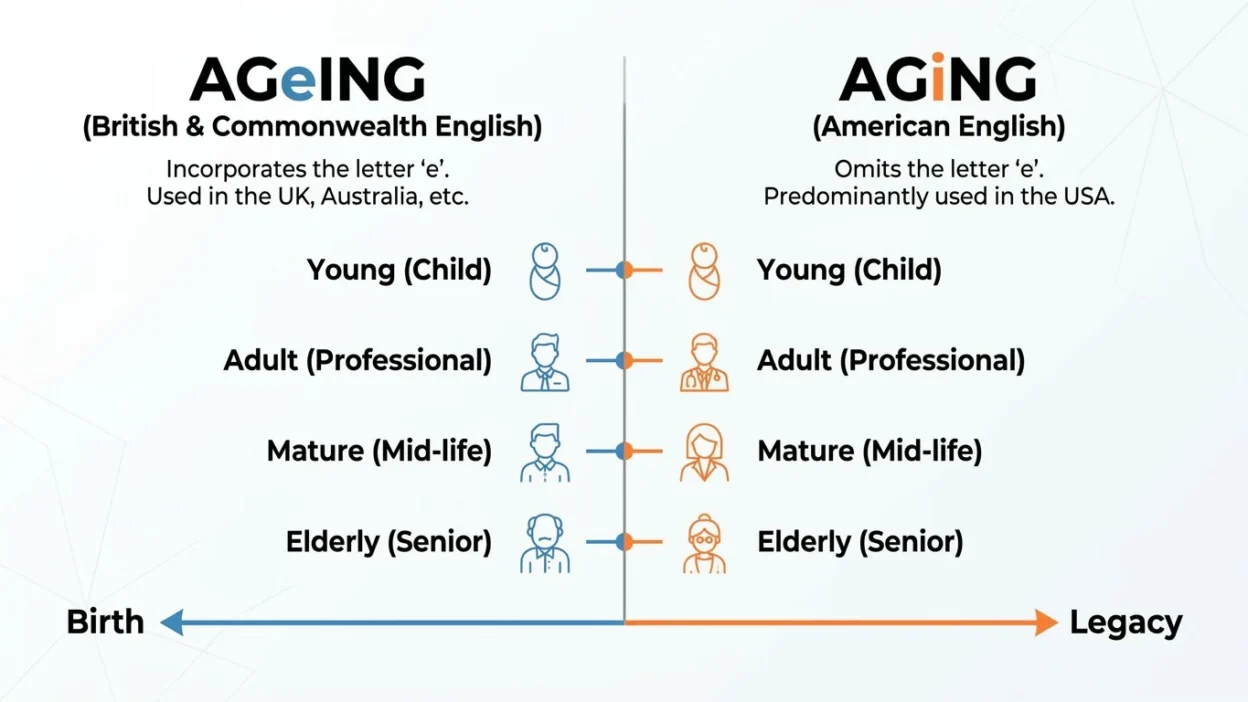
- 🇺🇸 Aging = American English
- 🇬🇧 Ageing = British English
👉 Simple rule:
Both are correct just match your audience and stay consistent.
What Do “Aging” and “Ageing” Mean?
Both aging and ageing are the present participle of the verb age, meaning to grow older or mature over time.
Common Meanings
- Growing older (people, animals)
- Maturing (wine, cheese, etc.)
- Showing signs of age
Example Sentences
- The population is aging rapidly. (American English)
- The population is ageing rapidly. (British English)
- This cheese is aging/ageing well.
👉 Meaning is identical only spelling differs.
Ageing vs Aging: Key Differences
The difference comes down to spelling style.
Comparison Table: Ageing vs Aging
| Feature | Aging 🇺🇸 | Ageing 🇬🇧 |
|---|---|---|
| Region | American English | British English |
| Spelling Style | Drops “e” | Keeps “e” |
| Meaning | Same | Same |
| Usage | U.S., global content | UK, Commonwealth countries |
Why Do These Spellings Differ?
This difference follows a general spelling pattern.
Key Pattern
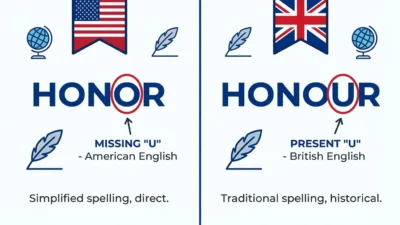
- American English → often drops the silent “e” before adding “-ing”
- age → aging
- British English → sometimes keeps the “e”
- age → ageing
👉 Both forms are accepted, depending on region.
When Should You Use “Aging”?
Use aging if you are writing in American English or for a global audience.
Best Situations
- Blogs and online content
- Health and science writing
- U.S.-based readers
Examples
- “He is aging gracefully.”
- “The aging process affects everyone.”
👉 Think of aging as the widely used global option.
When Should You Use “Ageing”?
Use ageing if you are writing in British English or for a UK audience.
Best Situations
- UK-based writing
- Academic or regional publications
- British English style guides
Examples
- “She is ageing naturally.”
- “The ageing population is growing.”
👉 Think of ageing as region specific but correct.
Common Mistakes to Avoid
1. Mixing Both Spellings
❌ The aging and ageing process
✔ Choose one style and stay consistent
2. Assuming One Is Wrong
Both are correct context matters.
3. Ignoring Audience
Always match your spelling to your readers.
Helpful Tip to Remember
👉 American English = aging (drop “e”)
👉 British English = ageing (keep “e”)
Memory trick:
- US → shorter (aging)
- UK → longer (ageing)
More Examples in Context
Aging (American English)
- “The aging wine tastes better.”
- “He studies the aging brain.”
Ageing (British English)
- “The ageing wine improves over time.”
- “She researches the ageing process.”
Synonyms and Related Words
To enhance your writing, you can also use:
- Maturing
- Growing older
- Developing
- Ripening
- Advancing in age
👉 These work in both English styles.
American vs British English Note
- Both aging and ageing are correct
- No difference in meaning or pronunciation
- Only spelling varies by region
👉 Consistency is more important than choice.
FAQs
1. Which is correct: ageing or aging?
Both are correct depends on American or British English.
2. Which is more common globally?
Aging is more common in global digital content.
3. Is “ageing” wrong in American English?
Not wrong, but less commonly used.
4. Can I use both in one article?
No, it’s best to stay consistent.
5. Why does British English keep the “e”?
Because it follows traditional spelling patterns.
6. Do they sound different?
No, pronunciation is the same.
7. Which should I use for SEO?
Use the version your target audience prefers.
Summary
Understanding ageing vs aging is simple: both words mean the same thing, but the spelling depends on the version of English you’re using. Aging is American English, while ageing is British English.
Choosing the right spelling depends on your audience and writing style. The key is to stay consistent throughout your content.
Actionable Takeaway
Next time you write, remember:
👉 Aging = American English
👉 Ageing = British English
Pick one style based on your audience and stick with it for clear, consistent, and professional writing.