Have you ever paused while writing and wondered whether to use “waiting” or “awaiting”? You’re definitely not alone. These two words seem almost identical, and in many cases, they feel interchangeable but there’s a subtle difference that can change the tone and correctness of your sentence.
In this guide, we’ll break down waiting vs awaiting in a simple, clear way. You’ll learn what each word means, how to use them properly, common mistakes to avoid, and easy tips to make the right choice every time.
Quick Answer
- ✅ Waiting is usually followed by “for” and is more conversational
- ✅ Awaiting is more formal and does not need “for”
👉 Simple rule:
- “I am waiting for your reply” ✔
- “I am awaiting your reply” ✔
- “I am awaiting for your reply” ❌
What Does “Waiting” Mean?
Waiting comes from the verb “wait,” which means staying in a place or delaying action until something happens.
Common Uses of “Waiting”
- Everyday conversation
- Informal and neutral writing
- Situations involving time or delay
Example Sentences
- I am waiting for the bus.
- She is waiting for your message.
- We’ve been waiting for hours.
👉 Key Point: “Waiting” is usually followed by for
Tone
- Casual to neutral
- Friendly and widely used in speech
What Does “Awaiting” Mean?
Awaiting comes from the verb “await,” which also means to wait for something but it is more formal and direct.
Common Uses of “Awaiting”
- Formal writing (emails, reports, business communication)
- Professional or official tone
- Written English more than spoken
Example Sentences
- We are awaiting your response.
- The team is awaiting approval.
- Several tasks are awaiting completion.
👉 Key Point: “Awaiting” does not use “for”
Tone
- Formal and polished
- More common in professional contexts
Waiting vs Awaiting: Key Differences
Although both words relate to waiting, they differ in structure and tone.
Comparison Table: Waiting vs Awaiting
| Feature | Waiting | Awaiting |
|---|---|---|
| Meaning | Staying until something happens | Waiting for something (formal) |
| Structure | Needs “for” | No “for” needed |
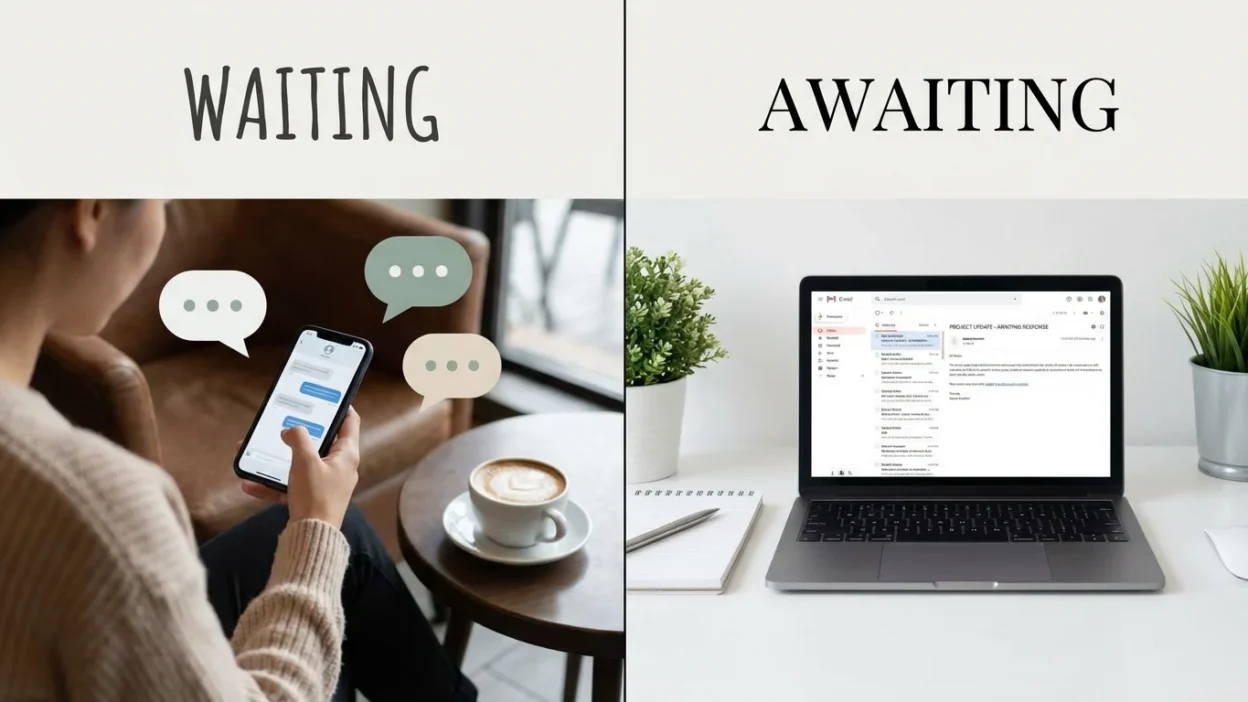
| Tone | Casual or neutral | Formal and professional |
| Usage Context | Everyday speech and writing | Business, formal writing |
| Example | Waiting for a reply | Awaiting your reply |
When Should You Use “Waiting”?
Use waiting when writing or speaking in a natural, conversational tone.
Best Situations for “Waiting”
- Daily conversations
- Informal emails or messages
- General writing
Examples
- “I’m waiting for your call.”
- “They are waiting for the results.”
- “We’re waiting for the meeting to start.”
👉 Think of waiting as relaxed and natural.
When Should You Use “Awaiting”?
Use awaiting when you want a more formal, polished tone—especially in professional writing.
Best Situations for “Awaiting”
- Business emails
- Reports or official documents
- Customer service communication
Examples
- “We are awaiting your confirmation.”
- “The application is awaiting review.”
- “Your response is awaiting approval.”
👉 Think of awaiting as formal and concise.
Grammar Rule You Must Remember
This is the most important rule in waiting vs awaiting:
- ✔ Waiting for something
- ✔ Awaiting something
- ❌ Awaiting for something
Correct vs Incorrect Examples
- ✔ I am waiting for your reply
- ✔ I am awaiting your reply
- ❌ I am awaiting for your reply
👉 This mistake is very common—watch out for it!
Common Mistakes to Avoid
Even experienced writers make these errors. Here’s how to avoid them:
1. Adding “for” After “Awaiting”
❌ We are awaiting for your response
✔ We are awaiting your response
👉 “Awaiting” already includes the idea of “for”
2. Using “Awaiting” in Casual Conversation
❌ I’m awaiting for the bus
✔ I’m waiting for the bus
👉 “Awaiting” sounds too formal here
3. Mixing Tone Incorrectly
- Formal email → use awaiting
- Friendly message → use waiting
4. Overusing “Awaiting” to Sound Professional
Sometimes simple is better. Don’t force formality if it feels unnatural.
Waiting vs Awaiting in American and British English
Good news there’s no major difference here.
- Both waiting and awaiting are used the same way in American and British English
- The difference is about tone, not regional spelling
👉 However, British English may slightly favor formal phrasing like “awaiting” in official writing.
Real Life Examples
Casual Context
- “I’m waiting for my friend.”
- “She’s waiting for the train.”
Professional Context
- “We are awaiting your approval.”
- “The document is awaiting signature.”
Mixed Context
- “I’m waiting for your reply” (neutral)
- “We are awaiting your reply” (formal)
Synonyms and Related Words
To improve your writing, here are some alternatives:
For “Waiting”
- Expecting
- Delaying
- Standing by
- Holding
For “Awaiting”
- Anticipating
- Pending
- Due
- Forthcoming
👉 These help add variety and clarity to your writing.
FAQs
1. Are waiting and awaiting the same?
They are similar in meaning, but awaiting is more formal and does not require “for.”
2. Can I say “awaiting for”?
No, this is incorrect. Always say “awaiting something” without “for.”
3. Which is better for emails?
For professional emails, awaiting sounds more polished. For casual emails, waiting is fine.
4. Is “waiting for” always correct?
Yes, when using “waiting,” you usually need “for.”
5. Is “awaiting” used in spoken English?
It is used, but less common. It sounds more formal in speech.
6. Can I use both in the same sentence?
Yes, if used correctly:
- “I’m waiting for your reply and awaiting final confirmation.”
7. Which is more polite?
Both are polite, but awaiting can sound more professional.
8. Is there any spelling difference worldwide?
No, both words are spelled the same in American and British English.
Summary
Understanding waiting vs awaiting is all about tone and grammar. Both words express the idea of expecting something, but they are used differently. Waiting is more casual and requires “for,” while awaiting is more formal and does not need it.
Choosing the right word helps your writing sound natural, clear, and appropriate for your audience. Whether you’re writing a quick message or a professional email, this small distinction can make a big difference.
Actionable Takeaway
Next time you write, remember this simple rule:
👉 Waiting → use “for” (waiting for something)
👉 Awaiting → no “for” (awaiting something)
If you want to sound natural, go with waiting.
If you want to sound polished and professional, choose awaiting.