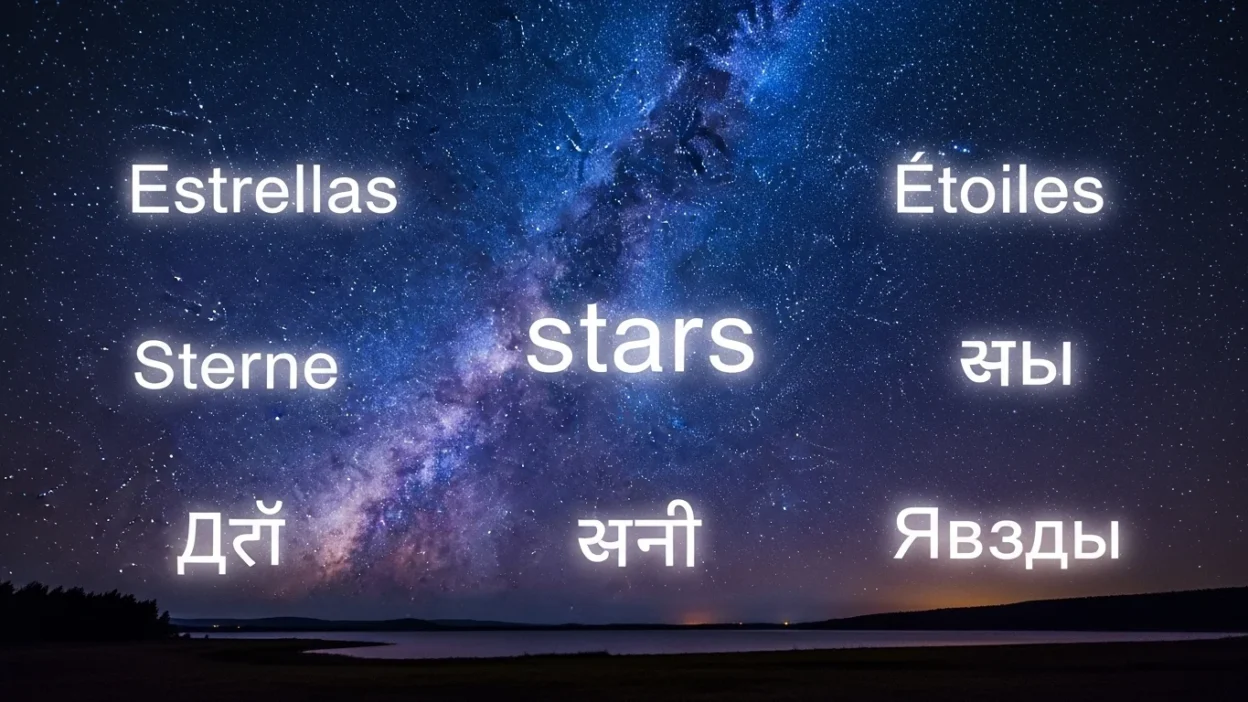
Have you ever looked up at the night sky and wondered how people across the globe describe those shining lights above us? Learning stars in different languages is not only fascinating, but it also connects you to cultures, poetry, science, and everyday conversations worldwide.
If you’re searching for stars in all languages, curious about how to say stars in different languages, or simply exploring unique stars translations, this guide gives you a complete and easy to read collection. Below, you’ll find 70 languages with native phrases, pronunciations, and real life examples to help you understand how people talk about stars around the world.
Stars in All Languages 70 Global Translations
| Language | Phrase | Example Sentence |
|---|---|---|
| English | Stars (Starz) | The stars shine brightly tonight. The stars are glowing in the sky. |
| Spanish | Estrellas (Es-TRE-yas) | Las estrellas brillan en el cielo. The stars shine in the sky. |
| French | Étoiles (Ay-TWAL) | Les étoiles sont belles. The stars are beautiful. |
| German | Sterne (SHTER-nuh) | Die Sterne leuchten hell. The stars shine brightly. |
| Italian | Stelle (STEL-leh) | Le stelle sono luminose. The stars are bright. |
| Portuguese | Estrelas (Es-TRE-las) | As estrelas brilham à noite. The stars shine at night. |
| Dutch | Sterren (STER-ren) | De sterren fonkelen. The stars sparkle. |
| Russian | Звёзды (Zvyoz-dy) | Звёзды сияют. The stars are shining. |
| Ukrainian | Зірки (ZIR-ky) | Зірки світять. The stars are shining. |
| Polish | Gwiazdy (GVYAZ-dy) | Gwiazdy są jasne. The stars are bright. |
| Turkish | Yıldızlar (YUL-duz-lar) | Yıldızlar parlak. The stars are bright. |
| Arabic | نجوم (Nu-JOOM) | النجوم جميلة. The stars are beautiful. |
| Hebrew | כוכבים (Ko-kha-VEEM) | הכוכבים זוהרים. The stars are glowing. |
| Hindi | तारे (TA-re) | तारे चमक रहे हैं। The stars are shining. |
| Urdu | ستارے (Si-TA-ray) | ستارے چمک رہے ہیں۔ The stars are shining. |
| Bengali | তারা (TA-ra) | তারা ঝলমল করছে। The stars are sparkling. |
| Punjabi | ਤਾਰੇ (TA-re) | ਤਾਰੇ ਚਮਕ ਰਹੇ ਹਨ। The stars are shining. |
| Gujarati | તારાઓ (TA-ra-o) | તારાઓ ચમકે છે. The stars shine. |
| Marathi | तारे (TA-re) | तारे चमकत आहेत. The stars are shining. |
| Tamil | நட்சத்திரங்கள் (Nat-cha-THI-ran-gal) | நட்சத்திரங்கள் பிரகாசிக்கின்றன. The stars shine. |
| Telugu | నక్షత్రాలు (Nak-sha-TRA-lu) | నక్షత్రాలు మెరుస్తున్నాయి. The stars are sparkling. |
| Kannada | ನಕ್ಷತ್ರಗಳು (Nak-sha-TRA-ga-lu) | ನಕ್ಷತ್ರಗಳು ಮಿನುಗುತ್ತಿವೆ. The stars are shining. |
| Malayalam | നക്ഷത്രങ്ങൾ (Nak-sha-TRA-ngal) | നക്ഷത്രങ്ങൾ തിളങ്ങുന്നു. The stars shine. |
| Chinese (Simplified) | 星星 (Xing-xing) | 星星在天空闪烁。 The stars sparkle in the sky. |
| Japanese | 星 (Hoshi) | 星が輝いています。 The stars are shining. |
| Korean | 별들 (Byeol-deul) | 별들이 빛나요. The stars are shining. |
| Thai | ดาว (Dao) | ดาวส่องแสง. The stars shine. |
| Vietnamese | Những ngôi sao (Ngwee-en ngoy sao) | Những ngôi sao sáng. The stars are bright. |
| Indonesian | Bintang-bintang (Bin-tang) | Bintang-bintang bersinar. The stars shine. |
| Malay | Bintang (Bin-tang) | Bintang bersinar terang. The stars shine brightly. |
| Filipino | Mga bituin (Ma-nga bi-tu-in) | Ang mga bituin ay kumikislap. The stars sparkle. |
| Greek | Αστέρια (As-TE-ria) | Τα αστέρια λάμπουν. The stars shine. |
| Swedish | Stjärnor (Sher-nor) | Stjärnorna lyser. The stars shine. |
| Norwegian | Stjerner (STYER-ner) | Stjernene skinner. The stars shine. |
| Danish | Stjerner (STYER-ner) | Stjernerne lyser. The stars shine. |
| Finnish | Tähdet (TEH-det) | Tähdet loistavat. The stars shine. |
| Icelandic | Stjörnur (STYOR-nur) | Stjörnurnar skína. The stars shine. |
| Czech | Hvězdy (HVEZ-dy) | Hvězdy svítí. The stars shine. |
| Slovak | Hviezdy (HVI-ez-dy) | Hviezdy svietia. The stars shine. |
| Hungarian | Csillagok (CHIL-la-gok) | A csillagok ragyognak. The stars shine. |
| Romanian | Stele (STE-le) | Stelele strălucesc. The stars shine. |
| Bulgarian | Звезди (ZVEZ-di) | Звездите блестят. The stars sparkle. |
| Serbian | Звезде (ZVEZ-de) | Звезде сијају. The stars shine. |
| Croatian | Zvijezde (Zvi-YEZ-de) | Zvijezde sjaje. The stars shine. |
| Slovenian | Zvezde (ZVEZ-de) | Zvezde svetijo. The stars shine. |
| Lithuanian | Žvaigždės (Zh-vaygzh-des) | Žvaigždės šviečia. The stars shine. |
| Latvian | Zvaigznes (Zvai-gz-nes) | Zvaigznes spīd. The stars shine. |
| Estonian | Tähed (TEH-hed) | Tähed säravad. The stars shine. |
| Albanian | Yjet (YET) | Yjet ndriçojnë. The stars shine. |
| Macedonian | Ѕвезди (ZVEZ-di) | Ѕвездите сјаат. The stars shine. |
| Armenian | Աստղեր (As-tgher) | Աստղերը փայլում են։ The stars shine. |
| Georgian | ვარსკვლავები (Var-skva-la-ve-bi) | ვარსკვლავები ანათებენ. The stars shine. |
| Persian | ستارهها (Se-ta-re-ha) | ستارهها میدرخشند. The stars shine. |
| Swahili | Nyota (Nyo-ta) | Nyota zinang’aa. The stars shine. |
| Zulu | Izinkanyezi (I-zin-kan-ye-zi) | Izinkanyezi ziyakhanya. The stars shine. |
| Xhosa | Iinkwenkwezi (In-kwen-kwe-zi) | Iinkwenkwezi ziyakhanya. The stars shine. |
| Afrikaans | Sterre (STE-re) | Die sterre skyn. The stars shine. |
| Somali | Xiddigo (Hid-di-go) | Xiddiguhu way ifayaan. The stars shine. |
| Amharic | ከዋክብት (Ke-wak-bet) | ከዋክብት ይብራሉ። The stars shine. |
| Nepali | तारा (TA-ra) | तारा चम्किरहेका छन्। The stars are shining. |
| Sinhala | තරු (Ta-ru) | තරු දිලේ. The stars shine. |
| Khmer | ផ្កាយ (Pkay) | ផ្កាយភ្លឺ. The stars shine. |
| Lao | ດາວ (Dao) | ດາວສ່ອງແສງ. The stars shine. |
| Burmese | ကြယ်များ (Kyal-myar) | ကြယ်များ လင်းနေသည်။ The stars shine. |
| Mongolian | Одод (O-dod) | Одод гэрэлтэж байна. The stars shine. |
| Kazakh | Жұлдыздар (Zhul-duz-dar) | Жұлдыздар жарқырайды. The stars shine. |
| Uzbek | Yulduzlar (Yul-duz-lar) | Yulduzlar porlaydi. The stars shine. |
| Azerbaijani | Ulduzlar (Ul-duz-lar) | Ulduzlar parlayır. The stars shine. |
| Haitian Creole | Zetwal (Zet-wal) | Zetwal yo briye. The stars shine. |
How to Say Stars in Different Languages Correctly
When learning stars translations, pronunciation matters. Many languages use plural forms differently. For example:
- Romance languages like Spanish and French add plural endings.
- Asian languages often rely on context instead of plural markers.
- Some languages, like Japanese, use a single form such as “星” for both singular and plural.
Practicing aloud helps you speak naturally and confidently.
Why Learning “Stars” Around the World Is Useful
Understanding stars in all languages can help you:
- Write multilingual poetry or songs
- Travel and connect with locals
- Study astronomy in global contexts
- Teach children cultural vocabulary
- Expand your language-learning skills
It’s a small word with universal meaning.
Cultural Meaning of Stars Around the World
Across cultures, stars symbolize:
- Hope and guidance
- Dreams and ambition
- Spiritual light
- Navigation and exploration
From ancient sailors to modern astronomers, stars continue to inspire humanity everywhere.
Conclusion
Learning stars in different languages opens a small but powerful window into global culture. This guide provided 70 translations, pronunciations, and example sentences to help you understand how people talk about stars around the world.
If you’re studying languages, writing creatively, or simply curious, these translations connect us under one shared sky.
FAQs
1. How do you say stars in different languages?
You can say stars in Spanish as “Estrellas,” in French as “Étoiles,” in German as “Sterne,” in Hindi as “तारे,” and in Japanese as “星.”
2. What is the most common translation of stars worldwide?
Most languages use a direct noun translation equivalent to “star” in plural form, such as Estrellas, Sterne, or Nyota.
3. How do Asian languages express stars?
Languages like Chinese use “星星,” Japanese uses “星,” and Korean uses “별들,” often relying on context for plural meaning.
4. Are stars translations the same as constellations?
No. Stars refer to individual celestial bodies, while constellations are groups of stars forming patterns.
5. Why should I learn stars in all languages?
Learning stars around the world improves vocabulary, cultural understanding, and communication skills.