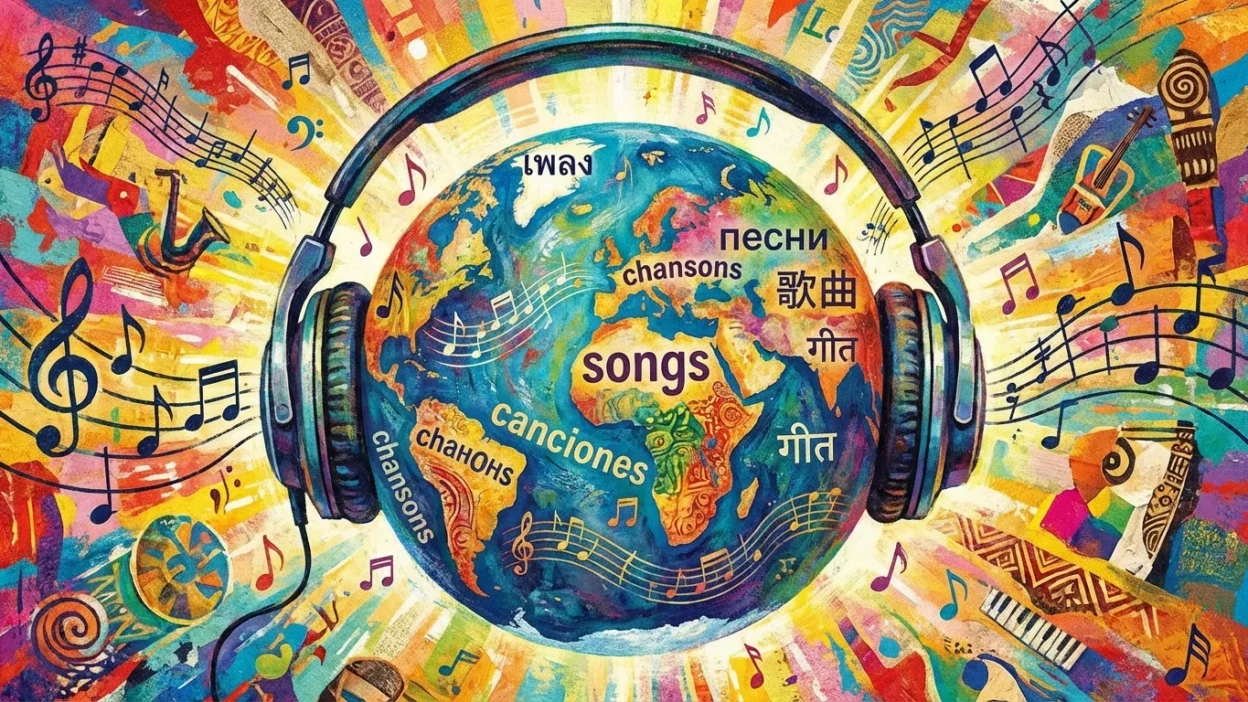
The word songs represents music with lyrics, rhythm, and emotion. Songs are a universal way of expressing feelings, telling stories, and connecting people across cultures. Every language has its own unique word for songs, reflecting its musical traditions.
Learning songs in different languages is useful for music lovers, language learners, and travelers. It helps you explore global cultures and communicate your love for music. In this guide, you’ll discover 70 songs translations around the world, along with pronunciation and simple example sentences.
Songs in 70 Different Languages Around the World
| Language | Phrase & Pronunciation | Example Sentence |
|---|---|---|
| English | Songs (songz) | I listen to songs every day. |
| Spanish | Canciones (kan-SYO-nes) | Escucho canciones todos los días. |
| French | Chansons (shan-SON) | J’écoute des chansons. |
| German | Lieder (LEE-der) | Ich höre jeden Tag Lieder. |
| Italian | Canzoni (kan-TSO-ni) | Ascolto canzoni ogni giorno. |
| Portuguese | Canções (kan-SOES) | Eu ouço canções diariamente. |
| Dutch | Liedjes (LEED-yes) | Ik luister elke dag naar liedjes. |
| Russian | Песни (PYES-ni) | Я слушаю песни каждый день. |
| Ukrainian | Пісні (PEES-ni) | Я слухаю пісні щодня. |
| Polish | Piosenki (pyo-SEN-ki) | Słucham piosenek codziennie. |
| Czech | Písně (PEES-nye) | Poslouchám písně každý den. |
| Slovak | Piesne (PEES-ne) | Počúvam piesne každý deň. |
| Hungarian | Dalok (DA-lok) | Minden nap hallgatok dalokat. |
| Romanian | Cântece (kun-TE-che) | Ascult cântece zilnic. |
| Greek | Τραγούδια (tra-GOO-dya) | Ακούω τραγούδια κάθε μέρα. |
| Turkish | Şarkılar (shar-kı-lar) | Her gün şarkılar dinlerim. |
| Arabic | أغاني (a-gha-ni) | أستمع إلى الأغاني كل يوم. |
| Hebrew | שירים (shi-rim) | אני שומע שירים כל יום. |
| Persian | آهنگها (a-hang-ha) | من هر روز آهنگ گوش میدهم. |
| Hindi | गाने (ga-ne) | मैं रोज गाने सुनता हूँ। |
| Urdu | گانے (ga-ne) | میں روز گانے سنتا ہوں۔ |
| Bengali | গান (gaan) | আমি প্রতিদিন গান শুনি। |
| Punjabi | ਗਾਣੇ (ga-ne) | ਮੈਂ ਹਰ ਰੋਜ਼ ਗਾਣੇ ਸੁਣਦਾ ਹਾਂ। |
| Gujarati | ગીતો (gee-to) | હું દરરોજ ગીતો સાંભળું છું. |
| Marathi | गाणी (gaa-ni) | मी रोज गाणी ऐकतो. |
| Tamil | பாடல்கள் (paa-dal-gal) | நான் தினமும் பாடல்கள் கேட்கிறேன். |
| Telugu | పాటలు (paa-ta-lu) | నేను ప్రతిరోజూ పాటలు వింటాను. |
| Kannada | ಹಾಡುಗಳು (haa-du-ga-lu) | ನಾನು ಪ್ರತಿದಿನ ಹಾಡುಗಳನ್ನು ಕೇಳುತ್ತೇನೆ. |
| Malayalam | പാട്ടുകൾ (paat-tu-kal) | ഞാൻ ദിവസവും പാട്ടുകൾ കേൾക്കുന്നു. |
| Sinhala | ගීත (gee-tha) | මම දිනපතා ගීත අහනවා. |
| Thai | เพลง (pleng) | ฉันฟังเพลงทุกวัน. |
| Vietnamese | Bài hát (bai hat) | Tôi nghe bài hát mỗi ngày. |
| Indonesian | Lagu (la-goo) | Saya mendengarkan lagu setiap hari. |
| Malay | Lagu (la-goo) | Saya dengar lagu setiap hari. |
| Filipino | Mga kanta (mga kan-ta) | Nakikinig ako ng mga kanta araw-araw. |
| Chinese (Mandarin) | 歌曲 (ge qu) | 我每天听歌曲. |
| Japanese | 歌 (u-ta) | 毎日歌を聞きます。 |
| Korean | 노래 (no-rae) | 나는 매일 노래를 듣는다. |
| Mongolian | Дуунууд (duu-nuud) | Би өдөр бүр дуунууд сонсдог. |
| Swahili | Nyimbo (nyim-bo) | Ninasikiliza nyimbo kila siku. |
| Zulu | Izingoma (i-zin-go-ma) | Ngilalela izingoma nsuku zonke. |
| Afrikaans | Liedjies (leed-yies) | Ek luister elke dag na liedjies. |
| Somali | Heeso (hee-so) | Waxaan dhageystaa heeso maalin kasta. |
| Amharic | ዘፈኖች (ze-fe-noch) | እኔ በየቀኑ ዘፈኖች እሰማለሁ. |
| Hausa | Wakoki (wa-ko-ki) | Ina sauraron wakoki kullum. |
| Yoruba | Orin (o-rin) | Mo gbọ orin lojoojumọ. |
| Igbo | Abụ (a-boo) | Ana m ege abụ kwa ụbọchị. |
| Danish | Sange (san-ge) | Jeg lytter til sange hver dag. |
| Swedish | Sånger (song-er) | Jag lyssnar på sånger varje dag. |
| Norwegian | Sanger (sang-er) | Jeg hører sanger hver dag. |
| Finnish | Laulut (lau-lut) | Kuuntelen lauluja joka päivä. |
| Icelandic | Lög (lug) | Ég hlusta á lög daglega. |
| Estonian | Laulud (lau-lud) | Ma kuulan laule iga päev. |
| Latvian | Dziesmas (dzee-es-mas) | Es klausos dziesmas katru dienu. |
| Lithuanian | Dainos (dai-nos) | Aš klausau dainų kasdien. |
| Serbian | Песме (pes-me) | Слушам песме сваки дан. |
| Croatian | Pjesme (pyes-me) | Slušam pjesme svaki dan. |
| Bosnian | Pjesme (pyes-me) | Slušam pjesme svaki dan. |
| Slovenian | Pesmi (pes-mi) | Poslušam pesmi vsak dan. |
| Albanian | Këngë (keng-ge) | Dëgjoj këngë çdo ditë. |
| Macedonian | Песни (pes-ni) | Слушам песни секој ден. |
| Georgian | სიმღერები (sim-gher-e-bi) | მე ყოველდღე სიმღერებს ვუსმენ. |
| Armenian | Երգեր (yer-ger) | Ես ամեն օր երգեր եմ լսում. |
| Kazakh | Әндер (an-der) | Мен күнде әндер тыңдаймын. |
| Uzbek | Qo‘shiqlar (qo-shiq-lar) | Men har kuni qo‘shiqlar tinglayman. |
| Tajik | Сурудҳо (su-rud-ho) | Ман ҳар рӯз сурудҳо мешунавам. |
| Nepali | गीतहरू (geet-ha-ru) | म हरेक दिन गीतहरू सुन्छु। |
| Khmer | បទចម្រៀង (bot cham-reang) | ខ្ញុំស្តាប់បទចម្រៀងរៀងរាល់ថ្ងៃ. |
| Lao | ເພງ (pheng) | ຂ້ອຍຟັງເພງທຸກມື້. |
The Meaning of “Songs” in Different Languages
The word songs refers to musical compositions with lyrics, often used for entertainment, storytelling, and emotional expression.
When exploring songs in all languages, you’ll notice that some languages use the same word for both singular and plural, while others change the form.
How the Word Songs Is Used in Everyday Life
People commonly use the word songs when talking about:
Music and entertainment
Favorite artists and playlists
Cultural traditions and festivals
Relaxation and mood
Understanding songs translations around the world helps you connect through music globally.
Why Learning Music Words in Different Languages Is Useful
Music is a global language. Knowing how to say songs in different languages helps you communicate your interests and explore different cultures more deeply.
It’s especially helpful for music lovers and travelers.
Conclusion
The word songs connects people through rhythm and emotion worldwide. While each language has its own way of expressing it, the meaning remains universal.
By learning songs in different languages, you enhance your vocabulary and appreciation of global music culture.
FAQs
What is songs in different languages?
Examples include Canciones (Spanish), Chansons (French), Lieder (German), Geet (Hindi), and 歌曲 (Chinese).
How do you say songs in 10 common languages?
English (Songs), Spanish (Canciones), French (Chansons), German (Lieder), Italian (Canzoni), Arabic (Aghani), Hindi (Gaane), Chinese (Ge Qu), Japanese (Uta), and Turkish (Şarkılar).
Is the word songs different from music?
Yes, songs specifically include lyrics, while music can be instrumental or vocal.
Why is learning song vocabulary useful?
It helps in conversations about entertainment and culture.
Are songs universal across cultures?
Yes, every culture has its own songs and musical traditions.