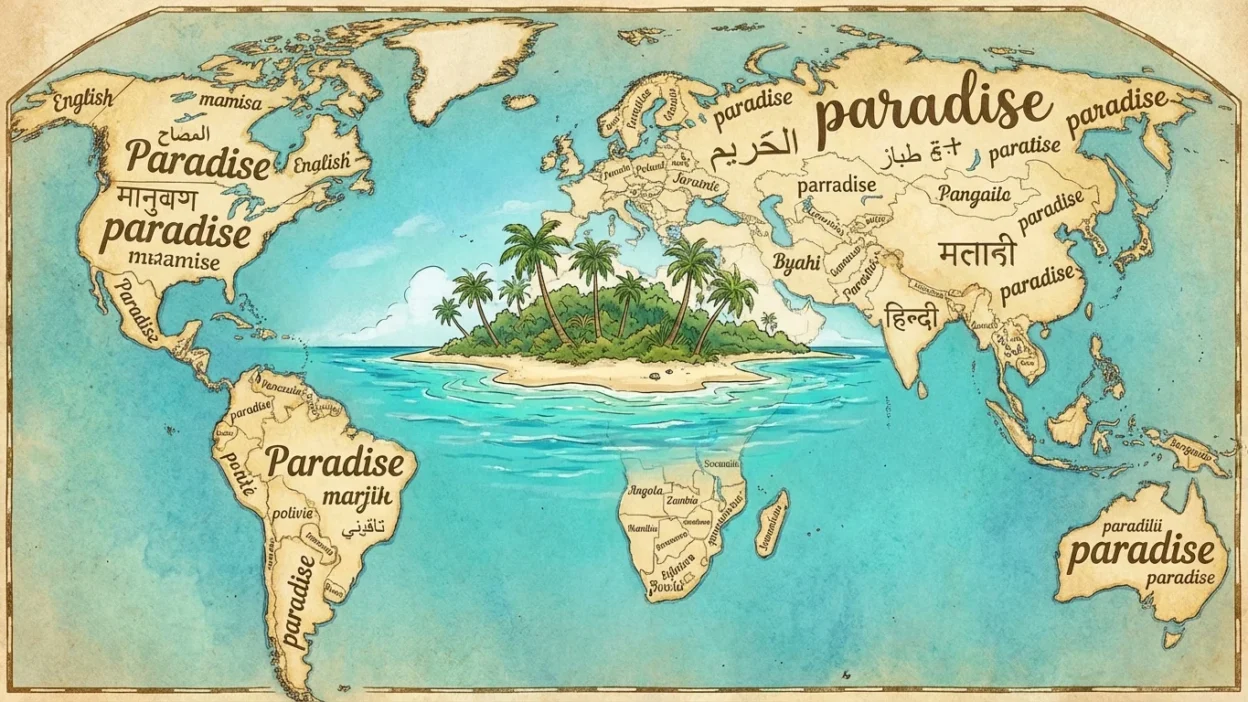
The word paradise often represents a place of perfect beauty, happiness, and peace. It can describe a heavenly realm, a tropical destination, or any place that feels calm and wonderful. Across cultures and languages, people use different words to express this powerful idea.
Learning paradise in different languages helps language learners, travelers, and culture lovers explore how different societies describe beauty and perfection.
In this guide, you will discover 70 paradise translations around the world, including pronunciation and simple example sentences that show how the word is used in everyday language.
Paradise in 70 Different Languages Around the World
| Language | Phrase & Pronunciation | Example Sentence |
|---|---|---|
| English | Paradise (PAIR-uh-dise) | This island feels like paradise. |
| Spanish | Paraíso (pa-ra-EE-so) | Esta playa es un paraíso. |
| French | Paradis (pa-ra-DEE) | Cette île est un paradis. |
| German | Paradies (pa-ra-DEES) | Diese Insel ist ein Paradies. |
| Italian | Paradiso (pa-ra-DEE-so) | Questa spiaggia è un paradiso. |
| Portuguese | Paraíso (pa-ra-EE-zo) | Esta ilha é um paraíso. |
| Dutch | Paradijs (pa-ra-DICE) | Dit eiland is een paradijs. |
| Russian | Рай (rai) | Этот остров — настоящий рай. |
| Ukrainian | Рай (rai) | Це місце — справжній рай. |
| Polish | Raj (rai) | Ta wyspa to raj. |
| Czech | Ráj (rai) | Tato pláž je ráj. |
| Slovak | Raj (rai) | Tento ostrov je raj. |
| Hungarian | Paradicsom (pa-ra-di-chom) | Ez a hely paradicsom. |
| Romanian | Paradis (pa-ra-DEES) | Această plajă este un paradis. |
| Greek | Παράδεισος (pa-RA-dee-sos) | Αυτό το νησί είναι παράδεισος. |
| Turkish | Cennet (jen-NET) | Bu yer adeta cennet. |
| Arabic | جنة (jan-nah) | هذه الجزيرة جنة. |
| Hebrew | גן עדן (gan e-den) | המקום הזה גן עדן. |
| Persian | بهشت (be-hesht) | اینجا مثل بهشت است. |
| Hindi | स्वर्ग (swarg) | यह जगह स्वर्ग जैसी है। |
| Urdu | جنت (jan-nat) | یہ جگہ جنت جیسی ہے۔ |
| Bengali | স্বর্গ (shorgo) | এই দ্বীপ স্বর্গের মতো। |
| Punjabi | ਜੰਨਤ (jan-nat) | ਇਹ ਥਾਂ ਜੰਨਤ ਵਰਗੀ ਹੈ। |
| Gujarati | સ્વર્ગ (swarg) | આ જગ્યા સ્વર્ગ જેવી છે. |
| Marathi | स्वर्ग (swarg) | हे ठिकाण स्वर्ग आहे. |
| Tamil | சொர்க்கம் (sor-gam) | இந்த இடம் சொர்க்கம் போல உள்ளது. |
| Telugu | స్వర్గం (swar-gam) | ఈ ప్రదేశం స్వర్గంలా ఉంది. |
| Kannada | ಸ್ವರ್ಗ (swar-ga) | ಈ ಸ್ಥಳ ಸ್ವರ್ಗದಂತೆ ಇದೆ. |
| Malayalam | സ്വർഗം (swar-gam) | ഈ സ്ഥലം സ്വർഗം പോലെയാണ്. |
| Sinhala | ස්වර්ගය (swar-ga-ya) | මේ තැන ස්වර්ගය වගේ. |
| Thai | สวรรค์ (sa-wan) | ที่นี่เหมือนสวรรค์. |
| Vietnamese | Thiên đường (thi-en duong) | Hòn đảo này là thiên đường. |
| Indonesian | Surga (sur-ga) | Pulau ini seperti surga. |
| Malay | Syurga (syur-ga) | Tempat ini seperti syurga. |
| Filipino | Paraiso (pa-ra-EE-so) | Ang lugar na ito ay parang paraiso. |
| Chinese (Mandarin) | 天堂 (tian tang) | 这个地方像天堂. |
| Japanese | 天国 (ten-go-ku) | この島は天国のようです。 |
| Korean | 천국 (cheon-guk) | 이곳은 천국 같아요. |
| Mongolian | Диваажин (di-vaa-jin) | Энэ газар диваажин шиг. |
| Swahili | Peponi (pe-po-ni) | Kisiwa hiki ni kama peponi. |
| Zulu | Izulu (i-zu-lu) | Le ndawo izulu. |
| Afrikaans | Paradys (pa-ra-dice) | Hierdie plek is paradys. |
| Somali | Janno (jan-no) | Meeshan waa janno. |
| Amharic | ገነት (ge-net) | ይህ ቦታ ገነት ነው. |
| Hausa | Aljanna (al-jan-na) | Wannan wuri aljanna ne. |
| Yoruba | Ọrun (o-run) | Ibi yi dabi ọrun. |
| Igbo | Eluigwe (e-lu-ig-we) | Ebe a dị ka eluigwe. |
| Danish | Paradis (pa-ra-DEES) | Denne strand er paradis. |
| Swedish | Paradis (pa-ra-DEES) | Den här ön är paradis. |
| Norwegian | Paradis (pa-ra-DEES) | Dette stedet er paradis. |
| Finnish | Paratiisi (pa-ra-TEE-si) | Tämä paikka on paratiisi. |
| Icelandic | Paradís (pa-ra-DEES) | Þetta er paradís. |
| Estonian | Paradiis (pa-ra-DEES) | See koht on paradiis. |
| Latvian | Paradīze (pa-ra-DEE-ze) | Šī vieta ir paradīze. |
| Lithuanian | Rojus (ro-yus) | Ši vieta yra rojus. |
| Serbian | Рај (rai) | Ово место је рај. |
| Croatian | Raj (rai) | Ovo mjesto je raj. |
| Bosnian | Raj (rai) | Ovo mjesto je raj. |
| Slovenian | Raj (rai) | Ta kraj je raj. |
| Albanian | Parajsë (pa-ra-yse) | Ky vend është parajsë. |
| Macedonian | Рај (rai) | Ова место е рај. |
| Georgian | სამოთხე (sa-mot-khe) | ეს ადგილი სამოთხეა. |
| Armenian | Դրախտ (dra-kht) | Այս վայրը դրախտ է. |
| Kazakh | Жұмақ (zhu-mak) | Бұл жер жұмақ. |
| Uzbek | Jannat (jan-nat) | Bu joy jannat. |
| Tajik | Биҳишт (bi-hisht) | Ин ҷой биҳишт аст. |
| Nepali | स्वर्ग (swarg) | यो ठाउँ स्वर्ग जस्तै छ। |
| Khmer | ស្ថានសួគ៌ (stan-suor) | កន្លែងនេះដូចស្ថានសួគ៌. |
| Lao | ສະຫວັນ (sa-wan) | ບ່ອນນີ້ເຫມືອນສະຫວັນ. |
The Meaning of “Paradise” in Different Languages
The word paradise often refers to a place of perfect beauty, happiness, or peace. In religious contexts, it can describe heaven or a divine garden. In everyday language, people use it to describe breathtaking natural places such as tropical islands or peaceful landscapes.
When exploring paradise in all languages, many translations are connected to religious or spiritual ideas of heaven.
How People Use the Word Paradise in Everyday Conversations
People commonly use the word paradise when describing:
Beautiful travel destinations
Peaceful or relaxing places
Dream vacation spots
Heavenly or spiritual locations
Learning paradise translations around the world helps people express admiration for beautiful places in different languages.
Why Learning Beautiful Words in Different Languages Is Interesting
Words like paradise show how cultures express ideas of beauty, peace, and happiness. Learning how to say paradise in different languages helps expand vocabulary and deepen cultural understanding.
It also makes communication more expressive and meaningful when talking about travel and nature.
Conclusion
The word paradise carries a powerful meaning in many cultures, symbolizing beauty, peace, and happiness. Although languages use different words, the idea behind paradise remains universal.
By learning paradise in different languages, you gain insight into how people around the world describe places that feel truly perfect.
FAQs
What is paradise in different languages?
Examples include Paraíso (Spanish), Paradis (French), Cennet (Turkish), Jannah (Arabic), and 天堂 (Chinese).
How do you say paradise in 10 common languages?
English (Paradise), Spanish (Paraíso), French (Paradis), German (Paradies), Italian (Paradiso), Arabic (Jannah), Hindi (Swarg), Chinese (Tian Tang), Japanese (Tengoku), and Turkish (Cennet).
Why do many languages have similar words for paradise?
Many European languages share similar roots from Greek and Latin influences.
Is paradise always related to religion?
Not always. It can also describe beautiful places or perfect environments.
Why is the word paradise used for travel destinations?
People use it to describe places with stunning scenery, relaxing atmosphere, and natural beauty.