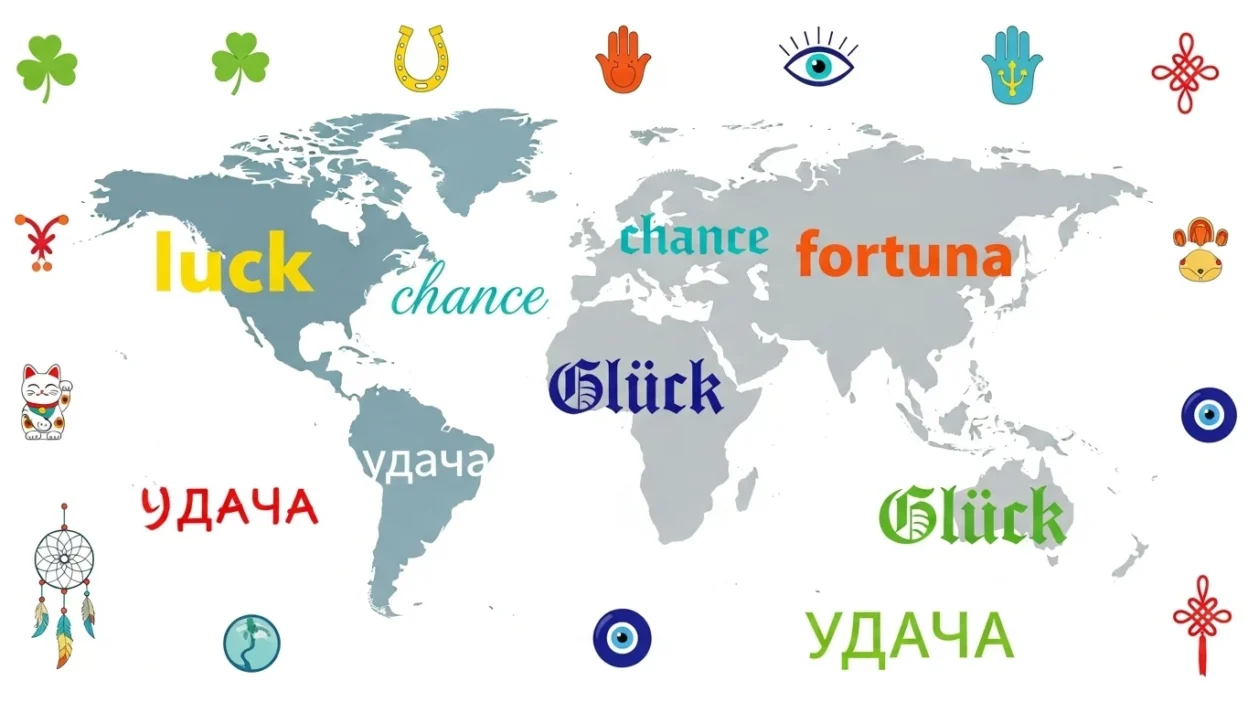
Luck is a universal concept that connects cultures, beliefs, and everyday conversations. Whether you’re wishing someone success, talking about fortune, or expressing hope, knowing how to say “luck” in different languages can be incredibly useful. This guide helps you explore luck in all languages, making it easier to communicate across cultures and expand your vocabulary in a meaningful way.
From common European languages to Asian and African dialects, this article covers how to say luck in different languages, along with pronunciation and real-life usage examples.
Luck in Different Languages Table
| Language | Phrase | Example Sentence |
|---|---|---|
| English | Luck (luk) | Good luck on your exam. (Wishing success) |
| Spanish | Suerte (swer-teh) | ¡Buena suerte! (Good luck!) |
| French | Chance (shahns) | Bonne chance! (Good luck!) |
| German | Glück (gluk) | Viel Glück! (Much luck!) |
| Italian | Fortuna (for-too-na) | Buona fortuna! (Good luck!) |
| Portuguese | Sorte (sor-chee) | Boa sorte! (Good luck!) |
| Dutch | Geluk (ghe-luk) | Veel geluk! (Much luck!) |
| Russian | Удача (oo-da-cha) | Удачи! (Good luck!) |
| Chinese (Mandarin) | 运气 (yun-chee) | 祝你好运 (Wish you good luck) |
| Japanese | 運 (un) | 幸運を祈る (I wish you luck) |
| Korean | 운 (oon) | 행운을 빌어요 (I wish you luck) |
| Arabic | حظ (haz) | حظ سعيد (Good luck) |
| Hindi | भाग्य (bhaag-ya) | तुम्हें शुभकामनाएँ (Best of luck) |
| Urdu | قسمت (qis-mat) | آپ کو خوش قسمتی ہو (Good luck to you) |
| Turkish | Şans (shans) | İyi şanslar! (Good luck!) |
| Greek | Τύχη (tee-khee) | Καλή τύχη! (Good luck!) |
| Polish | Szczęście (shchen-shcheh) | Powodzenia! (Good luck!) |
| Swedish | Tur (toor) | Lycka till! (Good luck!) |
| Danish | Held (held) | Held og lykke! (Good luck!) |
| Norwegian | Flaks (flaks) | Lykke til! (Good luck!) |
| Finnish | Onni (on-nee) | Onnea! (Good luck!) |
| Czech | Štěstí (shches-tee) | Hodně štěstí! (Good luck!) |
| Slovak | Šťastie (shtyas-tee-eh) | Veľa šťastia! (Good luck!) |
| Hungarian | Szerencse (seh-ren-cheh) | Sok szerencsét! (Good luck!) |
| Romanian | Noroc (no-rok) | Mult noroc! (Good luck!) |
| Bulgarian | Късмет (kus-met) | Късмет! (Good luck!) |
| Serbian | Sreća (sre-cha) | Srećno! (Good luck!) |
| Croatian | Sreća (sre-cha) | Sretno! (Good luck!) |
| Slovenian | Sreča (sre-cha) | Srečno! (Good luck!) |
| Ukrainian | Удача (oo-da-cha) | Удачі! (Good luck!) |
| Hebrew | מזל (ma-zal) | בהצלחה (Good luck) |
| Persian | شانس (shans) | موفق باشی (Good luck) |
| Thai | โชค (chok) | โชคดี (Good luck) |
| Vietnamese | May mắn (my man) | Chúc may mắn (Good luck) |
| Indonesian | Keberuntungan (keh-ber-un-toong-an) | Semoga beruntung (Good luck) |
| Malay | Nasib (na-seeb) | Semoga berjaya (Good luck) |
| Filipino | Swerte (swer-te) | Good luck sa iyo (Good luck to you) |
| Swahili | Bahati (ba-ha-tee) | Bahati njema (Good luck) |
| Zulu | Inhlanhla (in-hlan-hla) | Inhlanhla enhle (Good luck) |
| Afrikaans | Geluk (ghe-luk) | Sterkte! (Good luck!) |
| Icelandic | Heppni (hep-nee) | Gangi þér vel (Good luck) |
| Irish | Ádh (aw) | Ádh mór (Good luck) |
| Welsh | Lwc (look) | Pob lwc (Good luck) |
| Estonian | Õnn (urn) | Edu! (Good luck) |
| Latvian | Veiksme (vike-smeh) | Lai veicas (Good luck) |
| Lithuanian | Sėkmė (sek-meh) | Sėkmės! (Good luck!) |
| Albanian | Fat (faht) | Fat të mirë (Good luck) |
| Macedonian | Среќа (sre-kya) | Среќно! (Good luck!) |
| Georgian | იღბალი (igh-ba-lee) | წარმატებები (Good luck) |
| Armenian | Բախտ (bakht) | Հաջողություն (Good luck) |
| Mongolian | Аз (az) | Амжилт хүсье (Good luck) |
| Nepali | भाग्य (bhaag-ya) | शुभकामना (Good luck) |
| Sinhala | වාසනාව (vaa-sa-naa-wa) | සුභ පැතුම් (Good luck) |
| Bengali | ভাগ্য (bhaag-go) | শুভকামনা (Good luck) |
| Tamil | அதிர்ஷ்டம் (a-thir-sh-tam) | நல்ல அதிர்ஷ்டம் (Good luck) |
| Telugu | అదృష్టం (a-dris-tam) | శుభాకాంక్షలు (Good luck) |
| Kannada | ಅದೃಷ್ಟ (a-drish-ta) | ಶುಭಾಶಯಗಳು (Good luck) |
| Marathi | नशीब (na-sheeb) | शुभेच्छा (Good luck) |
| Gujarati | નસીબ (na-seeb) | શુભેચ્છાઓ (Good luck) |
| Punjabi | ਕਿਸਮਤ (kis-mat) | ਤੈਨੂੰ ਚੰਗੀ ਕਿਸਮਤ ਮਿਲੇ (Good luck to you) |
| Khmer | សំណាង (som-naang) | សំណាងល្អ (Good luck) |
| Lao | ໂຊກ (chok) | ໂຊກດີ (Good luck) |
| Burmese | ကံ (kan) | ကံကောင်းပါစေ (Good luck) |
| Amharic | እድል (idil) | መልካም እድል (Good luck) |
| Somali | Nasiib (na-seeb) | Nasiib wacan (Good luck) |
| Hausa | Sa’a (sa-ah) | Sa’a mai kyau (Good luck) |
| Yoruba | Orire (o-ree-reh) | Orire daadaa (Good luck) |
| Igbo | Chioma (chee-oh-ma) | Chioma diri gi (Good luck) |
What Does “Luck” Mean in Different Cultures
The idea of luck varies widely across cultures. In some societies, luck is tied to destiny or fate, while in others it is seen as something influenced by actions or spirituality. For example, in many Asian cultures, luck is strongly associated with numbers, colors, and traditions, while Western cultures often connect it to chance and opportunity.
Understanding luck translations helps you appreciate how different societies view success, fortune, and life outcomes.
How to Use “Luck” in Daily Conversations
Using “luck” correctly can make your communication more natural and culturally appropriate. Common situations include wishing someone success before an exam, interview, or journey.
Examples:
- “Good luck!” before a test or event
- “You’re lucky!” when something positive happens
- “Wish me luck” when seeking encouragement
Learning luck in different languages allows you to connect more personally with people from different backgrounds.
Why Learn Luck in Different Languages
Knowing how to say “luck” around the world has many benefits. It improves your language skills, enhances travel experiences, and helps you understand global cultures better. It also makes your conversations more engaging and respectful.
Whether you’re a student, traveler, or language enthusiast, learning how to say luck in different languages adds real value to your communication.
Conclusion
Luck is a powerful word that exists in every culture, though expressed differently across languages. By exploring these 70 translations, you gain not only vocabulary but also insight into how people around the world express hope, fortune, and positivity.
Keep practicing these phrases to make your global communication more meaningful and impactful.
FAQs
1. What is the most common way to say luck in different languages?
Most languages have their own unique word, but phrases like “good luck” are commonly used worldwide in similar contexts.
2. How do you say good luck in multiple languages?
Examples include “Buena suerte” (Spanish), “Bonne chance” (French), and “Viel Glück” (German).
3. Why is learning luck translations important?
It helps improve communication, cultural understanding, and language learning.
4. Are there cultural differences in the meaning of luck?
Yes, some cultures link luck with fate, while others connect it with effort or spiritual beliefs.
5. Can learning simple words like luck help in travel?
Absolutely, using local phrases like “good luck” can create positive interactions and show respect.