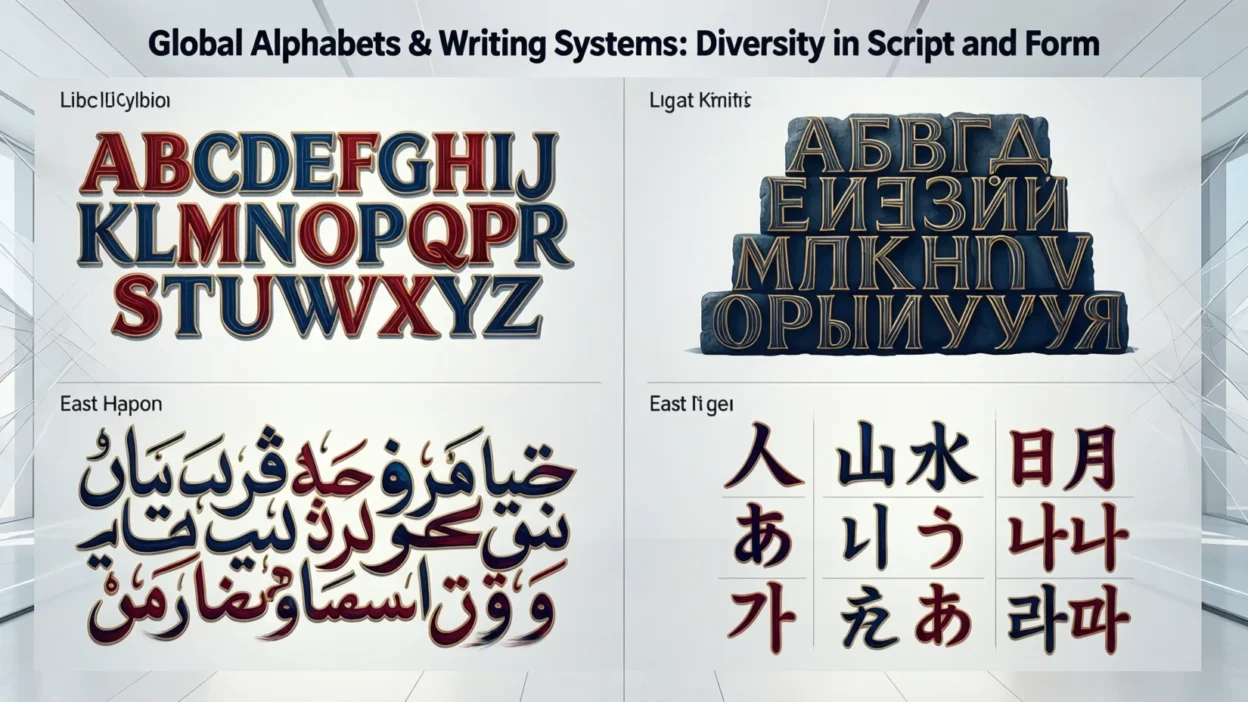
Letters are the building blocks of written language. Exploring letters in different languages reveals how cultures communicate, preserve history, and express identity through unique scripts and alphabets.
From the Latin alphabet to intricate Asian characters, writing systems vary widely. This guide helps you understand letters in all languages, how writing differs around the world, and how various letter systems and scripts function in everyday communication.
🌍 Writing Systems Around the World
Languages use different systems to represent sounds, words, or ideas:
- Alphabets Letters represent sounds (English, Spanish, Russian)
- Abjads Mostly consonants (Arabic, Hebrew)
- Abugidas Consonant vowel combinations (Hindi, Thai)
- Syllabaries Symbols represent syllables (Japanese Kana)
- Logographic systems Symbols represent words or meanings (Chinese)
Understanding these systems makes learning letters in different languages easier and more fascinating.
✍️ Letters in Different Languages (Global Examples)
| Language | Example Sentence | English Meaning |
|---|---|---|
| English | The alphabet has 26 letters. | Basic writing system |
| Spanish | El alfabeto tiene 27 letras. | The alphabet has 27 letters |
| French | L’alphabet contient 26 lettres. | The alphabet contains 26 letters |
| German | Das Alphabet hat 26 Buchstaben. | The alphabet has 26 letters |
| Italian | L’alfabeto ha 21 lettere. | The alphabet has 21 letters |
| Portuguese | O alfabeto tem 26 letras. | The alphabet has 26 letters |
| Russian | В алфавите 33 буквы. | The alphabet has 33 letters |
| Greek | Το αλφάβητο έχει 24 γράμματα. | The alphabet has 24 letters |
| Arabic | الأبجدية تحتوي على 28 حرفًا | The alphabet has 28 letters |
| Hebrew | לאלפבית יש 22 אותיות | The alphabet has 22 letters |
| Hindi | वर्णमाला में 52 अक्षर हैं | The alphabet has 52 letters |
| Urdu | حروفِ تہجی میں 38 حروف ہیں | The alphabet has 38 letters |
| Chinese | 汉字是表意文字 | Chinese characters represent meaning |
| Japanese | ひらがなは46文字あります | Hiragana has 46 characters |
| Korean | 한글에는 24개의 자모가 있습니다 | Hangul has 24 basic letters |
| Thai | ภาษาไทยมี 44 พยัญชนะ | Thai has 44 consonant letters |
| Bengali | বর্ণমালায় ৫০টি অক্ষর আছে | The alphabet has 50 letters |
| Tamil | தமிழ் எழுத்துக்கள் 247 ஆகும் | Tamil has 247 letters |
| Telugu | తెలుగు వర్ణమాలలో 56 అక్షరాలు | Telugu alphabet has 56 letters |
| Kannada | ಕನ್ನಡ ವರ್ಣಮಾಲೆಯಲ್ಲಿ 49 ಅಕ್ಷರಗಳು | Kannada alphabet has 49 letters |
| Malayalam | മലയാളത്തിൽ 54 അക്ഷരങ്ങളുണ്ട് | Malayalam has 54 letters |
| Punjabi | ਪੰਜਾਬੀ ਵਿੱਚ 35 ਅੱਖਰ ਹਨ | Punjabi has 35 letters |
| Gujarati | ગુજરાતી વર્ણમાળા માં 47 અક્ષરો છે | Gujarati alphabet has 47 letters |
| Marathi | मराठी वर्णमालेत 52 अक्षरे आहेत | Marathi alphabet has 52 letters |
| Nepali | नेपाली वर्णमालामा 46 अक्षर छन् | Nepali alphabet has 46 letters |
| Sinhala | සිංහල වර්ණමාලාවේ අක්ෂර 60 ක් ඇත | Sinhala alphabet has 60 letters |
| Turkish | Türk alfabesinde 29 harf vardır. | Turkish alphabet has 29 letters |
| Polish | Alfabet ma 32 litery. | The alphabet has 32 letters |
| Czech | Abeceda má 42 písmen. | The alphabet has 42 letters |
| Hungarian | Az ábécé 44 betűből áll. | The alphabet has 44 letters |
| Finnish | Suomen aakkosissa on 29 kirjainta. | Finnish alphabet has 29 letters |
| Swedish | Alfabetet har 29 bokstäver. | The alphabet has 29 letters |
| Norwegian | Alfabetet har 29 bokstaver. | The alphabet has 29 letters |
| Danish | Alfabetet har 29 bogstaver. | The alphabet has 29 letters |
| Dutch | Het alfabet heeft 26 letters. | The alphabet has 26 letters |
| Romanian | Alfabetul are 31 de litere. | The alphabet has 31 letters |
| Bulgarian | Азбуката има 30 букви. | The alphabet has 30 letters |
| Ukrainian | В алфавіті 33 літери. | The alphabet has 33 letters |
| Serbian | Азбука има 30 слова. | The alphabet has 30 letters |
| Croatian | Abeceda ima 30 slova. | The alphabet has 30 letters |
| Slovak | Abeceda má 46 písmen. | The alphabet has 46 letters |
| Lithuanian | Abėcėlė turi 32 raides. | The alphabet has 32 letters |
| Latvian | Alfabētā ir 33 burti. | The alphabet has 33 letters |
| Estonian | Tähestikus on 27 tähte. | The alphabet has 27 letters |
| Icelandic | Stafrófið hefur 32 stafi. | The alphabet has 32 letters |
| Irish | Tá 18 litir san aibítir. | The alphabet has 18 letters |
| Welsh | Mae gan yr wyddor 28 llythyren. | The alphabet has 28 letters |
| Albanian | Alfabeti ka 36 shkronja. | The alphabet has 36 letters |
| Armenian | Այբուբենը ունի 39 տառ | The alphabet has 39 letters |
| Georgian | ანბანში 33 ასოა | The alphabet has 33 letters |
| Mongolian | Цагаан толгойд 35 үсэг байдаг | The alphabet has 35 letters |
| Khmer | អក្ខរក្រមមាន 74 តួអក្សរ | Khmer alphabet has 74 letters |
| Lao | ພາສາລາວມີ 33 ພະຍັນຊະນະ | Lao has 33 consonant letters |
| Vietnamese | Bảng chữ cái có 29 chữ cái. | The alphabet has 29 letters |
| Indonesian | Alfabet memiliki 26 huruf. | The alphabet has 26 letters |
| Malay | Abjad mempunyai 26 huruf. | The alphabet has 26 letters |
| Filipino | May 28 titik ang alpabeto. | The alphabet has 28 letters |
| Swahili | Alfabeti ina herufi 24. | The alphabet has 24 letters |
| Zulu | Ulimi lunezinhlamvu ezingama-26. | The alphabet has 26 letters |
| Afrikaans | Die alfabet het 26 letters. | The alphabet has 26 letters |
| Hawaiian | He 13 mau leka i ka pīʻāpā. | The alphabet has 13 letters |
| Maori | E 15 ngā reta o te arapū. | The alphabet has 15 letters |
| Esperanto | La alfabeto havas 28 literojn. | The alphabet has 28 letters |
🧠 Why Learning Letters Around the World Matters
Understanding global scripts helps with:
- Learning new languages faster
- Appreciating cultural diversity
- Improving pronunciation
- Reading signs and names while traveling
Writing systems reflect history, identity, and tradition.
📝 Conclusion
Exploring letters in different languages shows how humans have developed unique ways to record speech and ideas. From alphabets to characters, every script tells a cultural story.
❓ FAQs
1. What are letters in different languages called?
They may be alphabets, scripts, characters, or writing systems depending on structure.
2. Do all languages use alphabets?
No, some use characters or syllabaries instead.
3. Which language has the most letters?
Some Indic and Southeast Asian scripts contain very large character sets.
4. Why do alphabets vary in size?
Because languages have different sounds and writing traditions.
5. Is learning foreign letters difficult?
It becomes easier with practice and understanding sound patterns.