Have you ever paused while writing and wondered if to use “lesser” or “lessor”? You’re not alone. These two words look very similar, but they have completely different meanings and using the wrong one can confuse your readers.
In this simple guide, we’ll break down lesser vs lessor, explain what each word means, show clear examples, and help you use them correctly with confidence in both everyday and professional writing.
Quick Answer
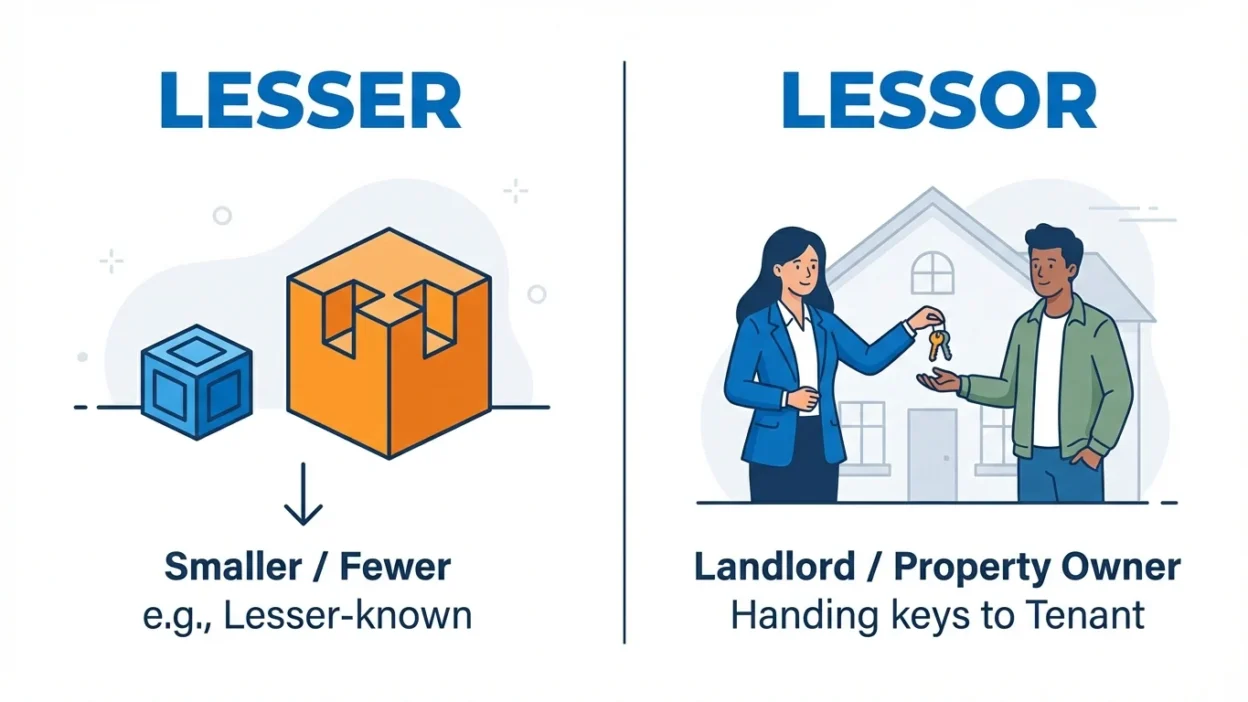
- ✅ Lesser = smaller, lower, or not as important
- ✅ Lessor = a person who rents out property (legal term)
👉 Simple rule:
- Comparing size/importance → lesser
- Talking about renting or leases → lessor
What Does “Lesser” Mean?
Lesser is an adjective. It describes something that is smaller, lower in importance, or of reduced value compared to something else.
Common Uses of “Lesser”
- Comparing importance or value
- Describing smaller degree or extent
- Talking about hierarchy or ranking
Example Sentences
- He chose the lesser of two evils.
- This issue is of lesser importance.
- The company focused on lesser risks first.
👉 Tone: Neutral, descriptive, commonly used in both formal and informal writing
What Does “Lessor” Mean?
Lessor is a noun used in legal and financial contexts. It refers to a person or entity that leases or rents out property to someone else.
Common Uses of “Lessor”
- Rental agreements
- Property leasing
- Legal or business documents
Example Sentences
- The lessor signed the lease agreement.
- The tenant must pay rent to the lessor.
- The lessor is responsible for maintenance.
👉 Tone: Formal, legal, and specific
Lesser vs Lessor: Key Differences
These two words differ in meaning, usage, and part of speech.
Comparison Table: Lesser vs Lessor
| Feature | Lesser | Lessor |
|---|---|---|
| Meaning | Smaller or less important | Person who rents out property |
| Part of Speech | Adjective | Noun |
| Usage Context | General writing | Legal and financial |
| Example | Lesser problem | The lessor owns the building |
When Should You Use “Lesser”?
Use lesser when you are comparing things and want to describe something as smaller, weaker, or less significant.
Best Situations for “Lesser”
- Comparisons
- Describing importance or impact
- General writing
Examples
- “She accepted the lesser offer.”
- “This is a lesser concern right now.”
- “He faced lesser challenges earlier.”
👉 Think of lesser as “less in degree or importance.”
When Should You Use “Lessor”?
Use lessor when referring to someone who leases or rents out property.
Best Situations for “Lessor”
- Legal contracts
- Rental agreements
- Business or financial documents
Examples
- “The lessor provided the lease terms.”
- “The lessor collects monthly rent.”
- “The agreement protects both the lessee and the lessor.”
👉 Think of lessor as “landlord in legal terms.”
Common Mistakes to Avoid
These words are often confused because they sound similar.
1. Using “Lessor” Instead of “Lesser”
❌ This is the lessor problem
✔ This is the lesser problem
👉 Use lesser for comparisons
2. Using “Lesser” in Legal Contexts
❌ The lesser signed the lease
✔ The lessor signed the lease
👉 Use lessor for rental/legal meaning
3. Confusing with “Lessee”
- Lessor = person who rents out property
- Lessee = person who rents/uses the property
👉 Easy way to remember:
- Lessor = owner
- Lessee = user
Helpful Tip to Remember
👉 Lesser = Less (smaller or lower)
👉 Lessor = Lease (renting property)
Memory trick:
- Lesser → Level (comparison)
- Lessor → Lease (legal term)
More Examples in Context
Lesser
- “He took the lesser risk.”
- “This task has lesser priority.”
Lessor
- “The lessor approved the contract.”
- “The lessor must follow legal obligations.”
Synonyms and Related Words
For “Lesser”
- Smaller
- Lower
- Minor
- Reduced
- Inferior
For “Lessor”
- Landlord
- Property owner
- Leasing party
👉 Using synonyms can improve clarity and variety in your writing.
Lesser vs Lessor in American and British English
- Both lesser and lessor are used the same way in American and British English
- No spelling differences exist
- The distinction is based on meaning, not region
FAQs
1. Are lesser and lessor the same?
No, they are completely different. Lesser describes degree, while lessor refers to a person renting out property.
2. Which word should I use in comparisons?
Use lesser when comparing importance, size, or value.
3. What is a lessor in simple terms?
A lessor is someone who rents out property like a landlord.
4. Is “lessor” commonly used?
It is mainly used in legal, real estate, and business contexts.
5. Can I use “lesser” in formal writing?
Yes, lesser is suitable for both formal and informal writing.
6. What is the opposite of lessor?
The opposite role is lessee, the person who rents the property.
7. Why are these words confusing?
Because they sound similar but have unrelated meanings.
Summary
Understanding lesser vs lessor comes down to meaning and context. Lesser is an adjective used to describe something smaller or less important, while lessor is a noun used in legal contexts for someone who rents out property.
Even though they sound alike, they are not interchangeable. Choosing the correct word ensures your writing is clear, accurate, and professional.
Actionable Takeaway
Next time you write, remember:
👉 Lesser = comparison (less important or smaller)
👉 Lessor = lease (person renting property)
A quick context check will help you pick the right word every time.