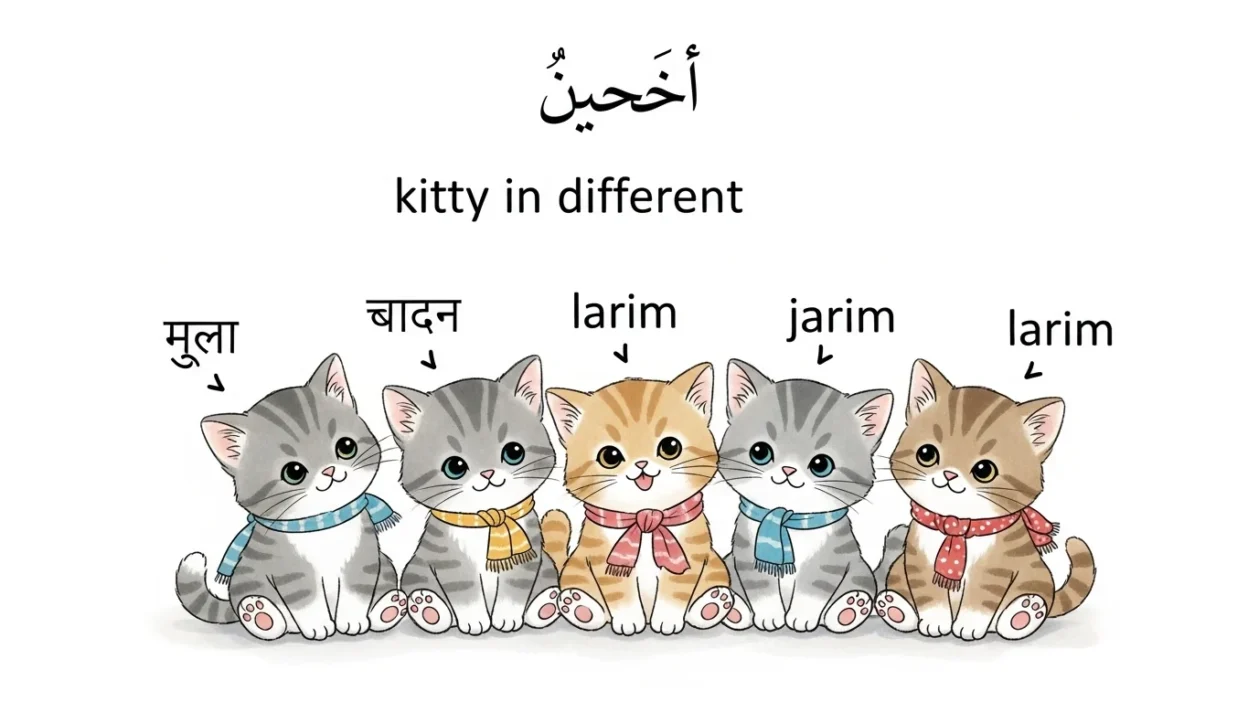
Learning how to say “kitty in different languages” is perfect for animal lovers, travelers, and language enthusiasts. The word “kitty” is a cute and affectionate way to refer to a cat, and every culture has its own adorable version of it.
In this guide, you’ll discover kitty in all languages with pronunciation and simple example sentences. Whether you’re curious about kitty translations or want to use them in real conversations, this article makes learning easy and fun.
Kitty in All Languages (70 Translations Table)
| Language | Phrase | Example Sentence |
|---|---|---|
| English | Kitty | The kitty is sleeping. (ki-tee) |
| Spanish | Gatito | El gatito duerme. (ga-tee-to) |
| French | Minou | Le minou dort. (mee-noo) |
| German | Kätzchen | Das Kätzchen schläft. (kets-chen) |
| Italian | Gattino | Il gattino dorme. (gat-tee-no) |
| Portuguese | Gatinho | O gatinho dorme. (ga-chee-nyo) |
| Dutch | Katje | Het katje slaapt. (kat-ye) |
| Russian | Котёнок | Котёнок спит. (ka-tyo-nok) |
| Polish | Kotek | Kotek śpi. (ko-tek) |
| Turkish | Yavru kedi | Yavru kedi uyuyor. (yav-roo ke-dee) |
| Arabic | قطة صغيرة | القطة الصغيرة نائمة. (qit-ta saghira) |
| Hindi | बिल्ली का बच्चा | बिल्ली का बच्चा सो रहा है। (billi ka bacha) |
| Urdu | بلی کا بچہ | بلی کا بچہ سو رہا ہے۔ (billi ka bacha) |
| Bengali | বিড়ালের বাচ্চা | বিড়ালের বাচ্চা ঘুমাচ্ছে। (bi-ra-ler ba-cha) |
| Chinese | 小猫 | 小猫在睡觉。 (shyao mao) |
| Japanese | 子猫 | 子猫が寝ている。 (ko-ne-ko) |
| Korean | 아기 고양이 | 아기 고양이가 자고 있다. (a-gi go-yang-i) |
| Thai | ลูกแมว | ลูกแมวนอนอยู่ (look maew) |
| Vietnamese | Mèo con | Mèo con ngủ. (meo kon) |
| Indonesian | Anak kucing | Anak kucing tidur. (a-nak koo-ching) |
| Malay | Anak kucing | Anak kucing tidur. (a-nak koo-ching) |
| Filipino | Kuting | Kuting natutulog. (koo-ting) |
| Greek | Γατάκι | Το γατάκι κοιμάται. (ga-ta-kee) |
| Swedish | Kattunge | Kattungen sover. (kat-ung-eh) |
| Norwegian | Kattunge | Kattungen sover. (kat-ung-eh) |
| Danish | Killing | Killingen sover. (kil-ling) |
| Finnish | Kissanpentu | Kissanpentu nukkuu. (kis-san-pen-too) |
| Czech | Kotě | Kotě spí. (ko-tye) |
| Slovak | Mačiatko | Mačiatko spí. (ma-chyat-ko) |
| Hungarian | Kiscica | Kiscica alszik. (kish-tsee-tsa) |
| Romanian | Pisicuță | Pisicuța doarme. (pi-see-koo-tsa) |
| Bulgarian | Коте | Коте спи. (ko-te) |
| Serbian | Маче | Маче спава. (ma-che) |
| Croatian | Mače | Mače spava. (ma-che) |
| Ukrainian | Кошеня | Кошеня спить. (ko-she-nya) |
| Hebrew | חתלתול | חתלתול ישן. (kha-tal-tool) |
| Persian | بچه گربه | بچه گربه خواب است. (bache gor-be) |
| Swahili | Kitoto cha paka | Kitoto cha paka kinalala. (ki-to-to cha pa-ka) |
| Zulu | Ikati elincane | Ikati elincane lilele. (ee-ka-tee e-lin-cha-ne) |
| Afrikaans | Katjie | Katjie slaap. (kat-yee) |
| Icelandic | Kettlingur | Kettlingur sefur. (ket-ling-ur) |
| Irish | Piscín | Tá an piscín ina chodladh. (pish-keen) |
| Scottish Gaelic | Piseag | Tha a’ phiseag na cadal. (pi-shak) |
| Welsh | Cath fach | Mae’r gath fach yn cysgu. (kath vakh) |
| Latvian | Kaķēns | Kaķēns guļ. (ka-kyens) |
| Lithuanian | Kačiukas | Kačiukas miega. (ka-choo-kas) |
| Estonian | Kassipoeg | Kassipoeg magab. (kas-si-poeg) |
| Albanian | Kotele | Kotele fle. (ko-te-le) |
| Macedonian | Маче | Маче спие. (ma-che) |
| Slovenian | Mucek | Mucek spi. (moo-tsek) |
| Georgian | კნუტი | კნუტი სძინავს. (knoo-tee) |
| Armenian | Կատվի ձագ | Կատվի ձագը քնած է։ (kat-vi dzag) |
| Mongolian | Муурын зулзага | Муурын зулзага унтаж байна. (moo-rin zul-za-ga) |
| Nepali | बिरालोको बच्चा | बिरालोको बच्चा सुतिरहेको छ। (bi-ra-lo ko ba-cha) |
| Sinhala | බළලා පැටියා | බළලා පැටියා නිදියි. (ba-la-la pa-ti-ya) |
| Khmer | កូនឆ្មា | កូនឆ្មាគេង។ (kon chma) |
| Lao | ລູກແມວ | ລູກແມວນອນ (look maew) |
| Burmese | ကြောင်ကလေး | ကြောင်ကလေးအိပ်သည်။ (kyoun ka-lay) |
| Malagasy | Zanaka saka | Zanaka saka matory. (za-na-ka sa-ka) |
| Haitian Creole | Ti chat | Ti chat ap dòmi. (tee sha) |
| Basque | Katutxo | Katutxo lo dago. (ka-toot-cho) |
| Catalan | Gatet | El gatet dorm. (ga-tet) |
| Galician | Gatiño | O gatiño dorme. (ga-tee-nyo) |
| Maltese | Qtates żgħir | Qtates żgħir rieqed. (ta-tes zheer) |
| Esperanto | Katido | Katido dormas. (ka-tee-do) |
| Latin | Catulus felis | Catulus felis dormit. (ka-too-lus fe-lis) |
How to Say Kitty in Different Languages Correctly
Learning kitty translations becomes easier when you focus on pronunciation and repetition. Many languages have soft, affectionate tones for this word, like “minou” in French or “gatito” in Spanish.
Practice saying each word out loud and try using it in simple sentences to improve memory and confidence.
Kitty Around the World: Cultural Meaning
Across cultures, “kitty” is often used as a loving or playful term. In many languages, the word changes slightly to reflect affection, such as adding diminutive endings (like ito in Spanish or ino in Italian).
This shows how languages express warmth and emotional connection differently.
Tips to Learn Kitty in All Languages Faster
- Start with familiar languages
- Repeat words daily
- Use them in real-life sentences
- Focus on similar-sounding words
Consistency and practice will help you quickly master how to say kitty in different languages.
Conclusion
Learning “kitty in different languages” is both fun and useful. With 70 translations, pronunciations, and examples, you now have a complete and easy guide to using this cute word worldwide.
FAQs
1. What is kitty in different languages?
It refers to how the word “kitty” is translated into multiple languages globally.
2. What is the most common translation of kitty?
Common ones include “gatito” (Spanish), “minou” (French), and “gattino” (Italian).
3. Is kitty the same as cat in all languages?
No, “kitty” is usually a more affectionate or diminutive form of “cat.”
4. How can I learn kitty translations quickly?
Practice pronunciation, repetition, and use in sentences daily.
5. Why do kitty words sound cute in many languages?
Many languages use soft sounds or diminutive forms to express affection.