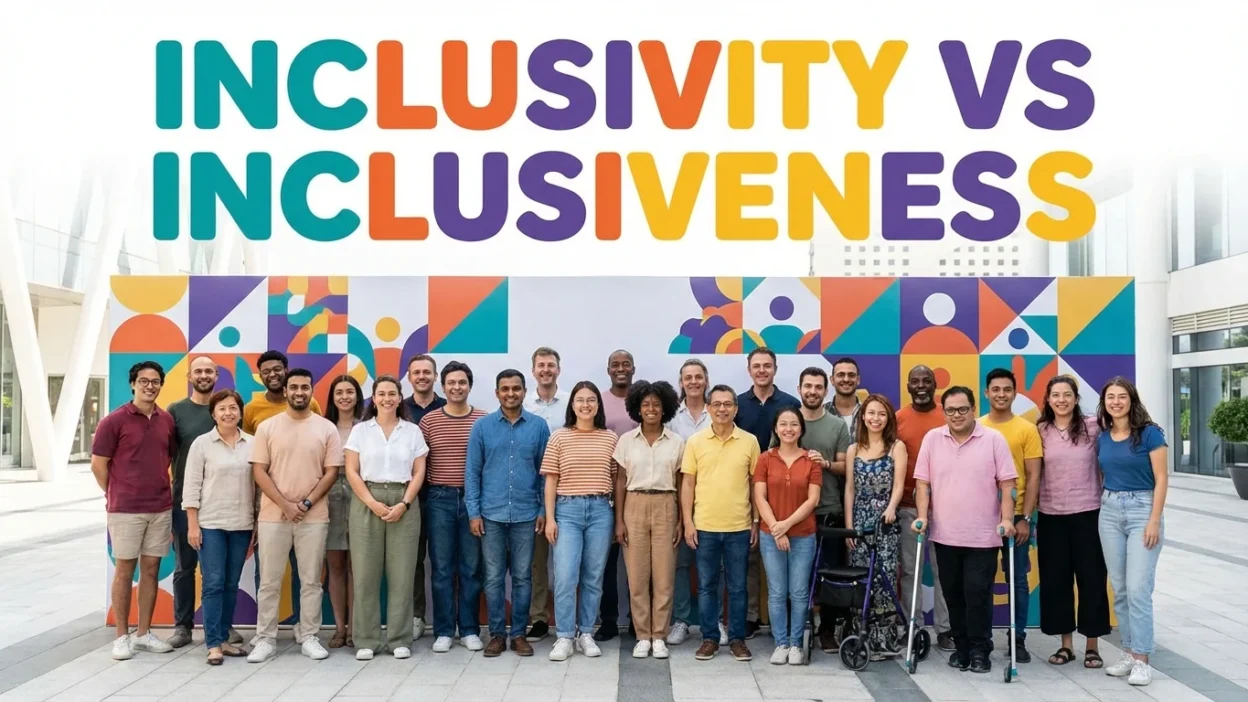
Have you ever wondered whether to use “inclusivity” or “inclusiveness”? These two words are often used interchangeably, especially in conversations about diversity, equity, and belonging. But while they’re closely related, they carry slightly different tones and usage preferences.
In this guide, we’ll break down inclusivity vs inclusiveness in a clear, human-friendly way. You’ll learn what each word means, how they differ, when to use them, and how to communicate your message with clarity and confidence.
Quick Answer
- ✅ Inclusivity = a modern, commonly used term focusing on creating inclusive environments
- ✅ Inclusiveness = the quality or state of being inclusive (more traditional/formal)
👉 Simple rule:
- Everyday and professional communication → inclusivity
- Describing the general quality or concept → inclusiveness
What Does “Inclusivity” Mean?
Inclusivity refers to the active practice of including people from all backgrounds, identities, and perspectives. It’s widely used in modern discussions about workplace culture, education, and social equality.
Common Uses of “Inclusivity”
- Diversity and inclusion (D&I) initiatives
- Workplace culture
- Social and community discussions
Example Sentences
- The company promotes inclusivity in the workplace.
- Schools should focus on inclusivity for all students.
- Their policies encourage greater inclusivity.
👉 Tone: Modern, action-oriented, widely used today
What Does “Inclusiveness” Mean?
Inclusiveness refers to the quality or state of being inclusive. It’s slightly more traditional and descriptive.
Common Uses of “Inclusiveness”
- Academic or formal writing
- General descriptions of inclusiveness
- Broader philosophical or conceptual contexts
Example Sentences
- The inclusiveness of the program impressed everyone.
- We value the inclusiveness of this community.
- The policy ensures inclusiveness across all groups.
👉 Tone: Formal, descriptive, slightly less common in everyday use
Inclusivity vs Inclusiveness: Key Differences
Although similar, these words differ in tone and usage.
Comparison Table: Inclusivity vs Inclusiveness
| Feature | Inclusivity | Inclusiveness |
|---|---|---|
| Meaning | Practice of being inclusive | Quality/state of being inclusive |
| Tone | Modern, active | Formal, descriptive |
| Usage Context | Workplace, social discussions | Academic, general descriptions |
| Popularity | More common today | Less commonly used |
| Example | Promote inclusivity | Ensure inclusiveness |
When Should You Use “Inclusivity”?
Use inclusivity when talking about actions, efforts, or policies that actively include people.
Best Situations for “Inclusivity”
- Workplace diversity discussions
- Social media or blogs
- Corporate communication
Examples
- “We are committed to inclusivity and diversity.”
- “The event focuses on cultural inclusivity.”
👉 Think of inclusivity as active inclusion in practice.
When Should You Use “Inclusiveness”?
Use inclusiveness when describing the overall quality or state of being inclusive.
Best Situations for “Inclusiveness”
- Academic writing
- Formal reports
- Descriptive contexts
Examples
- “The inclusiveness of the system is commendable.”
- “They emphasized the inclusiveness of their approach.”
👉 Think of inclusiveness as a characteristic or quality.
Common Mistakes to Avoid
1. Assuming They Are Completely Identical
While similar, they are not always interchangeable in tone.
2. Overusing “Inclusiveness” in Modern Writing
In today’s communication, inclusivity is more widely accepted and natural.
3. Ignoring Context and Audience
- Modern/business audience → inclusivity
- Academic/formal tone → inclusiveness
4. Mixing Tone Within the Same Content
Try to stay consistent with your chosen word.
Inclusivity vs Inclusiveness in American and British English
- Both inclusivity and inclusiveness are used the same way in American and British English
- No spelling differences exist
- The choice depends on tone, not region
👉 Globally, inclusivity is becoming the more popular term.
Real Life Examples
Workplace
- “Our company values inclusivity and respect.”
- “The inclusiveness of the policy ensures fairness.”
Education
- “Teachers should promote inclusivity in classrooms.”
- “The inclusiveness of the curriculum is important.”
Community
- “The event celebrates cultural inclusivity.”
- “We appreciate the inclusiveness of this group.”
Synonyms and Related Words
For Inclusivity
- Diversity
- Equality
- Belonging
- Representation
For Inclusiveness
- Openness
- Acceptance
- Fairness
- Unity
👉 These terms can enrich your writing and improve clarity.
FAQs
1. Are inclusivity and inclusiveness the same?
They are very similar, but inclusivity is more action-focused, while inclusiveness describes a quality.
2. Which word is more commonly used today?
Inclusivity is more popular, especially in workplaces and social discussions.
3. Can I use them interchangeably?
Sometimes yes, but it’s better to match the tone and context.
4. Which is better for business writing?
Inclusivity is preferred because it sounds modern and active.
5. Is “inclusiveness” outdated?
Not outdated, but less commonly used in everyday communication.
6. Are there spelling differences worldwide?
No, both words are spelled the same in American and British English.
7. Which word sounds more formal?
Inclusiveness tends to sound more formal and descriptive.
Summary
Understanding inclusivity vs inclusiveness comes down to tone and usage. Both words relate to the idea of including others, but inclusivity is more modern and action oriented, while inclusiveness focuses on the quality or state of being inclusive.
Choosing the right word helps your message feel natural and appropriate. In most modern contexts especially in business, education, and social discussions inclusivity is the preferred choice.
Actionable Takeaway
Next time you write, remember:
👉 Inclusivity = action and modern usage
👉 Inclusiveness = quality and formal tone
If you’re unsure, go with inclusivity it’s clearer, more current, and widely accepted.