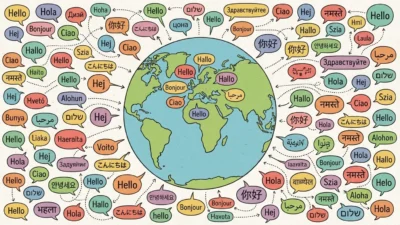
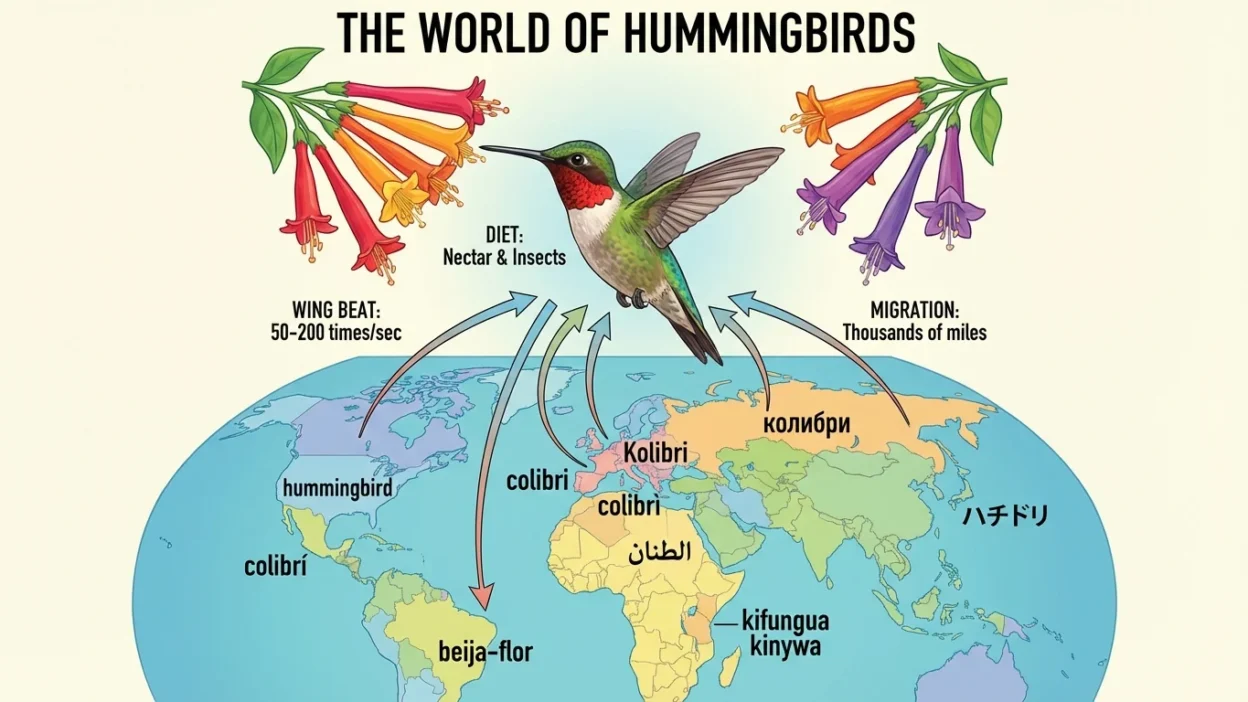
The hummingbird is one of the most fascinating birds in the world. Known for its tiny size, vibrant colors, and incredibly fast wing movement, this bird is admired in many cultures. Because hummingbirds are native mainly to the Americas, many languages have unique names for this beautiful creature.
Learning hummingbird in different languages is helpful for bird lovers, language learners, and travelers interested in wildlife vocabulary. It also shows how cultures describe animals differently around the world.
In this guide, you will discover 70 hummingbird translations around the world, along with pronunciation and simple example sentences showing how the word is used in everyday language.
Hummingbird in 70 Different Languages Around the World
| Language | Phrase & Pronunciation | Example Sentence |
|---|---|---|
| English | Hummingbird (HUM-ing-bird) | The hummingbird is drinking nectar. |
| Spanish | Colibrí (ko-lee-BREE) | El colibrí vuela muy rápido. |
| French | Colibri (ko-lee-BREE) | Le colibri boit du nectar. |
| German | Kolibri (ko-LEE-bree) | Der Kolibri fliegt schnell. |
| Italian | Colibrì (ko-lee-BREE) | Il colibrì è molto piccolo. |
| Portuguese | Beija-flor (BAY-zha flor) | O beija-flor visita as flores. |
| Dutch | Kolibrie (ko-LEE-bree) | De kolibrie drinkt nectar. |
| Russian | Колибри (ko-LEE-bree) | Колибри очень маленькая птица. |
| Ukrainian | Колібрі (ko-LEE-bree) | Колібрі літає швидко. |
| Polish | Koliber (ko-LEE-ber) | Koliber pije nektar. |
| Czech | Kolibřík (ko-LEE-breek) | Kolibřík je malý pták. |
| Slovak | Kolibrík (ko-LEE-breek) | Kolibrík lieta rýchlo. |
| Hungarian | Kolibri (ko-LEE-bree) | A kolibri gyorsan repül. |
| Romanian | Colibri (ko-lee-BREE) | Colibriul bea nectar. |
| Greek | Κολιμπρί (ko-lim-BREE) | Το κολιμπρί πετά γρήγορα. |
| Turkish | Sinek kuşu (see-NEK koo-shu) | Sinek kuşu çok hızlıdır. |
| Arabic | طائر الطنان (ta-ir at-ta-nan) | الطائر الطنان صغير. |
| Hebrew | יונק הדבש (yo-nek ha-dvash) | יונק הדבש קטן מאוד. |
| Persian | مرغ مگسخوار (morgh maghas-khor) | مرغ مگسخوار سریع پرواز میکند. |
| Hindi | हमिंगबर्ड (HUM-ing-bird) | हमिंगबर्ड फूलों से रस पीता है। |
| Urdu | ہمنگ برڈ (HUM-ing-bird) | ہمنگ برڈ بہت چھوٹا پرندہ ہے۔ |
| Bengali | হামিংবার্ড (ha-ming-bard) | হামিংবার্ড ফুলে বসে। |
| Punjabi | ਹਮਿੰਗਬਰਡ (ha-ming-bard) | ਹਮਿੰਗਬਰਡ ਤੇਜ਼ ਉੱਡਦੀ ਹੈ। |
| Gujarati | હમિંગબર્ડ (ha-ming-bird) | હમિંગબર્ડ ફૂલ પર બેસે છે. |
| Marathi | हमिंगबर्ड (ha-ming-bird) | हमिंगबर्ड खूप लहान आहे. |
| Tamil | ஹம்மிங் பறவை (ham-ming pa-ra-vai) | ஹம்மிங் பறவை மலர்களை சுற்றும். |
| Telugu | హమ్మింగ్ పక్షి (ham-ming pak-shi) | హమ్మింగ్ పక్షి వేగంగా ఎగురుతుంది. |
| Kannada | ಹಮ್ಮಿಂಗ್ ಪಕ್ಷಿ (ham-ming pak-shi) | ಹಮ್ಮಿಂಗ್ ಪಕ್ಷಿ ಚಿಕ್ಕದು. |
| Malayalam | ഹമ്മിംഗ് പക്ഷി (ham-ming pak-shi) | ഹമ്മിംഗ് പക്ഷി ചെറുതാണ്. |
| Sinhala | හම්මිං කුරුල්ලා (ham-ming ku-rul-la) | හම්මිං කුරුල්ලා ඉක්මනින් පියාසර කරයි. |
| Thai | นกฮัมมิงเบิร์ด (nok hum-ming-bird) | นกฮัมมิงเบิร์ดบินเร็ว. |
| Vietnamese | Chim ruồi (chim roo-ee) | Chim ruồi bay rất nhanh. |
| Indonesian | Burung kolibri (bu-rung ko-LEE-bree) | Burung kolibri minum nektar. |
| Malay | Burung kelicap (bu-rung ke-lee-chap) | Burung kelicap kecil. |
| Filipino | Kolibri (ko-LEE-bree) | Ang kolibri ay maliit. |
| Chinese (Mandarin) | 蜂鸟 (feng niao) | 蜂鸟飞得很快. |
| Japanese | ハチドリ (ha-chi-do-ri) | ハチドリは小さい鳥です。 |
| Korean | 벌새 (beol-sae) | 벌새는 매우 빠릅니다. |
| Mongolian | Колибри (ko-LEE-bree) | Колибри жижиг шувуу. |
| Swahili | Ndege mdogo wa asali (n-de-ge m-do-go wa a-sa-li) | Ndege huyu ni mdogo sana. |
| Zulu | Inyoni encane (in-yo-ni en-ka-ne) | Inyoni encane iyashesha. |
| Afrikaans | Kolibrie (ko-LEE-bree) | Die kolibrie vlieg vinnig. |
| Somali | Shimbir hummingbird (shim-bir hum-ming-bird) | Shimbirtu waa yar. |
| Amharic | ኮሊብሪ (ko-lee-bree) | ኮሊብሪ ትንሽ ወፍ ነው. |
| Hausa | Tsuntsun hummingbird (tsun-tsun hum-ming-bird) | Tsuntsun nan ƙarami ne. |
| Yoruba | Ẹyẹ hummingbird (e-ye hum-ming-bird) | Ẹyẹ yii kere. |
| Igbo | Nnụnụ hummingbird (n-nu-nu hum-ming-bird) | Nnụnụ a dị obere. |
| Danish | Kolibri (ko-LEE-bree) | Kolibrien flyver hurtigt. |
| Swedish | Kolibri (ko-LEE-bree) | Kolibrin är liten. |
| Norwegian | Kolibri (ko-LEE-bree) | Kolibrien flyr raskt. |
| Finnish | Kolibri (ko-LEE-bree) | Kolibri on pieni lintu. |
| Icelandic | Kolibrífugl (ko-LEE-bri-fu-gul) | Kolibrífugl er lítill. |
| Estonian | Koolibri (koo-LEE-bri) | Koolibri on väga väike. |
| Latvian | Kolibri (ko-LEE-bree) | Kolibri ir mazs putns. |
| Lithuanian | Kolibris (ko-LEE-bris) | Kolibris yra mažas. |
| Serbian | Колибри (ko-LEE-bree) | Колибри је мала птица. |
| Croatian | Kolibri (ko-LEE-bree) | Kolibri je mala ptica. |
| Bosnian | Kolibri (ko-LEE-bree) | Kolibri brzo leti. |
| Slovenian | Kolibri (ko-LEE-bree) | Kolibri je majhna ptica. |
| Albanian | Kolibri (ko-LEE-bree) | Kolibri është shumë i vogël. |
| Macedonian | Колибри (ko-LEE-bree) | Колибри е мала птица. |
| Georgian | კოლიბრი (ko-LEE-bree) | კოლიბრი სწრაფად დაფრინავს. |
| Armenian | Կոլիբրի (ko-LEE-bree) | Կոլիբրին փոքր թռչուն է. |
| Kazakh | Колибри (ko-LEE-bree) | Колибри өте кішкентай. |
| Uzbek | Kolibri (ko-LEE-bree) | Kolibri juda kichik qush. |
| Tajik | Колибри (ko-LEE-bree) | Колибри паррандаи хурд аст. |
| Nepali | हमिङबर्ड (ha-ming-bard) | हमिङबर्ड सानो चर हो। |
| Khmer | បក្សីហាំមីង (bak-si ham-ming) | បក្សីនេះតូចណាស់. |
| Lao | ນົກຮຳມິງເບີດ (nok ham-ming-berd) | ນົກນີ້ນ້ອຍຫຼາຍ. |
The Meaning of “Hummingbird” in Different Languages
The hummingbird gets its name from the humming sound created by its rapidly beating wings. In many languages, the name reflects its small size, fast movement, or its habit of drinking nectar from flowers.
When exploring hummingbird in all languages, you will notice that many European languages use variations of the word colibri.
How the Word Hummingbird Is Used in Everyday Conversation
People may use the word hummingbird when talking about:
Birdwatching and wildlife
Nature documentaries
Gardens and flowers
Travel experiences in tropical regions
Understanding hummingbird translations around the world can help bird enthusiasts and travelers describe this fascinating bird in different countries.
Why Learning Animal Names in Different Languages Is Useful
Animal vocabulary is important when learning a language. Knowing how to say hummingbird in different languages helps when reading books, watching nature programs, or discussing wildlife with people from other cultures.
It also expands vocabulary in a fun and educational way.
Conclusion
The hummingbird is admired worldwide for its beauty, speed, and unique flying ability. Although the word varies from language to language, many cultures share similar names for this remarkable bird.
By learning hummingbird in different languages, you gain insight into how different cultures describe animals and nature.
FAQs
What is hummingbird in different languages?
Examples include Colibrí (Spanish), Colibri (French), Kolibri (German), 蜂鸟 (Chinese), and ハチドリ (Japanese).
How do you say hummingbird in 10 common languages?
English (Hummingbird), Spanish (Colibrí), French (Colibri), German (Kolibri), Portuguese (Beija-flor), Chinese (Feng Niao), Japanese (Hachidori), Turkish (Sinek kuşu), Arabic (Tair al-tannan), and Hindi (Hummingbird).
Why do many languages use the word “colibri”?
The term originated from Caribbean languages and spread through European languages during early exploration.
Where are hummingbirds mostly found?
Hummingbirds are primarily found in North and South America.
Why are hummingbirds unique?
They are the only birds that can hover in place and fly backward.