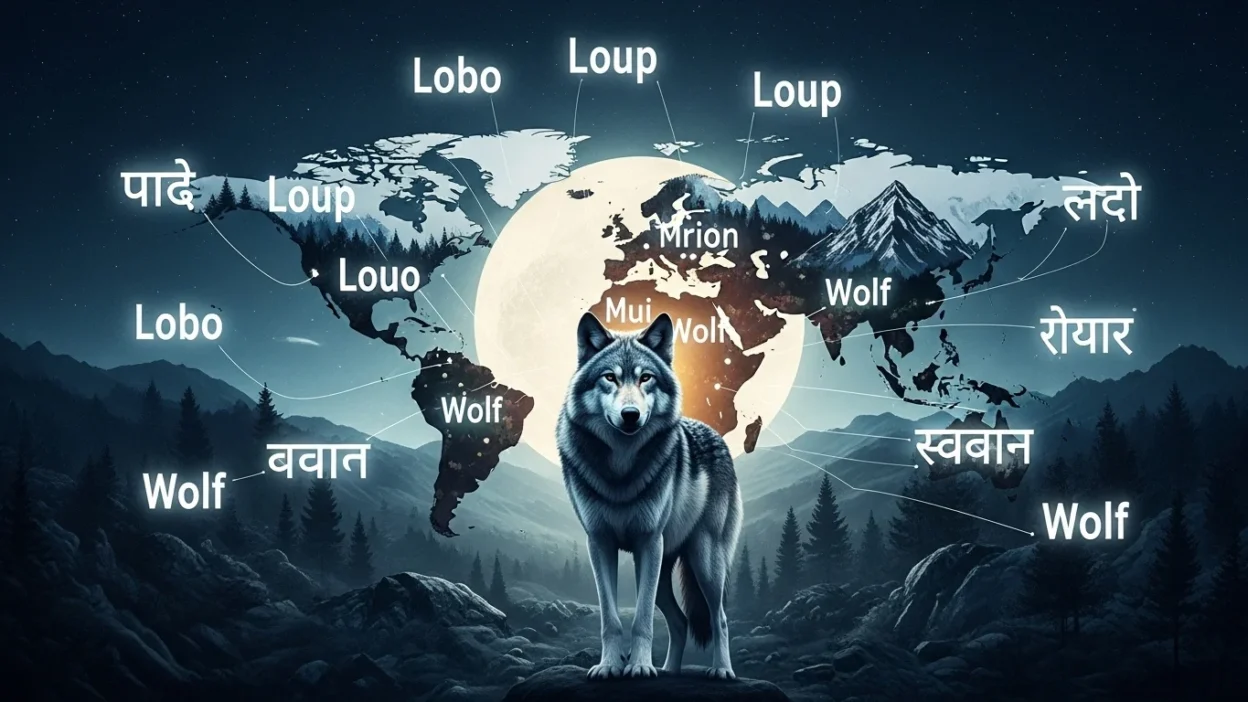
Learning how to say wolf in different languages is a fascinating way to explore global cultures, languages, and traditions. The word “wolf” carries deep symbolism in many societies representing strength, loyalty, and wilderness. Whether you’re a language learner, traveler, or just curious, this guide will help you understand wolf translations, pronunciation, and real-life usage across the world.
If you’ve ever wondered how to say wolf in different languages or searched for wolf in all languages, you’re in the right place. Below is a complete, easy-to-read table featuring 70 languages with pronunciation and example sentences.
Wolf in Different Languages (70 Translations Table)
| Language | Phrase / Example Sentence | Meaning |
|---|---|---|
| English | Wolf (woolf) – The wolf howls at night. | A wild animal howls at night |
| Spanish | Lobo (LO-bo) – El lobo corre en el bosque. | The wolf runs in the forest |
| French | Loup (loo) – Le loup est rapide. | The wolf is fast |
| German | Wolf (volf) – Der Wolf lebt im Wald. | The wolf lives in the forest |
| Italian | Lupo (LOO-po) – Il lupo è forte. | The wolf is strong |
| Portuguese | Lobo (LO-bo) – O lobo caça à noite. | The wolf hunts at night |
| Dutch | Wolf (volf) – De wolf rent snel. | The wolf runs fast |
| Russian | Волк (volk) – Волк воет ночью. | The wolf howls at night |
| Arabic | ذئب (dhi’b) – الذئب يعيش في الصحراء. | The wolf lives in the desert |
| Turkish | Kurt (koort) – Kurt hızlıdır. | The wolf is fast |
| Hindi | भेड़िया (bhe-ri-ya) – भेड़िया जंगल में रहता है। | The wolf lives in the jungle |
| Urdu | بھیڑیا (bheriya) – بھیڑیا خطرناک ہے۔ | The wolf is dangerous |
| Bengali | নেকড়ে (nek-re) – নেকড়ে বনে থাকে। | The wolf lives in the forest |
| Punjabi | ਭੇੜੀਆ (bheriya) – ਭੇੜੀਆ ਤੇਜ਼ ਦੌੜਦਾ ਹੈ। | The wolf runs fast |
| Chinese | 狼 (láng) – 狼在山上。 | The wolf is on the mountain |
| Japanese | 狼 (ōkami) – 狼は強いです。 | The wolf is strong |
| Korean | 늑대 (neuk-dae) – 늑대는 빠릅니다. | The wolf is fast |
| Thai | หมาป่า (maa-paa) – หมาป่าอยู่ในป่า | The wolf lives in the forest |
| Vietnamese | Sói (soy) – Sói chạy nhanh. | The wolf runs fast |
| Indonesian | Serigala (se-ri-ga-la) – Serigala berburu malam. | The wolf hunts at night |
| Malay | Serigala (se-ri-ga-la) – Serigala kuat. | The wolf is strong |
| Filipino | Lobo (LO-bo) – Ang lobo ay mabilis. | The wolf is fast |
| Greek | Λύκος (LEE-kos) – Ο λύκος τρέχει. | The wolf runs |
| Polish | Wilk (vilk) – Wilk żyje w lesie. | The wolf lives in forest |
| Czech | Vlk (vlk) – Vlk je silný. | The wolf is strong |
| Slovak | Vlk (vlk) – Vlk beží rýchlo. | The wolf runs fast |
| Hungarian | Farkas (far-kash) – A farkas erős. | The wolf is strong |
| Romanian | Lup (loop) – Lupul aleargă. | The wolf runs |
| Bulgarian | Вълк (vulk) – Вълкът е опасен. | The wolf is dangerous |
| Serbian | Vuk (vook) – Vuk trči. | The wolf runs |
| Croatian | Vuk (vook) – Vuk je brz. | The wolf is fast |
| Slovenian | Volk (volk) – Volk teče. | The wolf runs |
| Ukrainian | Вовк (vovk) – Вовк сильний. | The wolf is strong |
| Persian | گرگ (gorg) – گرگ در کوه است. | The wolf is in the mountain |
| Hebrew | זאב (ze’ev) – הזאב רץ מהר. | The wolf runs fast |
| Swahili | Mbwa mwitu (mbwa mwee-tu) – Mbwa mwitu anakimbia. | The wolf runs |
| Zulu | Impisi (im-pee-si) – Impisi iyashesha. | The wolf is fast |
| Afrikaans | Wolf (volf) – Die wolf jag snags. | The wolf hunts at night |
| Somali | Yey (yey) – Yey waa xoog badan. | The wolf is strong |
| Amharic | ተኩላ (tekula) – ተኩላ ፈጣን ነው | The wolf is fast |
| Yoruba | Ikooko (ee-ko-ko) – Ikooko yara. | The wolf is quick |
| Igbo | Nkịta ọhịa (nkita ohia) – Nkịta ọhịa ọsọ ọsọ. | The wolf is fast |
| Hausa | Kerkeci (ker-ke-chi) – Kerkeci yana gudu. | The wolf runs |
| Finnish | Susi (soo-si) – Susi juoksee. | The wolf runs |
| Swedish | Varg (varg) – Vargen springer. | The wolf runs |
| Norwegian | Ulv (oolv) – Ulven er sterk. | The wolf is strong |
| Danish | Ulv (oolv) – Ulven løber. | The wolf runs |
| Icelandic | Úlfur (ool-fur) – Úlfur er hraður. | The wolf is fast |
| Estonian | Hunt (hoont) – Hunt jookseb. | The wolf runs |
| Latvian | Vilks (vilks) – Vilks skrien. | The wolf runs |
| Lithuanian | Vilkas (vil-kas) – Vilkas stiprus. | The wolf is strong |
| Albanian | Ujk (uyk) – Ujku vrapon. | The wolf runs |
| Macedonian | Волк (volk) – Волкот е силен. | The wolf is strong |
| Georgian | მგელი (mgeli) – მგელი სწრაფია. | The wolf is fast |
| Armenian | Գայլ (gayl) – Գայլը վազում է։ | The wolf runs |
| Nepali | ब्वाँसो (bwan-so) – ब्वाँसो छिटो छ। | The wolf is fast |
| Sinhala | වෘකයා (wrukaya) – වෘකයා වේගවත්ය | The wolf is fast |
| Tamil | ஓநாய் (onai) – ஓநாய் வேகமாக ஓடும் | The wolf runs fast |
| Telugu | తోడేలు (tho-de-lu) – తోడేలు పరుగెడుతుంది | The wolf runs |
| Kannada | ತೋಳ (tola) – ತೋಳ ವೇಗವಾಗಿದೆ | The wolf is fast |
| Malayalam | ഓന (ona) – ഓന വേഗത്തിലാണ് | The wolf is fast |
| Marathi | लांडगा (land-ga) – लांडगा धावतो | The wolf runs |
| Gujarati | વરુ (varu) – વરુ ઝડપથી દોડે છે | The wolf runs fast |
| Khmer | ចចក (chachok) – ចចករត់ | The wolf runs |
| Lao | ໝາປ່າ (ma pa) – ໝາປ່າໄວ | The wolf is fast |
| Mongolian | Чоно (chono) – Чоно хурдан | The wolf is fast |
| Burmese | ဝံပုလွေ (wan pa lwe) – ဝံပုလွေ မြန်သည် | The wolf is fast |
| Malagasy | Amboadia (am-bo-a-di-a) – Amboadia mihazakazaka | The wolf runs |
Why Learn “Wolf” in Different Languages?
Understanding wolf around the world translations helps you connect with cultures, literature, and folklore. Wolves appear in myths, stories, and even national symbols across many countries.
It’s also useful for:
- Language learning and vocabulary building
- Traveling and cultural understanding
- Storytelling and creative writing
Common Patterns in Wolf Translations
Across many languages, you’ll notice patterns:
- European languages often use similar roots like lup, wolf, or vuk
- Asian languages tend to have unique native terms
- African languages often describe wolves with descriptive phrases
This shows how language evolves based on geography and culture.
Tips to Remember Wolf in Different Languages
- Practice pronunciation daily using simple sentences
- Group similar languages together (like Romance or Slavic)
- Use flashcards for faster memorization
- Try speaking with native speakers for accuracy
Conclusion
Learning how to say wolf in different languages is more than just memorizing words it’s a gateway to understanding global cultures and communication.
With these 70 translations, you now have a powerful resource to explore languages and expand your vocabulary in a fun and meaningful way.
FAQs
1. How do you say wolf in most European languages?
Many European languages use similar words like “wolf,” “lobo,” “loup,” or “lupo,” all derived from ancient roots.
2. What is wolf in Asian languages?
In Chinese it’s “láng,” in Japanese “ōkami,” and in Hindi “bheriya.”
3. Why are wolf translations similar in some languages?
Languages from the same family (like Latin-based languages) share common origins, which makes words similar.
4. Is wolf a common word in all languages?
Yes, since wolves exist in many regions, most languages have a specific word for them.
5. What is the easiest way to learn wolf in all languages?
Use repetition, practice sentences, and group similar languages together for faster learning.