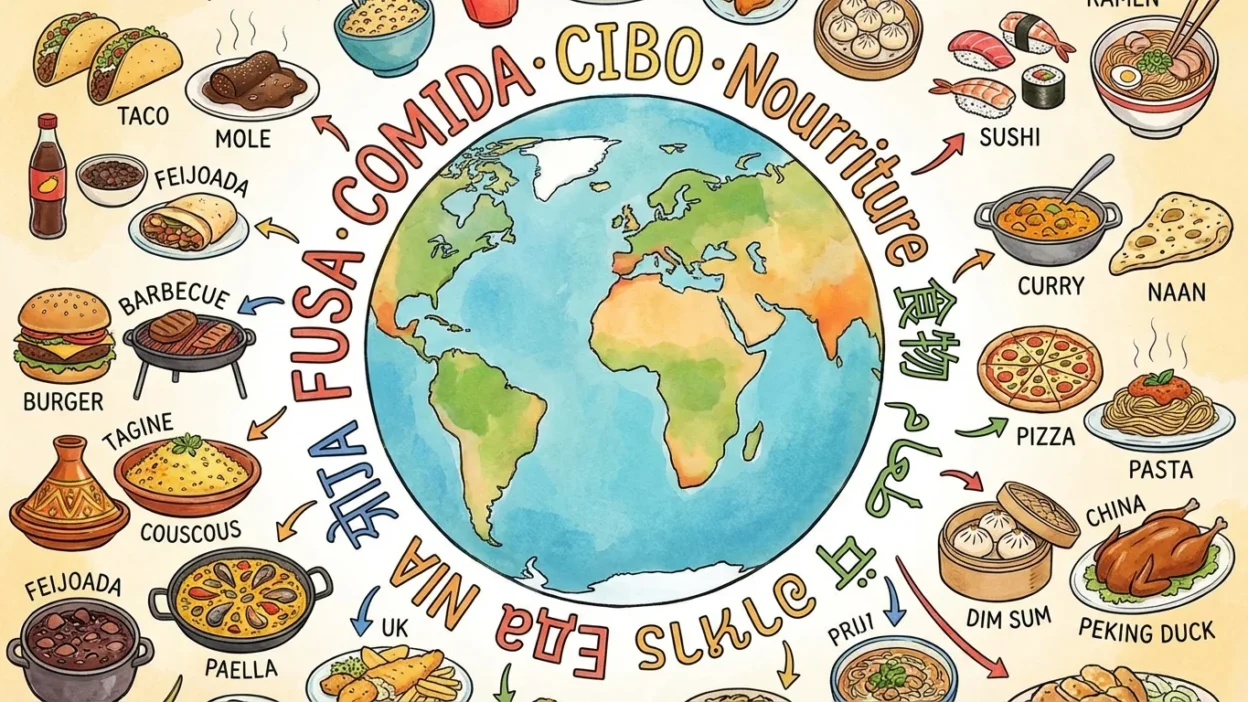
Food is one of the most important parts of daily life. Every culture has its own traditional dishes, cooking styles, and eating habits, but the concept of food is universal. If it is a homemade meal, street food, or a restaurant dish, food brings people together across cultures and languages.
Learning food in different languages is helpful for travelers, language learners, and anyone interested in global culture. When visiting another country or exploring international cuisine, knowing how to say food in different languages can help you communicate more easily.
In this guide, you will discover 70 food translations around the world, along with pronunciation and simple example sentences showing how the word is used in everyday conversation.
Food in 70 Different Languages Around the World
| Language | Phrase & Pronunciation | Example Sentence |
|---|---|---|
| English | Food (food) | The food tastes delicious today. |
| Spanish | Comida (ko-MEE-da) | La comida está deliciosa. |
| French | Nourriture (noo-ree-TUR) | La nourriture est délicieuse. |
| German | Essen (ES-sen) | Das Essen schmeckt gut. |
| Italian | Cibo (CHEE-bo) | Il cibo è molto buono. |
| Portuguese | Comida (ko-MEE-da) | A comida está deliciosa. |
| Dutch | Voedsel (FOOD-sel) | Het voedsel is lekker. |
| Russian | Еда (ye-DA) | Еда очень вкусная. |
| Ukrainian | Їжа (YI-zha) | Їжа смачна. |
| Polish | Jedzenie (ye-DZE-nye) | Jedzenie jest smaczne. |
| Czech | Jídlo (YEE-dlo) | Jídlo je chutné. |
| Slovak | Jedlo (YED-lo) | Jedlo je chutné. |
| Hungarian | Étel (AY-tel) | Az étel finom. |
| Romanian | Mâncare (mun-KA-re) | Mâncarea este gustoasă. |
| Greek | Φαγητό (fa-yee-TO) | Το φαγητό είναι νόστιμο. |
| Turkish | Yemek (ye-MEK) | Yemek çok lezzetli. |
| Arabic | طعام (ta-AAM) | الطعام لذيذ. |
| Hebrew | אוכל (O-khel) | האוכל טעים. |
| Persian | غذا (gha-ZA) | غذا خوشمزه است. |
| Hindi | खाना (kha-na) | खाना स्वादिष्ट है। |
| Urdu | کھانا (kha-na) | کھانا بہت مزیدار ہے۔ |
| Bengali | খাবার (kha-bar) | খাবার খুব সুস্বাদু। |
| Punjabi | ਖਾਣਾ (kha-na) | ਖਾਣਾ ਬਹੁਤ ਸੁਆਦ ਹੈ। |
| Gujarati | ખોરાક (kho-rak) | ખોરાક સ્વાદિષ્ટ છે. |
| Marathi | अन्न (an-na) | अन्न चविष्ट आहे. |
| Tamil | உணவு (u-na-vu) | உணவு ருசியாக உள்ளது. |
| Telugu | ఆహారం (aa-ha-ram) | ఆహారం రుచిగా ఉంది. |
| Kannada | ಆಹಾರ (aa-ha-ra) | ಆಹಾರ ರುಚಿಕರವಾಗಿದೆ. |
| Malayalam | ഭക്ഷണം (bha-ksha-nam) | ഭക്ഷണം രുചികരമാണ്. |
| Sinhala | ආහාර (aa-ha-ra) | ආහාර රසයි. |
| Thai | อาหาร (aa-han) | อาหารอร่อยมาก. |
| Vietnamese | Thức ăn (thook-an) | Thức ăn rất ngon. |
| Indonesian | Makanan (ma-ka-nan) | Makanan ini enak. |
| Malay | Makanan (ma-ka-nan) | Makanan ini sedap. |
| Filipino | Pagkain (pag-ka-in) | Masarap ang pagkain. |
| Chinese (Mandarin) | 食物 (shi-wu) | 食物很好吃. |
| Japanese | 食べ物 (ta-be-mo-no) | 食べ物は美味しいです。 |
| Korean | 음식 (eum-sik) | 음식이 맛있어요. |
| Mongolian | Хоол (kho-l) | Хоол амттай. |
| Swahili | Chakula (cha-koo-la) | Chakula ni kitamu. |
| Zulu | Ukudla (u-koo-dla) | Ukudla kumnandi. |
| Afrikaans | Kos (kos) | Die kos is lekker. |
| Somali | Cunto (coon-to) | Cuntadu waa macaan. |
| Amharic | ምግብ (migib) | ምግቡ ጣፋጭ ነው. |
| Hausa | Abinci (a-bin-ci) | Abinci yana da dadi. |
| Yoruba | Ounjẹ (oon-je) | Ounjẹ dun pupọ. |
| Igbo | Nri (n-ree) | Nri dị ụtọ. |
| Danish | Mad (mad) | Maden smager godt. |
| Swedish | Mat (mat) | Maten är god. |
| Norwegian | Mat (mat) | Maten smaker godt. |
| Finnish | Ruoka (roo-ka) | Ruoka on herkullista. |
| Icelandic | Matur (ma-tur) | Maturinn er góður. |
| Estonian | Toit (toit) | Toit on maitsev. |
| Latvian | Ēdiens (eh-di-ens) | Ēdiens ir garšīgs. |
| Lithuanian | Maistas (mai-stas) | Maistas skanus. |
| Serbian | Храна (hra-na) | Храна је укусна. |
| Croatian | Hrana (hra-na) | Hrana je ukusna. |
| Bosnian | Hrana (hra-na) | Hrana je ukusna. |
| Slovenian | Hrana (hra-na) | Hrana je okusna. |
| Albanian | Ushqim (ush-qim) | Ushqimi është i shijshëm. |
| Macedonian | Храна (hra-na) | Храната е вкусна. |
| Georgian | საჭმელი (sach-me-li) | საჭმელი გემრიელია. |
| Armenian | Սնունդ (s-nund) | Սնունդը համեղ է. |
| Kazakh | Тамақ (ta-mak) | Тамақ дәмді. |
| Uzbek | Ovqat (ov-kat) | Ovqat mazali. |
| Tajik | Хӯрок (khu-rok) | Хӯрок болаззат аст. |
| Nepali | खाना (kha-na) | खाना स्वादिलो छ। |
| Khmer | អាហារ (a-ha) | អាហារមានរសជាតិឆ្ងាញ់. |
| Lao | ອາຫານ (a-han) | ອາຫານແຊບ. |
The Importance of Food Across Cultures
Food is more than just nourishment. It represents tradition, family gatherings, celebrations, and cultural identity. Every country has special dishes that reflect its history and environment.
When exploring food in all languages, you can see how different cultures express the concept of meals and nourishment in unique ways.
How the Word Food Is Used in Daily Life
People commonly use the word food in conversations about:
Cooking and recipes
Restaurants and dining
Traditional cultural dishes
Nutrition and health
Knowing food translations around the world can help travelers understand menus, talk about meals, and connect with local cultures.
Why Learning Food Vocabulary in Different Languages Is Useful
Food vocabulary is one of the most practical things to learn in a new language. Understanding how to say food in different languages can help you order meals, ask for recommendations, and explore new cuisines with confidence.
It also helps language learners expand their everyday vocabulary quickly.
Conclusion
Food connects people everywhere, regardless of culture or language. While the word changes from one language to another, the importance of food remains the same around the world.
By learning food in different languages, you gain a deeper appreciation for global cultures and the universal joy of sharing meals.
FAQs
What is the word food in different languages?
Examples include Comida (Spanish), Nourriture (French), Essen (German), Yemek (Turkish), and 食物 (Chinese).
How do you say food in 10 common languages?
English (Food), Spanish (Comida), French (Nourriture), German (Essen), Italian (Cibo), Arabic (Taam), Hindi (Khana), Chinese (Shiwu), Japanese (Tabemono), and Turkish (Yemek).
Why is food vocabulary important in language learning?
It helps people communicate in restaurants, markets, and daily conversations about meals.
Is food a universal concept in all cultures?
Yes, every culture has its own food traditions and words related to meals and cooking.
Is learning food words helpful for travelers?
Yes, it makes ordering meals, reading menus, and understanding local cuisine much easier.