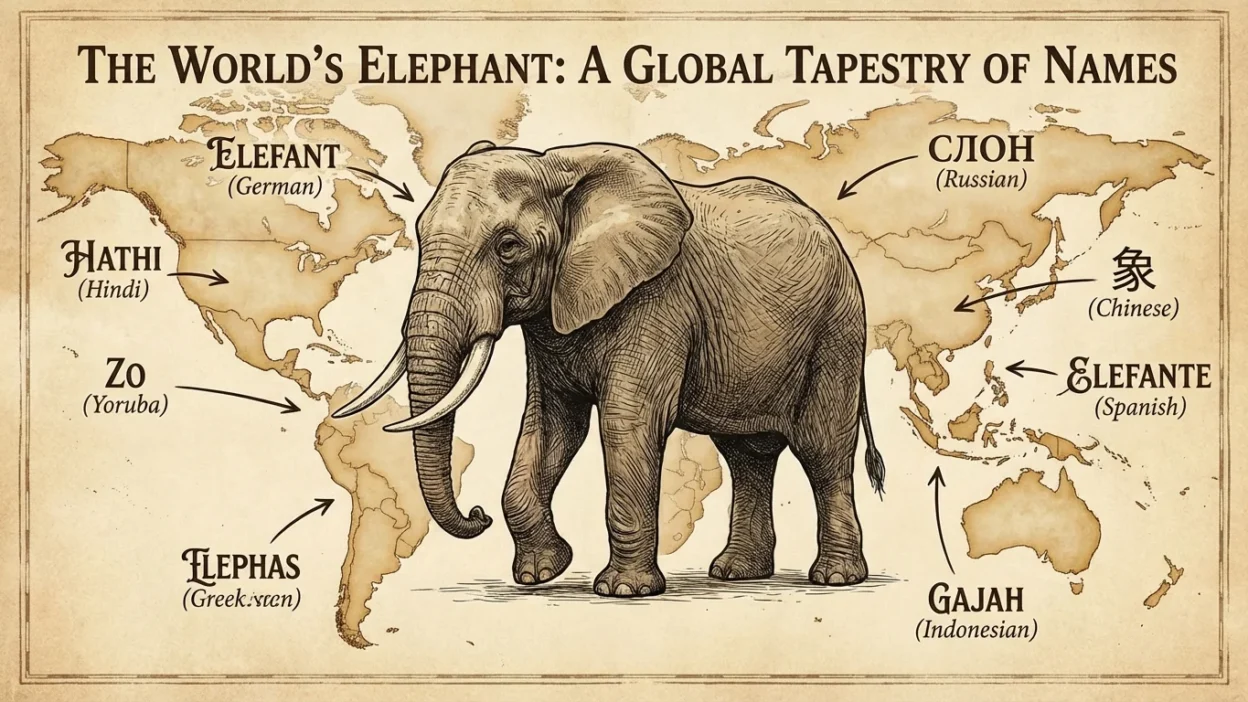
Elephants are among the most fascinating animals on Earth. Known for their intelligence, strength, and gentle nature, elephants hold special cultural and symbolic meaning in many parts of the world. Because of their global presence in history, wildlife, and mythology, people often search for elephant in different languages to learn how this majestic animal is described across cultures.
Learning how to say elephant in different languages is useful for language learners, travelers, wildlife enthusiasts, and students interested in global cultures. In this guide, you will discover 70 elephant translations around the world, including simple pronunciation and example sentences to show how the word is used in everyday language.
Elephant in 70 Different Languages Around the World
| Language | Phrase & Pronunciation | Example Sentence |
|---|---|---|
| English | Elephant (el-uh-fant) | The elephant is the largest land animal. (It is very big.) |
| Spanish | Elefante (e-le-FAN-te) | El elefante es muy grande. (The elephant is very big.) |
| French | Éléphant (ay-lay-FON) | L’éléphant est intelligent. (The elephant is intelligent.) |
| German | Elefant (eh-le-FANT) | Der Elefant ist stark. (The elephant is strong.) |
| Italian | Elefante (e-le-FAN-te) | L’elefante è enorme. (The elephant is huge.) |
| Portuguese | Elefante (e-le-FAN-chi) | O elefante é grande. (The elephant is big.) |
| Dutch | Olifant (O-li-fant) | De olifant is groot. (The elephant is big.) |
| Russian | Слон (slon) | Слон очень большой. (The elephant is very big.) |
| Ukrainian | Слон (slon) | Слон великий. (The elephant is big.) |
| Polish | Słoń (swon) | Słoń jest ogromny. (The elephant is huge.) |
| Czech | Slon (slon) | Slon je velký. (The elephant is big.) |
| Slovak | Slon (slon) | Slon je silný. (The elephant is strong.) |
| Hungarian | Elefánt (e-le-fant) | Az elefánt nagy. (The elephant is big.) |
| Romanian | Elefant (e-le-fant) | Elefantul este mare. (The elephant is big.) |
| Greek | Ελέφαντας (e-LE-fan-tas) | Ο ελέφαντας είναι μεγάλος. (The elephant is big.) |
| Turkish | Fil (feel) | Fil çok büyük. (The elephant is very big.) |
| Arabic | فيل (feel) | الفيل كبير. (The elephant is big.) |
| Hebrew | פיל (peel) | הפיל גדול. (The elephant is big.) |
| Persian | فیل (feel) | فیل بسیار بزرگ است. (The elephant is very big.) |
| Hindi | हाथी (haa-thee) | हाथी बहुत बड़ा है। (The elephant is very big.) |
| Urdu | ہاتھی (haa-thi) | ہاتھی بہت بڑا ہے۔ (The elephant is very big.) |
| Bengali | হাতি (ha-ti) | হাতি খুব বড়। (The elephant is very big.) |
| Punjabi | ਹਾਥੀ (haa-thee) | ਹਾਥੀ ਬਹੁਤ ਵੱਡਾ ਹੈ। (The elephant is very big.) |
| Gujarati | હાથી (haa-thee) | હાથી ખૂબ મોટો છે. (The elephant is very big.) |
| Marathi | हत्ती (hat-tee) | हत्ती खूप मोठा आहे. (The elephant is very big.) |
| Tamil | யானை (yaa-nai) | யானை பெரியது. (The elephant is big.) |
| Telugu | ఏనుగు (ae-nu-gu) | ఏనుగు చాలా పెద్దది. (The elephant is very big.) |
| Kannada | ಆನೆ (aa-ne) | ಆನೆ ದೊಡ್ಡದು. (The elephant is big.) |
| Malayalam | ആന (aa-na) | ആന വളരെ വലുതാണ്. (The elephant is very big.) |
| Sinhala | අලි (a-li) | අලි විශාලයි. (The elephant is large.) |
| Thai | ช้าง (chang) | ช้างตัวใหญ่. (The elephant is big.) |
| Vietnamese | Voi (voy) | Con voi rất to. (The elephant is very big.) |
| Indonesian | Gajah (ga-jah) | Gajah sangat besar. (The elephant is very big.) |
| Malay | Gajah (ga-jah) | Gajah sangat besar. (The elephant is very big.) |
| Filipino | Elepante (e-le-pan-te) | Ang elepante ay malaki. (The elephant is big.) |
| Chinese (Mandarin) | 大象 (da-shyang) | 大象很大. (The elephant is very big.) |
| Japanese | 象 (zo) | 象は大きいです。 (The elephant is big.) |
| Korean | 코끼리 (ko-kki-ri) | 코끼리는 크다. (The elephant is big.) |
| Mongolian | Заан (zaan) | Заан том. (The elephant is big.) |
| Swahili | Tembo (tem-bo) | Tembo ni mkubwa. (The elephant is big.) |
| Zulu | Indlovu (in-dlo-vu) | Indlovu inkulu. (The elephant is big.) |
| Afrikaans | Olifant (o-li-fant) | Die olifant is groot. (The elephant is big.) |
| Somali | Maroodi (ma-roo-di) | Maroodi waa weyn. (The elephant is big.) |
| Amharic | ዝሆን (zi-hon) | ዝሆን ትልቅ ነው. (The elephant is big.) |
| Hausa | Giwa (gee-wa) | Giwa tana da girma. (The elephant is big.) |
| Yoruba | Erin (eh-rin) | Erin tobi. (The elephant is big.) |
| Igbo | Enyi (en-yi) | Enyi buru ibu. (The elephant is big.) |
| Danish | Elefant (e-le-fant) | Elefanten er stor. (The elephant is big.) |
| Swedish | Elefant (e-le-fant) | Elefanten är stor. (The elephant is big.) |
| Norwegian | Elefant (e-le-fant) | Elefanten er stor. (The elephant is big.) |
| Finnish | Norsu (nor-su) | Norsu on suuri. (The elephant is big.) |
| Icelandic | Fíll (feel) | Fíllinn er stór. (The elephant is big.) |
| Estonian | Elevant (e-le-vant) | Elevant on suur. (The elephant is big.) |
| Latvian | Zilonis (zi-lo-nis) | Zilonis ir liels. (The elephant is big.) |
| Lithuanian | Dramblys (dram-blis) | Dramblys yra didelis. (The elephant is big.) |
| Serbian | Слон (slon) | Слон је велики. (The elephant is big.) |
| Croatian | Slon (slon) | Slon je velik. (The elephant is big.) |
| Bosnian | Slon (slon) | Slon je velik. (The elephant is big.) |
| Slovenian | Slon (slon) | Slon je velik. (The elephant is big.) |
| Albanian | Elefant (e-le-fant) | Elefanti është i madh. (The elephant is big.) |
| Macedonian | Слон (slon) | Слонот е голем. (The elephant is big.) |
| Georgian | სპილო (spi-lo) | სპილო დიდია. (The elephant is big.) |
| Armenian | Փիղ (pigh) | Փիղը մեծ է. (The elephant is big.) |
| Kazakh | Піл (pil) | Піл үлкен. (The elephant is big.) |
| Uzbek | Fil (feel) | Fil juda katta. (The elephant is very big.) |
| Tajik | Фил (feel) | Фил хеле калон аст. (The elephant is very big.) |
| Nepali | हात्ती (hat-tee) | हात्ती ठूलो छ। (The elephant is big.) |
| Khmer | ដំរី (dam-rey) | ដំរីធំណាស់។ (The elephant is very big.) |
| Lao | ຊ້າງ (chang) | ຊ້າງໃຫຍ່. (The elephant is big.) |
The Cultural Importance of Elephants Around the World
Elephants play an important role in many cultures and traditions. In some Asian cultures, elephants symbolize wisdom, strength, and good luck. In African traditions, they represent power, leadership, and intelligence.
When exploring elephant in all languages, you will see that the word often appears in folklore, religious symbolism, and wildlife conservation discussions.
How the Word Elephant Is Used in Daily Language
The word elephant is commonly used when talking about wildlife, zoos, nature documentaries, and conservation. People also use the word in idioms and expressions, such as:
The elephant in the room
Elephant memory
Strong like an elephant
Learning elephant translations around the world can help people communicate about animals, nature, and travel experiences in different languages.
Why Learning Animal Names in Different Languages Is Helpful
Animal names are useful vocabulary for travelers, students, and wildlife enthusiasts. Knowing how to say elephant in different languages can help when visiting zoos, national parks, and wildlife reserves.
It also helps language learners build vocabulary related to nature and animals.
Conclusion
Elephants are admired around the world for their intelligence, strength, and beauty. Although the word elephant sounds different in each language, the respect for this incredible animal remains universal.
By learning elephant in different languages, you can expand your vocabulary while gaining a deeper appreciation of global cultures and wildlife.
FAQs
What is elephant called in different languages?
Elephant has many translations worldwide, including Elefante (Spanish), Éléphant (French), Fil (Turkish), 象 (Japanese), and 大象 (Chinese).
How do you say elephant in 10 common languages?
Examples include English (Elephant), Spanish (Elefante), French (Éléphant), German (Elefant), Italian (Elefante), Portuguese (Elefante), Arabic (Fil), Hindi (Haathi), Chinese (Daxiang), and Japanese (Zō).
Why are elephants important in many cultures?
Elephants often symbolize wisdom, strength, good fortune, and leadership in many traditions.
Where do elephants mostly live?
Elephants mainly live in Africa and Asia, especially in forests, grasslands, and national parks.
Why are elephants protected animals?
Elephants are protected because they face threats such as habitat loss and illegal poaching.