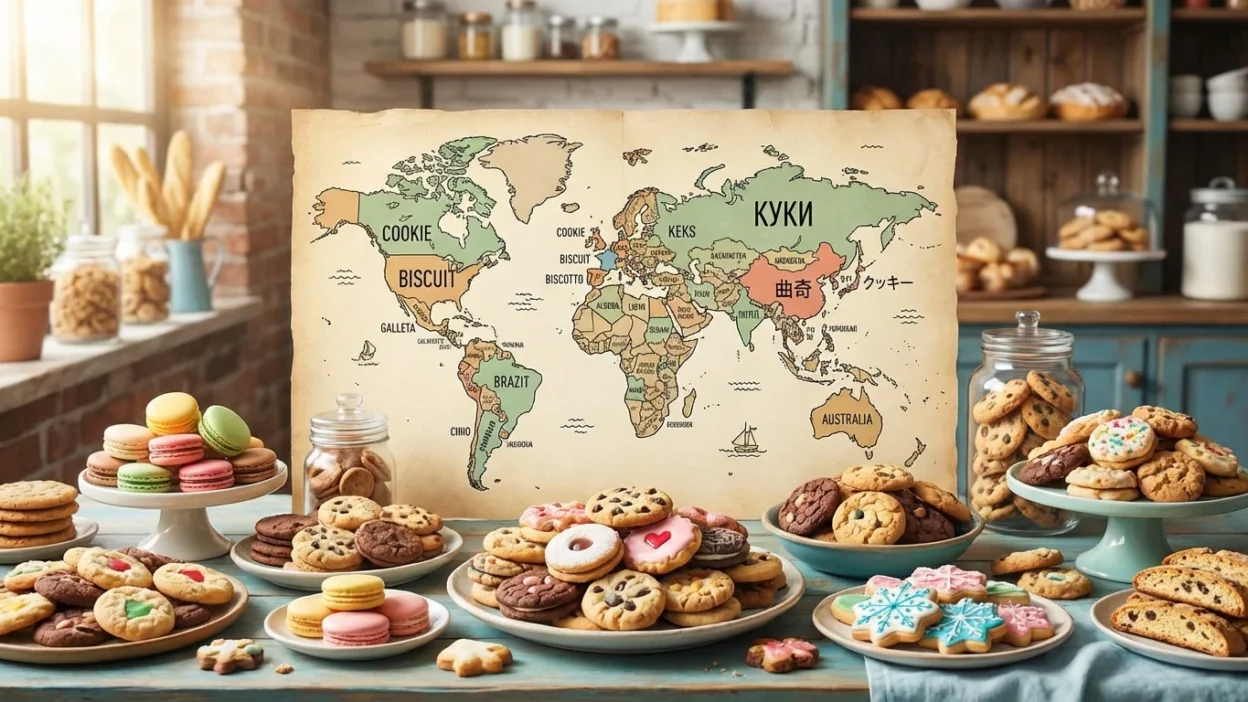
Cookies are one of the most loved treats worldwide. From chocolate chip cookies in America to buttery biscuits in Europe and sweet baked snacks in Asia, cookies appear in many cultures with different names and styles. Because baking traditions vary around the world, the word cookie is translated differently in many languages.
Learning cookie in different languages is helpful for travelers, food lovers, and language learners. It also helps you understand menus, recipes, and bakery products across cultures. In this guide, you will discover 70 cookie translations around the world, including pronunciation and simple example sentences showing how people use the word in everyday situations.
Cookie in 70 Different Languages Around the World
| Language | Phrase & Pronunciation | Example Sentence |
|---|---|---|
| English | Cookie (koo-kee) | I baked a chocolate cookie today. (A sweet baked treat.) |
| Spanish | Galleta (ga-YEH-ta) | Me gusta comer una galleta. (I like eating a cookie.) |
| French | Biscuit (bees-KWEE) | Je mange un biscuit. (I eat a cookie.) |
| German | Keks (keks) | Ich esse einen Keks. (I eat a cookie.) |
| Italian | Biscotto (bee-SKO-to) | Mangio un biscotto. (I eat a cookie.) |
| Portuguese | Biscoito (bee-sko-EE-to) | Eu comi um biscoito. (I ate a cookie.) |
| Dutch | Koekje (KOOK-ye) | Ik eet een koekje. (I eat a cookie.) |
| Russian | Печенье (pe-CHEN-ye) | Я ем печенье. (I eat a cookie.) |
| Ukrainian | Печиво (pe-CHEE-vo) | Я їм печиво. (I eat a cookie.) |
| Polish | Ciasteczko (cha-STETCH-ko) | Jem ciasteczko. (I eat a cookie.) |
| Czech | Sušenka (su-SHEN-ka) | Jím sušenku. (I eat a cookie.) |
| Slovak | Sušienka (su-SHEN-ka) | Jem sušienku. (I eat a cookie.) |
| Hungarian | Süti (shoo-tee) | Eszem egy sütit. (I eat a cookie.) |
| Romanian | Biscuit (bees-KWEET) | Mănânc un biscuit. (I eat a cookie.) |
| Greek | Μπισκότο (bee-SKO-to) | Τρώω ένα μπισκότο. (I eat a cookie.) |
| Turkish | Kurabiye (ku-ra-bee-YE) | Bir kurabiye yiyorum. (I eat a cookie.) |
| Arabic | بسكويت (bis-kweet) | آكل بسكويت. (I eat a cookie.) |
| Hebrew | עוגייה (oo-gee-YA) | אני אוכל עוגייה. (I eat a cookie.) |
| Persian | بیسکویت (bis-kweet) | من یک بیسکویت میخورم. (I eat a cookie.) |
| Hindi | कुकी (koo-kee) | मैं कुकी खा रहा हूँ। (I am eating a cookie.) |
| Urdu | بسکٹ (bis-kit) | میں بسکٹ کھا رہا ہوں۔ (I am eating a cookie.) |
| Bengali | বিস্কুট (bis-koot) | আমি বিস্কুট খাচ্ছি। (I am eating a cookie.) |
| Punjabi | ਬਿਸਕੁਟ (bis-kut) | ਮੈਂ ਬਿਸਕੁਟ ਖਾ ਰਿਹਾ ਹਾਂ। (I am eating a cookie.) |
| Gujarati | બિસ્કિટ (bis-kit) | હું બિસ્કિટ ખાઉં છું. (I eat a cookie.) |
| Marathi | बिस्किट (bis-kit) | मी बिस्किट खात आहे. (I am eating a cookie.) |
| Tamil | பிஸ்கட் (bis-kat) | நான் பிஸ்கட் சாப்பிடுகிறேன். (I eat a cookie.) |
| Telugu | బిస్కెట్ (bis-ket) | నేను బిస్కెట్ తింటున్నాను. (I eat a cookie.) |
| Kannada | ಬಿಸ್ಕಟ್ (bis-kat) | ನಾನು ಬಿಸ್ಕಟ್ ತಿನ್ನುತ್ತೇನೆ. (I eat a cookie.) |
| Malayalam | ബിസ്കറ്റ് (bis-kat) | ഞാൻ ബിസ്കറ്റ് കഴിക്കുന്നു. (I eat a cookie.) |
| Sinhala | බිස්කට් (bis-kat) | මම බිස්කට් කනවා. (I eat a cookie.) |
| Thai | คุกกี้ (koo-kee) | ฉันกินคุกกี้. (I eat a cookie.) |
| Vietnamese | Bánh quy (ban-kwee) | Tôi ăn bánh quy. (I eat a cookie.) |
| Indonesian | Kue kering (ku-eh ke-ring) | Saya makan kue kering. (I eat a cookie.) |
| Malay | Biskut (bis-kut) | Saya makan biskut. (I eat a cookie.) |
| Filipino | Biskwit (bis-kwit) | Kumain ako ng biskwit. (I ate a cookie.) |
| Chinese (Mandarin) | 饼干 (bing-gan) | 我吃饼干. (I eat a cookie.) |
| Japanese | クッキー (kuk-kee) | クッキーを食べます。 (I eat a cookie.) |
| Korean | 쿠키 (koo-kee) | 쿠키를 먹어요. (I eat a cookie.) |
| Mongolian | Жигнэмэг (jig-ne-meg) | Би жигнэмэг идэж байна. (I eat a cookie.) |
| Swahili | Biskuti (bis-koo-tee) | Nakula biskuti. (I eat a cookie.) |
| Zulu | Ikhukhi (ee-koo-khee) | Ngidla ikhukhi. (I eat a cookie.) |
| Afrikaans | Koekie (koo-kee) | Ek eet ‘n koekie. (I eat a cookie.) |
| Somali | Buskud (bus-kud) | Waxaan cunayaa buskud. (I eat a cookie.) |
| Amharic | ብስኩት (bis-kut) | ብስኩት እበላለሁ. (I eat a cookie.) |
| Hausa | Biskit (bis-kit) | Ina cin biskit. (I eat a cookie.) |
| Yoruba | Biskiti (bis-kee-tee) | Mo jẹ biskiti. (I eat a cookie.) |
| Igbo | Biskit (bis-kit) | Ana m eri biskit. (I eat a cookie.) |
| Danish | Småkage (smo-kay) | Jeg spiser en småkage. (I eat a cookie.) |
| Swedish | Kaka (ka-ka) | Jag äter en kaka. (I eat a cookie.) |
| Norwegian | Kjeks (sheks) | Jeg spiser en kjeks. (I eat a cookie.) |
| Finnish | Keksi (kek-si) | Syön keksin. (I eat a cookie.) |
| Icelandic | Kaka (ka-ka) | Ég borða köku. (I eat a cookie.) |
| Estonian | Küpsis (kuup-sis) | Ma söön küpsist. (I eat a cookie.) |
| Latvian | Cepums (tse-pums) | Es ēdu cepumu. (I eat a cookie.) |
| Lithuanian | Sausainis (sau-sai-nis) | Aš valgau sausainį. (I eat a cookie.) |
| Serbian | Колачић (ko-la-chich) | Једем колачић. (I eat a cookie.) |
| Croatian | Kolačić (ko-la-chich) | Jedem kolačić. (I eat a cookie.) |
| Bosnian | Kolačić (ko-la-chich) | Jedem kolačić. (I eat a cookie.) |
| Slovenian | Piškot (pish-kot) | Jem piškot. (I eat a cookie.) |
| Albanian | Biskotë (bis-ko-te) | Ha një biskotë. (I eat a cookie.) |
| Macedonian | Бисквит (bis-kvit) | Јадам бисквит. (I eat a cookie.) |
| Georgian | ორცხობილა (or-tskho-bi-la) | მე ვჭამ ორცხობილას. (I eat a cookie.) |
| Armenian | Թխվածքաբլիթ (tukh-vats-ka-blit) | Ես թխվածքաբլիթ եմ ուտում. (I eat a cookie.) |
| Kazakh | Печенье (pe-chen-ye) | Мен печенье жеймін. (I eat a cookie.) |
| Uzbek | Pechenye (pe-chen-ye) | Men pechenye yeyman. (I eat a cookie.) |
| Tajik | Печенье (pe-chen-ye) | Ман печенье мехӯрам. (I eat a cookie.) |
| Nepali | बिस्कुट (bis-kut) | म बिस्कुट खान्छु। (I eat a cookie.) |
| Khmer | នំប៊ីស្គី (nom-bis-ki) | ខ្ញុំញ៉ាំនំប៊ីស្គី. (I eat a cookie.) |
| Lao | ບິດສະກິດ (bis-kit) | ຂ້ອຍກິນບິດສະກິດ. (I eat a cookie.) |
The Meaning of Cookies Around the World
Cookies are small sweet baked treats enjoyed in many cultures. While the word changes across languages, the idea remains similar: a small baked snack often made with flour, sugar, and butter.
When exploring cookie in all languages, you will notice that many cultures use words similar to biscuit, while others have unique traditional names.
How the Word Cookie Is Used in Different Cultures
Different cultures use the word cookie in daily conversations related to:
Baking and desserts
Bakery menus
Snacks and tea time
Family recipes
Understanding cookie translations around the world helps travelers read menus and communicate in bakeries or cafés.
Why Learning Food Words in Different Languages Is Helpful
Food vocabulary is among the most practical language knowledge for travelers. Knowing how to say cookie in different languages helps when ordering desserts, reading recipes, or exploring local bakeries.
It also allows language learners to connect with cultures through their traditional foods.
Conclusion
Cookies are a universal treat enjoyed in many cultures around the world. Although the pronunciation and spelling vary across languages, the sweet idea behind the word remains the same.
By learning cookie in different languages, you expand your vocabulary and gain a better understanding of global food traditions.
FAQs
What is the word cookie in different languages?
Examples include Galleta (Spanish), Biscuit (French), Keks (German), Biscotto (Italian), and 饼干 (Chinese).
How do you say cookie in 10 common languages?
English (Cookie), Spanish (Galleta), French (Biscuit), German (Keks), Italian (Biscotto), Portuguese (Biscoito), Hindi (Cookie), Chinese (Binggan), Japanese (Kukki), Korean (Cookie).
Is cookie the same as biscuit?
In American English, cookie refers to a sweet baked snack, while in British English the word biscuit is commonly used.
Why do many languages use similar words for cookie?
Many languages borrowed the word from European baking traditions or English food terminology.
Is cookie vocabulary useful for travelers?
Yes, knowing food words like cookie helps when ordering desserts, reading menus, and exploring local bakeries.