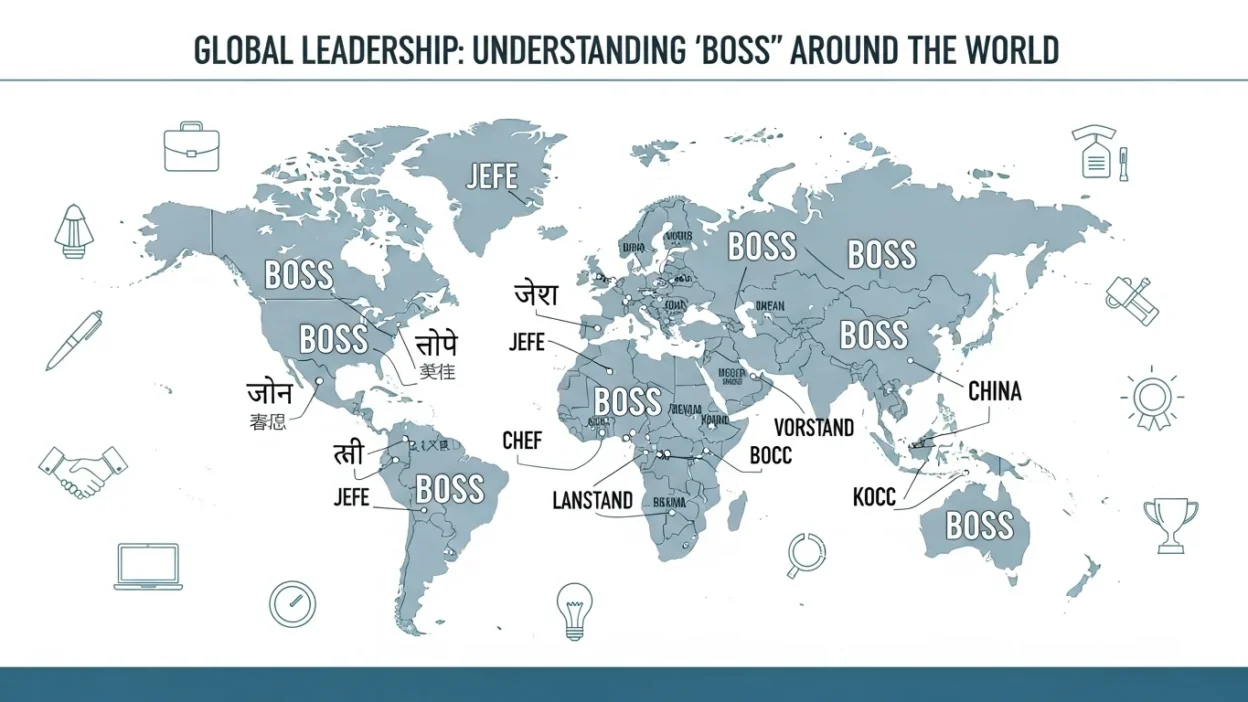
The word boss is widely used to describe a leader, manager, supervisor, or someone in charge of a team or organization. In workplaces, businesses, and daily conversations, people often refer to their manager or leader as a boss. Learning boss in different languages can help you communicate better with people around the world and understand workplace vocabulary across cultures.
In this article, you will discover how to say boss in different languages, including pronunciation and example sentences. These boss translations around the world will help expand your vocabulary and improve your global communication skills.
Boss in Different Languages
| Language | Phrase | Example Sentence |
|---|---|---|
| English | Boss (boss) | My boss is very supportive. (My manager helps me) |
| Spanish | Jefe (he-fe) | Mi jefe es muy amable. (My boss is very kind) |
| French | Patron (pa-tron) | Mon patron est gentil. (My boss is nice) |
| German | Chef (shef) | Mein Chef ist freundlich. (My boss is friendly) |
| Italian | Capo (ka-po) | Il capo è in ufficio. (The boss is in the office) |
| Portuguese | Chefe (she-fe) | Meu chefe é justo. (My boss is fair) |
| Dutch | Baas (bahs) | Mijn baas is aardig. (My boss is nice) |
| Russian | Босс (boss) | Мой босс добрый. (My boss is kind) |
| Chinese (Mandarin) | 老板 (lao-ban) | 我的老板很好. (My boss is good) |
| Japanese | 上司 (jo-shi) | 私の上司は優しいです. (My boss is kind) |
| Korean | 상사 (sang-sa) | 내 상사는 친절합니다. (My boss is kind) |
| Arabic | رئيس (ra-ees) | رئيسي في العمل جيد. (My boss at work is good) |
| Hindi | बॉस (bos) | मेरा बॉस अच्छा है। (My boss is good) |
| Urdu | باس (baas) | میرا باس اچھا ہے۔ (My boss is good) |
| Turkish | Patron (pa-tron) | Patron çok iyi. (The boss is very good) |
| Greek | Αφεντικό (a-fen-di-ko) | Το αφεντικό είναι εδώ. (The boss is here) |
| Polish | Szef (shef) | Mój szef jest miły. (My boss is nice) |
| Swedish | Chef (shef) | Min chef är snäll. (My boss is kind) |
| Danish | Chef (shef) | Min chef er venlig. (My boss is friendly) |
| Norwegian | Sjef (shef) | Sjefen er her. (The boss is here) |
| Finnish | Pomo (po-mo) | Pomoni on mukava. (My boss is nice) |
| Czech | Šéf (shef) | Můj šéf je hodný. (My boss is kind) |
| Slovak | Šéf (shef) | Môj šéf je dobrý. (My boss is good) |
| Hungarian | Főnök (foe-nok) | A főnök az irodában van. (The boss is in the office) |
| Romanian | Șef (shef) | Șeful este aici. (The boss is here) |
| Bulgarian | Шеф (shef) | Шефът е тук. (The boss is here) |
| Serbian | Шеф (shef) | Шеф је овде. (The boss is here) |
| Croatian | Šef (shef) | Šef je u uredu. (The boss is in the office) |
| Slovenian | Šef (shef) | Šef je tukaj. (The boss is here) |
| Ukrainian | Бос (bos) | Мій бос хороший. (My boss is good) |
| Hebrew | בוס (bos) | הבוס שלי טוב. (My boss is good) |
| Persian | رئیس (ra-ees) | رئیس من مهربان است. (My boss is kind) |
| Thai | เจ้านาย (jao-nai) | เจ้านายของฉันใจดี. (My boss is kind) |
| Vietnamese | Sếp (sep) | Sếp của tôi rất tốt. (My boss is very good) |
| Indonesian | Bos (bos) | Bos saya baik. (My boss is kind) |
| Malay | Bos (bos) | Bos saya baik. (My boss is kind) |
| Filipino | Amo (a-mo) | Ang amo ko ay mabait. (My boss is kind) |
| Swahili | Bosi (bo-si) | Bosi wangu ni mzuri. (My boss is good) |
| Zulu | Umphathi (oom-pa-ti) | Umphathi wami ulungile. (My boss is good) |
| Afrikaans | Baas (bahs) | My baas is vriendelik. (My boss is friendly) |
| Icelandic | Yfirmaður (eer-fi-ma-thur) | Yfirmaður minn er góður. (My boss is good) |
| Irish | Boss (boss) | Tá mo boss maith. (My boss is good) |
| Welsh | Boss (boss) | Mae fy boss yn dda. (My boss is good) |
| Estonian | Ülemus (u-le-mus) | Minu ülemus on tore. (My boss is nice) |
| Latvian | Priekšnieks (prieksh-nieks) | Mans priekšnieks ir labs. (My boss is good) |
| Lithuanian | Viršininkas (vir-shi-nin-kas) | Mano viršininkas geras. (My boss is good) |
| Albanian | Shef (shef) | Shefi është këtu. (The boss is here) |
| Macedonian | Шеф (shef) | Шефот е тука. (The boss is here) |
| Georgian | უფროსი (up-ro-si) | ჩემი უფროსი კარგია. (My boss is good) |
| Armenian | պետ (pet) | Իմ պետը բարի է։ (My boss is kind) |
| Mongolian | Дарга (dar-ga) | Миний дарга сайн. (My boss is good) |
| Nepali | मालिक (ma-lik) | मेरो मालिक राम्रो छ। (My boss is good) |
| Sinhala | ප්රධානියා (pra-dha-ni-ya) | මගේ ප්රධානියා හොඳයි. (My boss is good) |
| Bengali | বস (bos) | আমার বস ভালো। (My boss is good) |
| Tamil | முதலாளர் (mu-tha-laa-lar) | என் முதலாளர் நல்லவர். (My boss is good) |
| Telugu | యజమాని (ya-ja-ma-ni) | నా యజమాని మంచివాడు. (My boss is good) |
| Kannada | ಬಾಸ್ (bas) | ನನ್ನ ಬಾಸ್ ಒಳ್ಳೆಯವರು. (My boss is good) |
| Marathi | बॉस (bos) | माझा बॉस चांगला आहे. (My boss is good) |
| Gujarati | બોસ (bos) | મારો બોસ સારો છે. (My boss is good) |
| Punjabi | ਬੌਸ (bos) | ਮੇਰਾ ਬੌਸ ਚੰਗਾ ਹੈ। (My boss is good) |
| Khmer | មេ (me) | មេរបស់ខ្ញុំល្អ. (My boss is good) |
| Lao | ຫົວໜ້າ (hua-na) | ຫົວໜ້າຂອງຂ້ອຍດີ. (My boss is good) |
| Burmese | သူဌေး (thu-htay) | သူဌေးကကောင်းပါတယ်. (My boss is good) |
| Amharic | አለቃ (a-le-ka) | አለቃዬ ጥሩ ነው. (My boss is good) |
| Somali | Madaxa (ma-da-kha) | Madaxa waa fiican yahay. (The boss is good) |
| Hausa | Shugaba (shu-ga-ba) | Shugabana yana da kyau. (Our boss is good) |
| Yoruba | Oga (o-ga) | Oga mi dara. (My boss is good) |
| Igbo | Onye isi (on-ye ee-see) | Onye isi m dị mma. (My boss is good) |
What the Word Boss Means in Different Cultures
The word boss generally refers to a leader, supervisor, or someone responsible for managing others. However, the exact meaning can vary slightly across cultures. In some languages, the word may also refer to the owner of a company, a senior manager, or a respected authority figure.
Learning boss translations around the world helps you understand workplace culture and communication in different countries.
How the Word Boss Is Used in Daily Conversations
The word boss is commonly used in professional and workplace environments. People use it when referring to their supervisor, manager, or employer.
Examples include:
- Talking about your workplace manager
- Describing leadership roles
- Discussing company structure
Understanding how to say boss in different languages can help you communicate effectively in international workplaces.
Why Learning Boss in Different Languages Is Useful
Learning workplace vocabulary is very helpful when working with international teams or traveling for business. Knowing boss in all languages can improve communication and make interactions more comfortable.
It also helps language learners understand how leadership roles are described across different cultures.
Conclusion
The word boss is used worldwide to describe someone in charge or responsible for leading others. While the exact term varies between languages, the meaning remains similar across cultures.
By learning these 70 translations, you can improve your global vocabulary and better understand workplace communication around the world.
FAQs
1. What does boss mean in different languages?
In most languages, boss refers to a leader, manager, or supervisor in a workplace.
2. How do you say boss in other languages?
Examples include Jefe (Spanish), Patron (French), Chef (German), and 老板 (Chinese).
3. Why learn boss translations in multiple languages?
It helps with business communication, language learning, and understanding workplace culture.
4. Is boss the same as manager in every language?
Not always. Some languages use separate words for owner, leader, and manager.
5. Can learning workplace vocabulary improve communication?
Yes, it helps when working with international teams and global businesses.