Have you ever paused while writing and wondered whether to use “ascendency” or “ascendancy”? Both look correct, and you may have even seen them used interchangeably. That’s where the confusion begins.
In this clear and friendly guide, we’ll break down ascendency vs ascendancy, explain which spelling is preferred, show real examples, and help you use the right word confidently in both formal and everyday writing.
Quick Answer
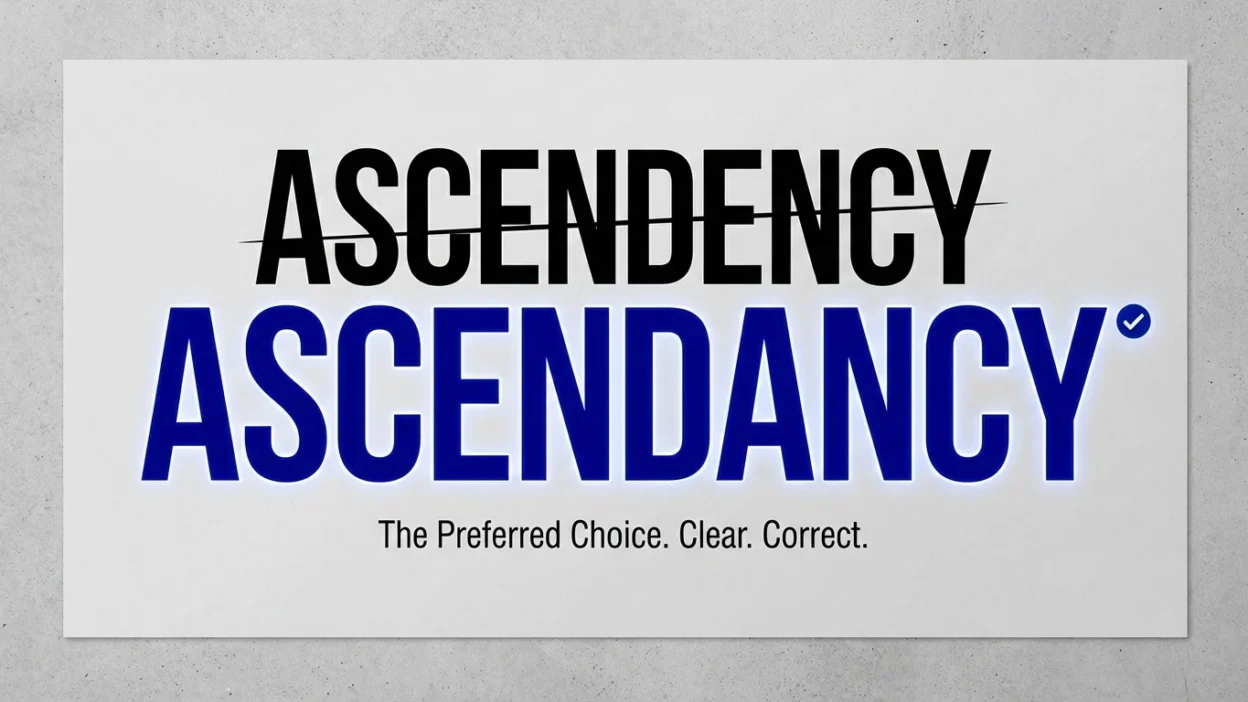
- ✅ Ascendancy is the preferred and more common spelling
- ⚠️ Ascendency is correct but less commonly used
👉 Simple rule:
Use ascendancy in most situations, especially in modern writing.
What Does “Ascendancy” Mean?
Ascendancy is a noun that means a position of dominance, power, or influence over others.
Common Meanings
- Gaining control or authority
- Having influence over people or situations
- Rising to a position of power
Example Sentences
- The team gained ascendancy in the second half.
- She quickly rose to ascendancy in the company.
- His ideas took ascendancy in the discussion.
👉 Tone: Formal, often used in professional, political, or academic contexts
What Does “Ascendency” Mean?
Ascendency has the same meaning as ascendancy. It also refers to dominance, influence, or control.
Example Sentences
- The empire reached its ascendency during that era.
- Their influence grew into ascendency over time.
👉 Tone: Correct but slightly less common and sometimes considered outdated
Ascendency vs Ascendancy: Key Differences
The difference between these two words is mainly about usage frequency and preference.
Comparison Table: Ascendency vs Ascendancy
| Feature | Ascendancy | Ascendency |
|---|---|---|
| Meaning | Dominance or influence | Same meaning |
| Correctness | ✔ Preferred | ✔ Correct but less common |
| Usage Frequency | Very common | Less common |
| Tone | Modern standard | Slightly traditional |
| Recommendation | Use this | Use rarely |
Why “Ascendancy” Is Preferred
In modern English, ascendancy is the standard spelling used in:
- News articles
- Academic writing
- Business communication
- Everyday professional use
While ascendency is not wrong, it may sound slightly outdated or less familiar to readers.
👉 Using ascendancy ensures clarity and consistency.
When Should You Use “Ascendancy”?
Use ascendancy in almost all cases where you want to describe power, influence, or dominance.
Best Situations
- Professional writing
- Academic essays
- Business communication
- General usage
Examples
- “The company gained market ascendancy.”
- “He established ascendancy over his rivals.”
👉 Think of ascendancy as the safe and modern choice.
When Can You Use “Ascendency”?
You can use ascendency if you prefer it stylistically, especially in:
- Literary writing
- Historical contexts
- Personal preference
Examples
- “The kingdom reached its ascendency.”
👉 However, most readers expect ascendancy, so use with care.
Common Mistakes to Avoid
1. Thinking One Is Incorrect
Both are technically correct, but ascendancy is preferred.
2. Mixing Both Spellings in One Piece
❌ Using both forms in the same article can confuse readers
✔ Stick to one—preferably ascendancy
3. Choosing the Less Common Option Unnecessarily
Using ascendency may make your writing seem inconsistent or outdated.
Helpful Tip to Remember
👉 Ascendancy = standard and widely used
👉 Ascendency = less common alternative
Quick memory trick:
- “Ascendancy” has ‘a’ like ‘advantage’ → more dominant choice
More Examples in Context
Ascendancy
- “Technology companies have gained global ascendancy.”
- “Her leadership brought ascendancy to the team.”
Ascendency
- “The empire’s ascendency lasted for decades.”
Synonyms and Related Words
To improve your writing, consider these alternatives:
- Dominance
- Influence
- Control
- Authority
- Supremacy
👉 These can add variety while keeping your meaning clear.
Ascendency vs Ascendancy in American and British English
- Both spellings are accepted in American and British English
- Ascendancy is more widely used in both regions
- No major regional preference difference exists
👉 Globally, ascendancy is the safer and more common choice.
FAQs
1. Are ascendency and ascendancy the same?
Yes, they have the same meaning, but ascendancy is more commonly used.
2. Which spelling is correct?
Both are correct, but ascendancy is preferred in modern English.
3. Why is “ascendancy” more popular?
Because it has become the standard form in modern usage.
4. Can I use “ascendency” in formal writing?
You can, but ascendancy is usually a better choice.
5. Is “ascendency” outdated?
Not fully outdated, but less commonly used today.
6. Which should I use in essays?
Use ascendancy for clarity and consistency.
7. Do they have different meanings?
No, their meanings are identical.
Summary
When comparing ascendency vs ascendancy, both words mean the same thing power, influence, or dominance. However, ascendancy is the preferred spelling in modern English and is used far more frequently across all types of writing.
While ascendency is still correct, it’s less common and can feel slightly outdated. Choosing ascendancy ensures your writing feels clear, modern, and professional.
Actionable Takeaway
Next time you write, remember:
👉 Ascendancy = preferred and modern
👉 Ascendency = correct but less common
To stay safe and sound natural, always go with ascendancy.